


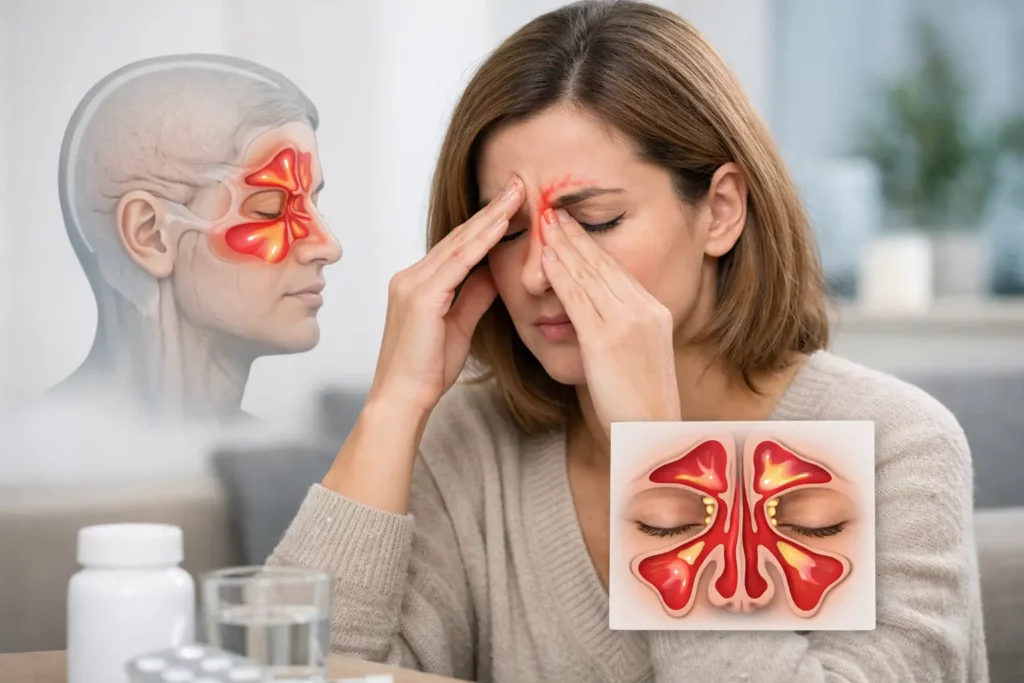
Most people ask whether are antibiotics needed for sinusitis when the pressure builds, the nose blocks up and the mucus seems to linger for days. It is a sensible question, but the answer is often less straightforward than many expect. In many cases, sinusitis improves without antibiotics, especially when it starts after a cold. The key is understanding what is most likely causing the symptoms, what self-care may help, and when it is time to speak to a doctor or qualified healthcare professional.
Are antibiotics needed for sinusitis in most cases?
Usually, not at the start. Most short-term sinusitis is linked to a viral upper respiratory infection, such as a common cold, and antibiotics do not work against viruses. Even when symptoms feel intense, antibiotics may offer little or no benefit if the cause is viral.
This is one reason doctors are careful about prescribing them. Using antibiotics when they are unlikely to help can expose people to side effects such as diarrhoea, nausea or rash, and it also contributes to antibiotic resistance. That matters not only for the individual, but more widely when infections become harder to treat in future.
That said, antibiotics are sometimes appropriate. A smaller number of sinus infections are thought to be bacterial, and in selected cases antibiotics may be considered. The challenge is that viral and bacterial sinusitis can look very similar in the early stages.
What sinusitis usually feels like
Sinusitis, sometimes called rhinosinusitis, describes inflammation in the lining of the nose and sinuses. People often notice nasal blockage, thicker mucus, facial pressure, reduced sense of smell and a feeling of fullness around the cheeks, eyes or forehead. Some also have tooth pain, a cough that is worse at night, tiredness or a mild temperature.
These symptoms can feel unpleasant, but feeling unwell does not automatically mean antibiotics are needed. Severity alone is not always a reliable guide, particularly in the first few days.
When antibiotics may be considered
Doctors often look at the pattern and duration of symptoms, not just the symptom list. Antibiotics may be considered if sinus symptoms persist for around 10 days or more without improvement, if they are clearly worsening after seeming to improve, or if there are signs that suggest a more significant bacterial infection.
One common pattern is sometimes called double worsening. This is when a person starts to recover from a cold, then develops increasing facial pain, thicker discharge, more congestion or a return of fever. That pattern can suggest bacterial infection, although it still needs clinical judgement.
Another situation is severe early symptoms, such as high fever with marked facial pain and purulent nasal discharge for several days. Even then, assessment matters because not every severe headache or facial pain is caused by sinusitis.
When antibiotics are less likely to help
If symptoms have been present for only a few days, especially during or just after a cold, antibiotics are less likely to be useful. The same applies when symptoms are gradually improving, even if the nose is still blocked or the pressure has not fully gone.
This can be frustrating. People often expect a medicine to shorten the illness quickly, but for many viral episodes the body simply needs time. Good symptom relief and careful monitoring are often the most sensible first steps.
Self-care while you monitor symptoms
Supportive care can make a meaningful difference while the sinuses settle. Rest, fluids and avoiding cigarette smoke may help you feel more comfortable. Pain relief such as paracetamol or ibuprofen may be suitable for some adults if needed, provided it is appropriate for you and you follow the label directions.
Saline rinses or saline sprays may help some people with nasal comfort and mucus clearance. A short course of a decongestant may be considered by some adults, but these products are not suitable for everyone and should not be used for longer than advised on the label. If you are pregnant, have high blood pressure, take regular medicines or have an underlying health condition, it is worth checking with a pharmacist or doctor first.
Some people also look at sinus-focused products. If considering any product, including a nasal spray, read and follow the product label, package leaflet or instructions for use, and make sure it is suitable for your age group and circumstances. Product choice should not delay medical advice if symptoms are severe, unusual or worsening.
Why doctors do not prescribe antibiotics automatically
It can feel disappointing to leave an appointment without an antibiotic, particularly when symptoms affect sleep or work. But careful prescribing is usually a sign of good practice, not dismissal.
Antibiotics can cause side effects, interact with other medicines and may disturb the normal balance of bacteria in the body. There is also the wider issue of antimicrobial resistance. The more antibiotics are used when not needed, the greater the chance they may be less effective when genuinely necessary.
There is also the question of benefit. In uncomplicated sinusitis, antibiotics may shorten illness only modestly for some people, while others notice little difference. That trade-off is why many clinicians recommend watchful waiting and symptom care first, provided there are no red flags.
Are antibiotics needed for sinusitis that keeps coming back?
Recurrent or persistent symptoms deserve a different conversation. If you seem to get repeated episodes, or if blockage, pressure or reduced smell carries on for many weeks, it is worth seeking medical advice. Ongoing symptoms are not always due to a simple infection. Allergy, nasal polyps, structural issues, dental problems and other causes can all play a part.
In these situations, repeated antibiotics are not always the answer. A proper assessment may be more useful than another short course, especially if previous antibiotics did not clearly help.
When to seek medical advice promptly
Some symptoms should not be watched at home for long. You should seek prompt medical advice if you have swelling around the eyes, severe or one-sided facial pain, visual changes, confusion, a stiff neck, repeated vomiting, a high fever that is not settling, or symptoms that are rapidly worsening. These features are uncommon, but they can point to complications or to a different diagnosis.
It is also sensible to speak to a doctor or qualified healthcare professional if you have a weakened immune system, are receiving treatment that affects immunity, have significant underlying illness, are pregnant and concerned about medicines, or are not sure whether sinusitis is really the cause of your symptoms.
A word on testing and diagnosis
Most uncomplicated sinusitis is diagnosed from symptoms and timing rather than scans or swabs. Imaging is not usually needed for a routine short-lived episode. That can surprise people, but it reflects how sinusitis behaves in everyday practice.
Because many conditions overlap, diagnosis is rarely about one symptom alone. Facial pain can come from migraine, tension headache, dental issues or other causes. Thick mucus can occur with a viral cold. A blocked nose can reflect allergy or irritation rather than infection. That is another reason self-diagnosis has limits.
Where responsible product information fits
For adults looking for symptom support, educational content and self-care products may have a place, but they should be approached sensibly. A sinus-focused nasal product such as Nasodren® may be considered only in line with the approved product information for the relevant market. It should not be seen as a substitute for diagnosis, antibiotics when clinically appropriate, or medical advice. Always read and follow the product label, package leaflet or instructions for use.
This content is for general information only and does not replace advice from a qualified healthcare professional. Seek medical advice if symptoms are severe, persistent, worsening, recurrent or concerning.
If your sinuses are making life miserable, the most useful question is often not simply whether antibiotics are needed, but what is most likely causing your symptoms right now and what the safest next step looks like.