


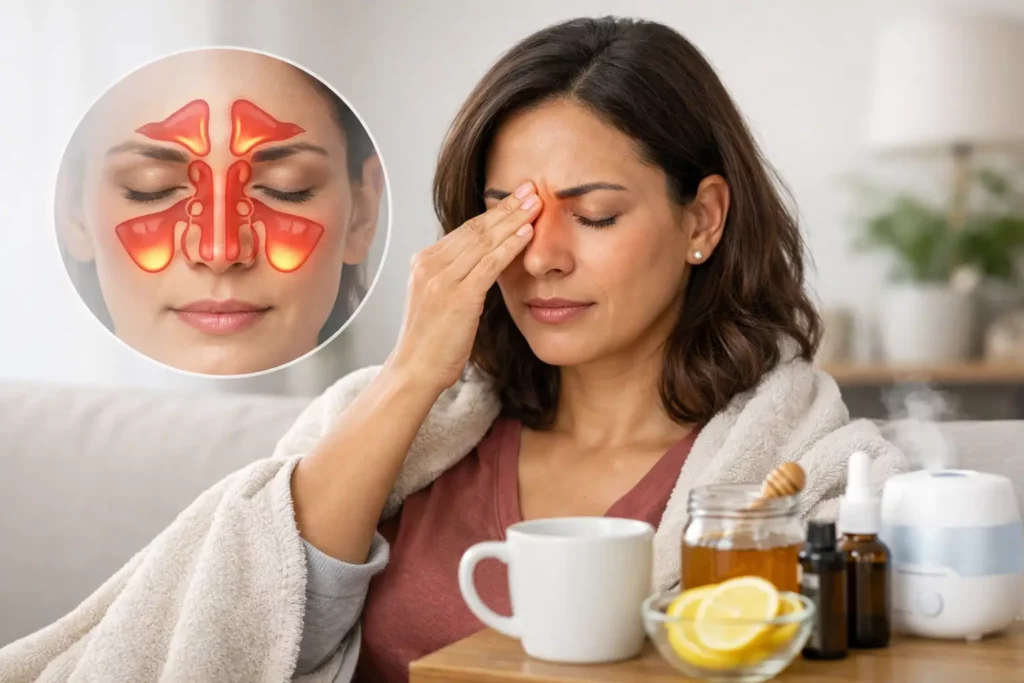
A blocked nose can make a simple cold feel disproportionately draining. Sleep becomes lighter, food tastes less appealing and pressure around the cheeks, eyes or forehead can be uncomfortable. The best home care for blocked sinuses is usually not one dramatic remedy, but a few sensible measures used safely while you watch how your symptoms develop.
Sinus symptoms often follow a cold because the lining of the nose and sinuses becomes swollen, making it harder for mucus to clear. Allergies, irritants and structural nasal problems can also contribute. Facial pain or headache is not always caused by the sinuses, so it is worth avoiding assumptions if symptoms feel unusual or severe.
Start with comfort, fluids and rest
There is no need to force large amounts of water, but regular drinks can prevent dehydration when you have a cold or fever. Warm drinks may feel soothing for a sore throat and stuffy nose. Rest also matters: trying to maintain a full schedule when you are run down can make symptoms feel harder to manage.
Keep the room comfortably cool and avoid cigarette smoke, vaping and other airborne irritants, which can aggravate nasal symptoms. If dry air is a problem, a clean humidifier may make the air feel more comfortable. It should be cleaned and dried according to its instructions, as poorly maintained devices can harbour mould or bacteria.
Sleeping with your head slightly raised on an extra pillow may reduce the feeling of nasal blockage for some people. This is a comfort measure rather than a treatment, but better sleep can make a real difference when you are unwell.
Saline can be a useful part of home care
Saline sprays or rinses may help moisten the nasal passages and wash away thick mucus, crusting, allergens and irritants. For many adults, they are a practical first option for congestion associated with a cold or allergies.
A ready-made saline spray is straightforward to use. If you choose a larger-volume rinse device, follow the manufacturer’s directions carefully. Use sterile, distilled water, or water that has been boiled and then allowed to cool – not water straight from the tap. Clean and air-dry the device after use.
Saline does not suit every situation equally. Stop and seek advice if rinsing causes significant pain, repeated nosebleeds, ear discomfort or worsening symptoms. People who have recently had nasal or sinus surgery should ask their clinician which method is appropriate before using a rinse.
Pain relief and decongestants: consider the trade-offs
Paracetamol/acetaminophen or ibuprofen may help with pain, fever or facial discomfort for people who can take them. Check the label and avoid doubling up with cold and flu products that contain the same ingredients. Ibuprofen is not suitable for everyone, including some people with stomach ulcers, kidney disease, certain heart conditions or asthma that is affected by anti-inflammatory medicines. A pharmacist can help you choose safely.
Decongestant nasal sprays can provide short-term relief from a blocked nose for some adults. The important limitation is duration: using these sprays for longer than stated on the label, often no more than a few days, can lead to rebound congestion and make blockage harder to settle.
Decongestant tablets and powders also have limitations. They may not be suitable if you have high blood pressure, heart disease, glaucoma, an overactive thyroid, prostate problems, or if you take certain medicines. Ask a pharmacist or qualified healthcare professional before using them if you are pregnant, breastfeeding, managing a long-term condition or unsure about interactions.
Be cautious with steam and strongly scented remedies
A warm shower or sitting in a steamy bathroom may temporarily feel comforting. However, there is limited evidence that steam inhalation meaningfully treats sinus symptoms, and bowls of hot water can cause serious scalds. Do not lean over a bowl of boiling water or use steam around children.
Essential oils, menthol products and herbal preparations are sometimes marketed for congestion, but a strong smell or cooling sensation is not the same as improved sinus drainage. Essential oils should not be put inside the nose, and they can irritate the skin or airways in some people. If you use any scented product, stop if it causes burning, wheeze, rash or worsening congestion.
The best home care for blocked sinuses also includes observation
Most cold-related nasal and sinus symptoms improve gradually without antibiotics. A viral infection can cause coloured or thicker mucus, and this alone does not show that antibiotics are needed. What matters more is the overall pattern: are you beginning to improve, staying the same, or becoming worse?
It can help to make a brief note of when symptoms started, whether you have a fever, and what seems to trigger or relieve them. This is useful if you need advice from a pharmacist, doctor or qualified healthcare professional. It also helps distinguish a short-lived cold from recurrent symptoms that deserve a fuller assessment.
Consider seeking routine medical advice if symptoms last around 10 days without improvement, worsen after initially getting better, keep returning, or interfere substantially with daily life. A clinician can consider other possibilities, including allergies, migraine, dental problems or a condition affecting the nose itself.
Know when to seek urgent help
Seek urgent medical advice for swelling or redness around an eye, eye pain, changes in vision, severe or rapidly worsening headache, confusion, a stiff neck, marked drowsiness, or a very high fever with severe illness. Urgent assessment is also appropriate if you have a weakened immune system and develop significant sinus symptoms.
Get advice promptly for one-sided facial swelling, severe tooth or facial pain, persistent bloody nasal discharge, or symptoms following a significant head injury. These signs do not necessarily mean something serious is happening, but they should not be managed with home care alone.
A measured approach usually works best
If symptoms are mild and improving, focus on the basics: saline used correctly, rest, regular fluids, avoiding irritants and appropriate pain relief if needed. Add a short-term decongestant only if it is suitable for you and you can follow the product label.
Avoid trying several cold remedies at once without checking their ingredients. More treatment is not always better, particularly where decongestants and pain medicines are concerned. A pharmacist is a useful source of advice when you want help comparing options or checking whether a medicine fits your health needs.
This content is for general information only and does not replace advice from a qualified healthcare professional. Always read and follow the product label, package leaflet or instructions for use. Seek medical advice if symptoms are severe, persistent, worsening, recurrent or concerning.
References
NHS. Sinusitis (sinus infection): symptoms, self-care and when to seek help.
NICE Clinical Knowledge Summaries. Sinusitis (acute): antimicrobial prescribing and management principles.
UK Health Security Agency and NHS guidance on safe use of nasal rinses and cold medicines.
A blocked sinus feeling is unpleasant, but it is also a reason to slow down and pay attention to the pattern of your symptoms. Safe home care can support comfort while your body recovers, and timely professional advice is there when the pattern does not feel right.