


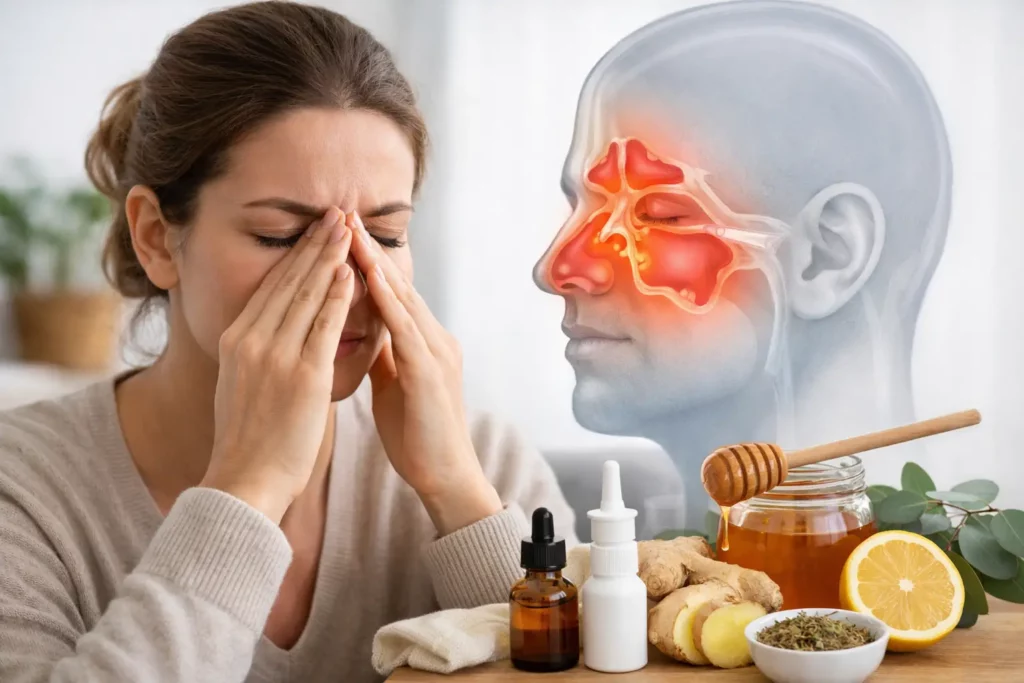
That heavy, boxed-in feeling across your cheeks or forehead can make a simple cold feel much worse. When people search for the best natural sinus treatment, they are usually looking for something practical, gentle and sensible that may ease pressure, congestion and thick mucus without overcomplicating things. The challenge is that “natural” does not always mean proven, and what helps one person may do very little for another.
What is the best natural sinus treatment really trying to do?
Most natural approaches aim to support drainage, keep the inside of the nose moist and make mucus easier to clear. That matters because sinus symptoms often build up when the nose and sinus passages are irritated or blocked, such as during or after a cold, with allergies, or alongside other upper respiratory symptoms.
A natural option is usually best seen as supportive self-care rather than a cure. If your symptoms are mild and short-lived, that may be enough. If they are severe, worsening, recurrent or not clearly related to a simple cold, it is wiser to speak to a doctor or qualified healthcare professional rather than keep trying home remedies.
Best natural sinus treatment options with the strongest practical value
For most adults, the most useful place to start is saline. Saline nasal sprays or rinses may help wash away excess mucus, crusting and irritants while adding moisture to the nasal lining. They are widely used, straightforward and generally considered a reasonable first self-care step for congestion and post-cold sinus discomfort.
The main trade-off is that saline is supportive, not dramatic. Some people feel clear benefit, while others find it too mild, especially when facial pressure is prominent. Technique also matters. If you are using a rinse system rather than a simple spray, it is important to follow the instructions carefully and use water prepared exactly as recommended by the product manufacturer.
Steam inhalation is another common choice, although expectations should stay realistic. Warm steam may temporarily ease the feeling of nasal blockage for some people, mainly by loosening secretions and making the nose feel less dry. It does not suit everyone, and the benefit is often short term. There is also a real risk of burns from hot water, particularly if bowls or towels are used carelessly. A warm shower or breathing in gentle steam from a safely run bathroom is usually more sensible than leaning over very hot water.
Hydration can help too, though not in a magical way. Drinking enough fluid supports general recovery when you are unwell and may help keep mucus from becoming overly thick. There is no need to force large amounts of water, but being mildly dehydrated can make you feel worse overall.
Rest and sleep are often underestimated. Sinus discomfort tends to feel more intense when you are run down. Sleeping with your head slightly raised may help some people feel less blocked overnight, although it will not solve the underlying cause.
Warm compresses are simple but worth mentioning. A clean warm flannel placed over the face may ease the sensation of pressure around the nose, eyes and cheeks. This is mainly a comfort measure, but comfort matters when symptoms are affecting sleep or concentration.
The best natural sinus treatment depends on the cause
This is the part many articles skip. Sinus symptoms are not all the same, and the best natural sinus treatment depends a lot on what is driving them.
If symptoms began with a cold and have only been present for a few days, supportive care such as saline, rest, fluids and gentle steam may be considered. If allergy is a likely factor, reducing exposure to the trigger may matter as much as any home remedy. If your symptoms keep coming back on one side, are accompanied by dental pain, or do not improve in the usual timeframe, a different explanation may need to be explored.
Facial pain is also not always sinus-related. Headache, migraine, dental problems and other causes can feel similar. That is one reason balanced self-care is better than self-diagnosis.
Natural does not automatically mean low risk
It is understandable to assume that a natural remedy will be gentler than a medicine, but that is not always true. Some approaches have little evidence behind them, and some can irritate the nose or trigger other problems.
Essential oils are a good example. Strong smells such as menthol or eucalyptus may create a temporary sensation of opening the nose, but they do not necessarily improve sinus drainage. More importantly, essential oils should not be placed inside the nose. They can irritate delicate tissue, and concentrated products are not suitable for everyone.
Herbal supplements also deserve caution. Some may interact with medicines, and quality can vary. If you take regular medication, are pregnant, have a long-term condition, or are considering a supplement for persistent sinus symptoms, speak to a pharmacist, doctor or another qualified healthcare professional first.
Where sinus-focused products may fit
Some adults want an option beyond basic saline but still prefer a non-antibiotic, non-prescription self-care approach. In that context, a sinus-focused nasal product may be considered if it is authorised for the relevant market and used strictly according to its approved product information.
For example, Nasodren® is a sinus-focused nasal spray product intended for use in line with its authorised label, package leaflet or instructions for use. Whether it is appropriate depends on the person, the market and the nature of the symptoms. It should not be viewed as a substitute for medical assessment where that is needed, and no sinus product should be assumed suitable for everyone.
Before choosing any product marketed for sinus symptoms, read and follow the product label, package leaflet or instructions for use. If you are unsure whether a product is appropriate for your symptoms or health history, ask a pharmacist or doctor.
When self-care is reasonable, and when it is not
Short-lived congestion and sinus pressure linked to a recent cold often improve with time and sensible home care. That is usually the setting in which natural measures are most reasonable. If symptoms are mild, you may decide to monitor them for several days while focusing on hydration, rest and a suitable nasal care routine.
That said, there are times when waiting it out is not the best plan. Speak to a doctor or qualified healthcare professional if symptoms are severe, if pain or swelling around the eyes develops, if you have a high temperature that does not settle, if symptoms are getting worse rather than better, or if they persist beyond what feels like a typical cold. Recurrent episodes also deserve proper assessment.
It is also worth seeking advice if you are relying on repeated short-term fixes but never feel fully better. Persistent congestion may reflect allergy, structural nasal issues, medication-related causes or something else that needs a clearer diagnosis.
A practical way to choose the best natural sinus treatment
If your symptoms are mild and recent, start with the lowest-risk options that have a sensible rationale. Saline is usually the clearest example. Add rest, normal fluid intake and a warm compress if they make you more comfortable. You can then judge whether that combination is enough over the next few days.
If your main issue is dryness or crusting, moisture-focused care may help most. If the dominant symptom is pressure after a cold, comfort measures and time may matter as much as anything else. If thick mucus and blocked nasal passages are ongoing, consider whether your technique, environment or possible triggers are part of the problem.
The aim is not to find one perfect remedy. It is to choose an approach that is proportionate to your symptoms, supported by common clinical practice, and unlikely to cause extra irritation.
A note on pain relief and expectations
Natural care does not mean you must avoid all conventional symptom relief. If facial discomfort or headache is significant, some adults may consider paracetamol, used as directed, unless a healthcare professional has advised otherwise. That is not a failure of natural care. It is simply symptom management.
The bigger point is that realistic expectations usually lead to better decisions. Natural measures may help reduce discomfort, improve moisture and support mucus clearance, but they may not dramatically change how quickly the underlying illness resolves.
This content is for general information only and does not replace advice from a qualified healthcare professional. Always read and follow the product label, package leaflet or instructions for use. Seek medical advice if symptoms are severe, persistent, worsening, recurrent or concerning.
If you are looking for the best natural sinus treatment, the most reliable answer is often the least flashy one: careful symptom monitoring, low-risk supportive care and knowing when home treatment has reached its limit.