


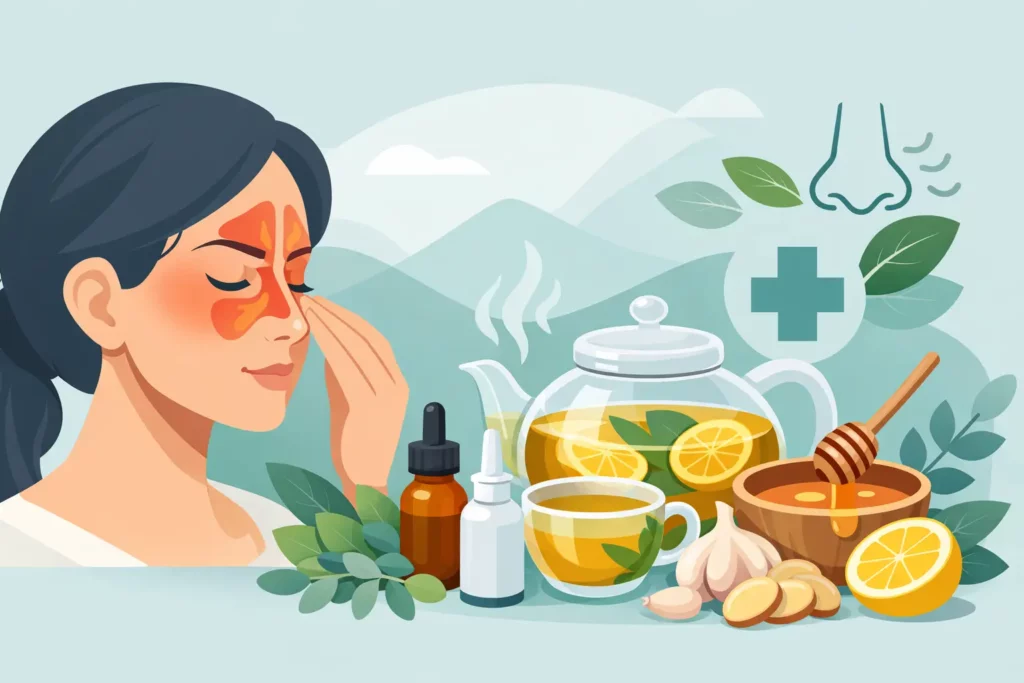
If your nose has felt blocked for weeks, your face aches when you bend forward, and every cold seems to settle in your sinuses, you are not dealing with a passing nuisance. Chronic sinusitis can wear you down day after day. When people search for the best natural treatment for chronic sinusitis, they are usually looking for something simple but credible – relief that supports drainage, reduces inflammation and helps normal breathing return.
What chronic sinusitis actually needs from treatment
Chronic sinusitis is not just about feeling stuffy. The real problem is what happens inside the sinuses when inflammation persists. The lining becomes swollen, mucus cannot drain properly, pressure builds, and the nose and sinus passages stop functioning as they should. That is why symptoms often include facial pain or pressure, thick mucus, post-nasal drip, reduced sense of smell, headaches and disturbed sleep.
A useful treatment needs to do more than temporarily open the nose. It should help address the conditions that keep symptoms going: trapped mucus, poor drainage and ongoing inflammation. This is where many natural remedies fall short. Some may feel soothing for a short time, but they do not always help restore proper sinus drainage.
Best natural treatment for chronic sinusitis: what works best?
The best natural treatment for chronic sinusitis is the one that supports the sinuses in doing what they are meant to do naturally – clear mucus, reduce blockage and restore airflow. In practice, that usually means focusing on drainage rather than simply masking symptoms.
For many adults, saline rinses are the most familiar natural option. They can help wash away irritants, thin mucus and keep the nasal passages moist. This can be useful, especially when dryness, allergens or thick secretions are making symptoms worse. The limitation is that saline is mainly supportive. It can help manage symptoms, but for persistent sinus congestion it may not be enough on its own.
Steam inhalation is another common choice. Warm vapour may briefly ease the feeling of congestion and can make mucus seem looser. Some people find it comforting, particularly in colder months. But the effect is often short-lived, and steam does not directly resolve the inflammatory cycle that contributes to chronic sinusitis.
Hydration also matters. Drinking enough fluids can help keep mucus from becoming excessively thick. Again, this is sensible support, not usually a stand-alone answer for long-term sinus problems.
When symptoms are recurring or established, a more targeted natural treatment may be more appropriate. A sinus-specific natural nasal spray designed to stimulate mucus drainage can offer a different level of support. This matters because drainage is central to relief. If mucus remains trapped in swollen sinus cavities, pressure, pain and congestion often continue.
A natural cyclamen extract nasal spray is one example of a treatment developed with this mechanism in mind. Rather than acting like a generic decongestant, it is designed to promote sinus secretion and drainage, helping to clear accumulated mucus and support a return towards normal nasal function. For adults who want a natural option with clinical backing, that makes it a stronger candidate than general home remedies alone.
Why drainage matters more than temporary decongestion
There is an important distinction between feeling more open and actually helping the sinuses recover. Many people with chronic symptoms have already tried menthol products, hot showers, humidifiers or over-the-counter sprays that make breathing feel easier for a while. The problem is that temporary relief does not always mean the underlying blockage is improving.
Chronic sinusitis tends to persist when mucus sits in the sinuses and the tissue remains inflamed. Effective care should help break that pattern. Supporting the natural drainage process can reduce pressure and help the sinuses clear themselves more effectively. That is why a treatment aimed at mucus evacuation can be more useful than one that only gives a brief sensation of airflow.
This is also where evidence matters. Natural treatment does not have to mean vague or purely traditional. A better standard is natural and clinically evaluated. Patients often want the reassurance that what they are using is not only plant-based, but also studied and intended specifically for sinusitis.
Natural remedies that can help, but have limits
Some home approaches can still play a worthwhile role. Saline irrigation can be a good daily support measure, especially if your symptoms are aggravated by dust, pollen or thick mucus. Adequate rest and hydration can also help your body cope with prolonged inflammation.
However, essential oils, aggressive steaming and improvised home treatments should be approached carefully. They may irritate the nose, trigger sensitivity or create a false sense of treatment while symptoms continue underneath. Chronic sinusitis often needs a more structured approach than general wellness advice.
This is the trade-off many people face. Gentle home care can be comforting, but comfort is not always the same as progress. If you have had symptoms for many weeks or they keep returning, it makes sense to choose a treatment designed for sinus drainage and symptom relief rather than relying only on broad natural remedies.
How to choose the best natural treatment for chronic sinusitis
Start with the question that matters most: what is your main problem right now? If your symptoms are mild and occasional, supportive measures such as saline and hydration may be enough. If you have persistent blockage, facial pressure, heavy mucus or repeated flare-ups, you may need something more focused.
Look for four things. First, the treatment should be sinus-specific rather than a generic cold product. Second, it should support mucus drainage, not just provide a cooling sensation. Third, it should have a clear treatment regimen that is easy to follow. Fourth, it should be backed by clinical evidence or specialist use, especially if you are trying to avoid repeated cycles of ineffective self-care.
Convenience matters as well. Adults managing work, family and recurrent symptoms are more likely to stick with a once-daily treatment than a complicated routine repeated throughout the day. Simplicity supports consistency, and consistency often makes the difference in chronic conditions.
In that context, a natural cyclamen extract spray such as Nasodren may appeal to people who want a specialist sinus treatment rather than a general nasal product. Its role is not to add fragrance or temporary freshness, but to help stimulate drainage and support recovery of normal sinus function over a defined treatment period.
When natural treatment is appropriate – and when to get medical advice
Natural treatment can be a sensible first step or part of a wider management plan, but it is not the right answer for every case. If you have severe facial swelling, high fever, worsening pain, visual changes, recurrent nosebleeds or symptoms lasting despite repeated treatment attempts, you should seek medical advice promptly. The same applies if you suspect nasal polyps, structural blockage or significant allergy-related inflammation.
Chronic sinusitis is also not identical in every person. Some cases are driven more by infection, others by allergy, irritated nasal tissue or anatomical factors. That is why there is no single remedy that suits absolutely everyone. The best choice depends on symptom pattern, severity and how long the problem has been present.
Still, for adults who want to avoid overly complicated pathways, the most practical natural option is usually one that is both evidence-based and sinus-focused. That gives you a better chance of real relief than relying on scattered home remedies with no clear treatment goal.
A practical way to think about relief
If you have been living with chronic sinusitis, it is understandable to want something natural but also trustworthy. The strongest natural options are not necessarily the most fashionable ones. They are the ones that support drainage, reduce the burden of trapped mucus and help the nose and sinuses return to normal function.
That is often the difference between short-term comfort and meaningful improvement. When a treatment is designed around the actual mechanics of sinusitis, it does more than make you feel looked after for an hour or two. It helps you move towards clearer breathing, less pressure and a more manageable day.
If your symptoms keep coming back, choose a natural treatment that is focused, clinically credible and built for sinus relief rather than general congestion. Your sinuses usually tell you when they need more than a quick fix.