


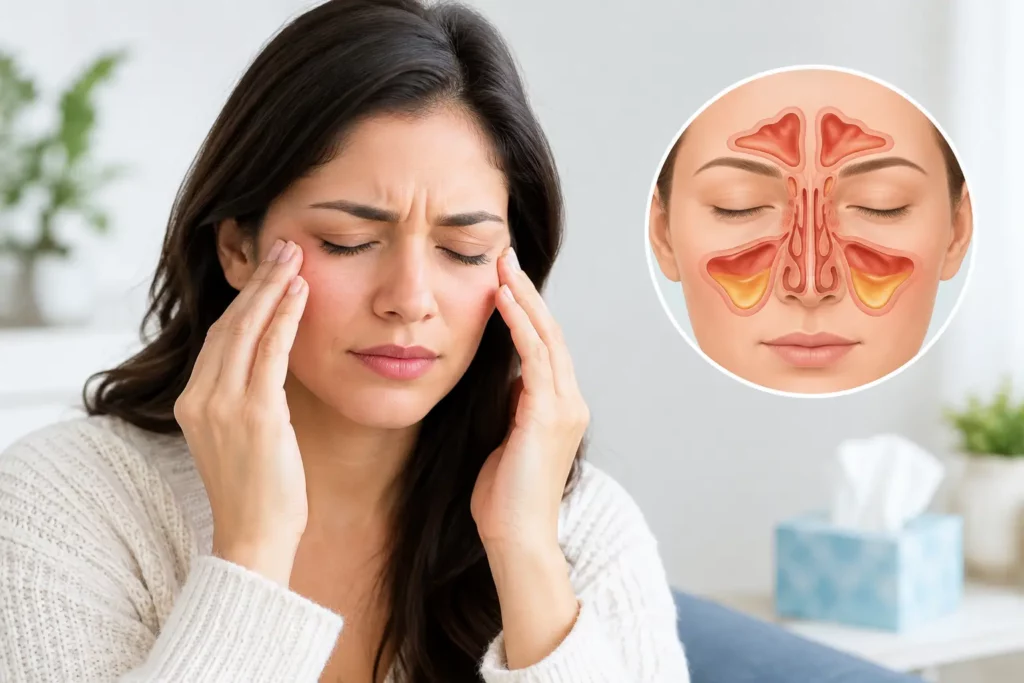
A blocked nose can make the area around your cheeks, eyes or forehead feel full, heavy or sore. So, can rhinitis cause facial pressure? It can contribute to that sensation, particularly when swelling inside the nose affects airflow and mucus clearance. But facial pressure has several possible causes, and it should not automatically be assumed to be a sinus problem.
Rhinitis means inflammation of the lining of the nose. It may be triggered by allergies, a cold, irritants such as smoke, changes in temperature, or other non-allergic causes. Understanding the pattern of your symptoms can help you choose sensible self-care and recognise when it is time to speak to a doctor or qualified healthcare professional.
Can rhinitis cause facial pressure directly?
Rhinitis commonly causes a blocked or runny nose, sneezing, itching and post-nasal drip. The nasal lining becomes swollen and produces more mucus. For some people, this congestion creates pressure or fullness around the nose and face, especially during a cold or allergy flare-up.
The nose and sinuses are closely connected. Small openings allow the sinuses to ventilate and drain into the nose. When the nasal lining is swollen, those openings may not function as freely as usual. This can create a feeling of stuffiness, pressure or discomfort. If a viral upper respiratory infection is involved, symptoms may overlap with acute rhinosinusitis, often called sinusitis.
However, pressure alone does not confirm sinusitis. Headache disorders, including migraine, can cause pain around the forehead, eyes or cheeks and may also bring nasal symptoms. Dental problems, jaw tension and some eye conditions can also cause facial discomfort. This is why the whole symptom picture matters more than the location of pain alone.
Rhinitis, sinusitis and facial pain: spotting the differences
Allergic rhinitis is more likely when sneezing, an itchy nose or eyes, clear watery discharge, and symptoms linked to pollen, pets or dust are prominent. Facial pressure may occur when congestion is substantial, but severe facial pain is less typical.
A cold-related rhinitis often develops with a sore throat, cough, tiredness and a blocked or runny nose. During the first week, mucus may become thicker or change colour. Colour alone does not show that a bacterial infection is present or that antibiotics are needed.[1]
Acute rhinosinusitis may be more likely when nasal blockage or discharge occurs with reduced sense of smell and facial pressure or pain. Most cases follow a viral infection and improve without antibiotics. Symptoms that persist beyond around 10 days without improving, become markedly worse after an initial milder phase, or are severe deserve professional advice.[1][2]
The character of the discomfort can offer useful clues. Pressure that worsens when bending forward may occur with nasal and sinus congestion, but it is not specific to sinusitis. Repeated one-sided pain, throbbing headaches, nausea, sensitivity to light, or pain that disrupts usual activities could point towards another cause and should be assessed rather than repeatedly self-treated as sinus pressure.
What may help when congestion and pressure are mild
When symptoms are mild and you otherwise feel well, the aim is comfort while your nose recovers. Rest, regular fluids and avoiding known triggers can be useful first steps. If pollen is a trigger, reducing exposure where practical, such as keeping windows closed when pollen levels are high, may help some people.
Saline nasal rinses or sprays may help moisten the nose and clear mucus for some adults. Use products as directed and follow hygiene instructions carefully. If preparing a rinse, use water that has been appropriately treated or boiled and cooled according to the device instructions, rather than untreated tap water.
A pharmacist can advise whether an allergy medicine, a steroid nasal spray or a short course of a decongestant is suitable for you. These options are not appropriate for everyone. For example, decongestant nasal sprays can make blockage worse if used for longer than recommended, and some oral decongestants may not be suitable for people with certain health conditions or those taking particular medicines.
For pain or discomfort, paracetamol/acetaminophen or ibuprofen may be considered if suitable for you. Check the product label and speak to a pharmacist or qualified healthcare professional if you are pregnant, have asthma, stomach, kidney, liver or heart problems, take regular medicines, or are unsure which option is appropriate.
Steam inhalation is often suggested for sinus discomfort, but evidence of meaningful benefit is limited and there is a real risk of scalding from hot water. A warm shower may feel soothing, but avoid leaning over bowls of hot water. Essential oils should not be put inside the nose, as they may irritate the nasal lining and can cause harm if used incorrectly.
When facial pressure needs medical advice
Most cold-related nasal symptoms settle gradually. Still, do not wait it out if the symptoms are severe, unusual or getting worse. Seek urgent medical help if facial swelling occurs around an eye, the eye becomes red or painful, vision changes, there is severe headache, confusion, a stiff neck, or you feel very unwell. These symptoms need prompt assessment.
Arrange advice from a doctor or qualified healthcare professional if you have persistent fever, severe one-sided facial or dental pain, recurrent episodes, symptoms lasting longer than expected, or a blocked nose on one side that does not settle. Advice is also sensible if symptoms are affecting sleep, work or daily life, or if you have a weakened immune system or a significant long-term health condition.
Children, pregnant people and those taking regular medicines may need more individual guidance before using over-the-counter treatments. A pharmacist is often a helpful first point of contact for uncomplicated symptoms, while a doctor can assess persistent, recurrent or unclear problems.
A practical way to monitor your symptoms
Rather than focusing only on how much pressure you feel on a given day, look for the overall direction of travel. Are you gradually improving? Is your nose becoming easier to breathe through? Are you sleeping better and needing less pain relief? These are generally more reassuring signs than a single change in mucus colour or a brief spell of discomfort.
It can help to make a short note of when symptoms started, likely triggers, whether they affect one or both sides of the face, medicines tried, and whether there was improvement followed by deterioration. This gives a pharmacist or healthcare professional clearer information if you need advice.
If you choose a sinus-focused nasal product, use it only for its authorised intended purpose and according to its product label, package leaflet or instructions for use. Check with a pharmacist or qualified healthcare professional if you are unsure whether it is suitable for your symptoms or personal circumstances.
The right next step is not always another remedy
Facial pressure alongside rhinitis is often linked to congestion and may settle as the nasal swelling improves. But persistent or severe pain is worth taking seriously, especially when the pattern does not fit a straightforward cold or allergy flare-up. Listening to changes in your symptoms, and seeking advice when something feels unclear, is a practical form of self-care.
This content is for general information only and does not replace advice from a qualified healthcare professional. Always read and follow the product label, package leaflet or instructions for use. Seek medical advice if symptoms are severe, persistent, worsening, recurrent or concerning.