


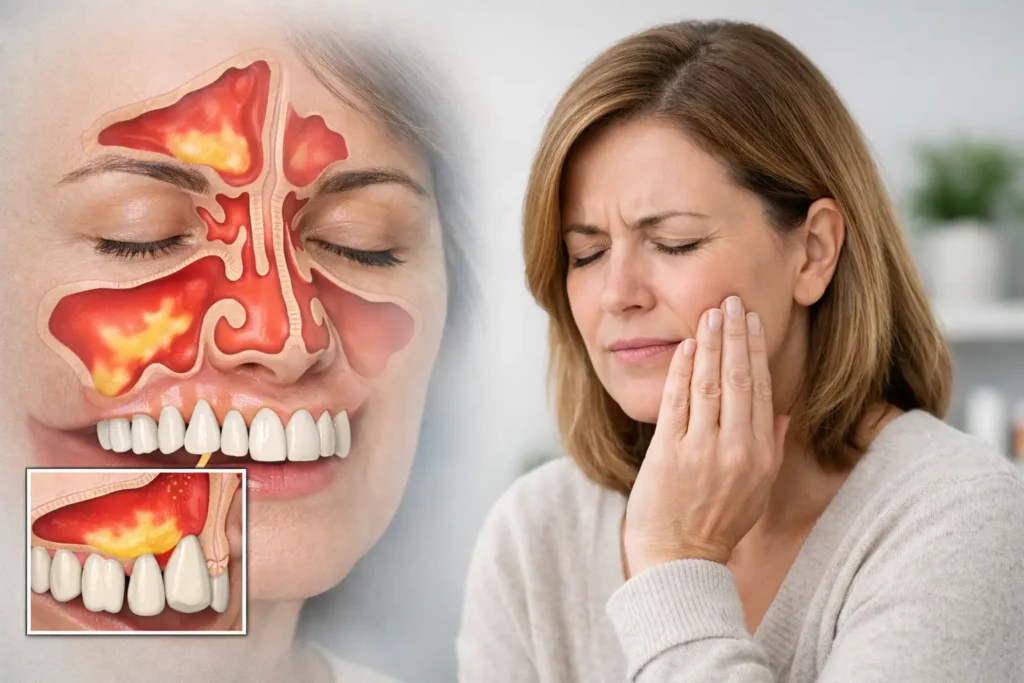
A dull ache in your upper teeth can be confusing, especially when your nose also feels blocked and your face feels heavy. If you are wondering, can sinusitis cause tooth pain, the short answer is yes – it can. In some people, pressure and swelling in the sinuses can create pain that seems to come from the upper back teeth, even when the teeth themselves are not the main problem.
That said, tooth pain is not always caused by sinusitis, and sinus symptoms are not always the whole story. A dental problem, such as decay, gum disease or a cracked tooth, can also cause pain in a very similar area. Knowing the difference can help you choose the right next step and avoid delaying treatment you may need.
Can sinusitis cause tooth pain in the upper teeth?
Yes, sinusitis can cause tooth pain, most often in the upper molars and premolars. These teeth sit close to the maxillary sinuses, which are the air-filled spaces behind your cheeks. When the lining of these sinuses becomes inflamed or blocked, pressure can build up. Because the tooth roots and the sinus floor are anatomically close, that pressure may be felt as aching, tenderness or a sense of fullness in the upper teeth.
This does not mean the teeth are damaged. The pain may be referred pain, which means the source is in one place but you feel it somewhere nearby. People often describe it as a deep, dull ache rather than a sharp pain in one specific tooth.
Sinus-related tooth pain is more likely if you also have nasal congestion, facial pressure, thick nasal discharge, reduced sense of smell or symptoms that followed a cold or upper respiratory infection. Pain that worsens when bending forward can also point towards sinus pressure rather than a tooth problem.
Why sinus pressure can feel like a dental problem
The sinuses and upper teeth share nearby nerve pathways and physical space. That overlap is why the brain can sometimes interpret sinus pressure as dental pain. It is a common reason people first think they need a dentist when the main issue may be in the nose and sinuses.
The reverse can happen too. A problem with an upper tooth can sometimes irritate the sinus area and produce symptoms that seem sinus-related. This is one reason self-diagnosis has limits. Location alone does not always tell you what is causing the pain.
Signs the pain may be linked to sinusitis
Sinus-related tooth pain often affects more than one upper tooth rather than one single tooth. It may come with a blocked nose, pressure around the cheeks or eyes, headache, post-nasal drip or thick mucus. Some people notice the discomfort increases when lying down, walking downstairs or bending over.
If the ache began around the same time as cold symptoms, nasal congestion or facial pressure, sinusitis becomes a more likely explanation. The pain may also improve as the congestion starts to settle.
Signs the pain may be more dental than sinus
Pain from a dental cause is more often localised to one tooth or one side. It may be sharp, throbbing or triggered by hot, cold or sweet foods. Swelling of the gum, pain when biting, a bad taste in the mouth or visible tooth damage may also suggest a dental issue.
If you have tooth pain without any nasal symptoms, or if the pain continues after sinus symptoms have gone, it is sensible to consider a dental cause. A sinus problem and a dental problem can also happen at the same time.
What sinusitis usually feels like
Sinusitis often follows a cold, although allergies and other factors can also play a part. Symptoms can include nasal blockage, facial pressure, thick nasal discharge, reduced sense of smell, headache and a feeling of fullness in the cheeks or forehead. Some people feel tired or generally unwell as well.
Pain is not always severe, and not every blocked nose means sinusitis. Many cases improve with time and supportive self-care. But the pattern matters. Symptoms that are severe, keep worsening, last longer than expected or keep returning deserve medical advice.
How long can sinus-related tooth pain last?
It depends on what is driving the sinus irritation. If it is linked to a short-lived viral infection, the discomfort may ease as the congestion and pressure improve over days to a couple of weeks. If symptoms are lingering, recurrent or linked to another issue such as allergy or structural nasal problems, the pain may continue for longer.
Persistent tooth pain should not be brushed off as sinus trouble indefinitely. Ongoing pain, especially if it is one-sided or focused on one tooth, is worth checking properly.
What you can do at home
If your symptoms are mild and you think sinus pressure may be contributing, simple self-care may help you feel more comfortable while you monitor the pattern.
Keeping well hydrated can help if secretions feel thick. Rest may also be useful when symptoms are linked to a cold. Some people find that a warm compress over the cheeks feels soothing.
For pain or fever, paracetamol or ibuprofen may be considered if they are suitable for you. Always follow the pack instructions and check with a pharmacist or doctor if you are unsure, particularly if you have other medical conditions, take regular medicines, are pregnant or have been advised to avoid anti-inflammatory medicines.
Saline nasal rinses or sprays may help some people by supporting nasal cleansing and comfort. If you are considering a sinus-focused product, use it only according to the approved product information for your market and read and follow the product label, package leaflet or instructions for use. Nasodren® may be considered where appropriate, but product suitability, intended use and authorised claims must always be checked for the relevant market before publication or use.
Home care has limits. If pain is severe, very localised, worsening or accompanied by swelling, fever or a bad taste in the mouth, do not assume it is only sinus-related.
When to see a dentist or doctor
The tricky part with the question can sinusitis cause tooth pain is that the right professional depends on the likely cause. Sometimes that is obvious. Often it is not.
A dentist is a sensible first step if the pain seems focused on one tooth, if chewing makes it worse, if the gum looks swollen, or if you have known dental problems. A doctor or qualified healthcare professional may be the better starting point if the tooth pain comes with clear sinus symptoms such as congestion, facial pressure and mucus, especially after a cold.
Seek prompt medical advice if you have swelling around the eyes, a high temperature that does not settle, severe facial pain, symptoms lasting more than about 10 days without improvement, symptoms that improve then worsen again, or repeated episodes. You should also seek advice if you are immunocompromised, pregnant, have significant underlying health conditions, or are not sure what is causing the pain.
Urgent assessment is important if there is facial swelling, difficulty opening the mouth, trouble breathing, confusion, severe headache, visual symptoms or signs of a spreading infection. These symptoms are less common, but they should not be ignored.
Why getting the cause right matters
Tooth pain from sinus pressure usually settles when the underlying sinus problem improves. A dental infection, however, may need specific treatment and can worsen if left untreated. On the other hand, repeated antibiotics are not the answer for every episode of sinus discomfort. The best approach depends on the cause, severity and duration of symptoms.
That is why a balanced, symptom-led approach is helpful. If the pattern points towards sinusitis, supportive care and monitoring may be reasonable at first. If the pattern points towards a tooth problem, dental assessment is important. If it is unclear, a pharmacist, dentist, doctor or another qualified healthcare professional can help you work out the next step.
This content is for general information only and does not replace advice from a qualified healthcare professional. Always read and follow the product label, package leaflet or instructions for use. Seek medical advice if symptoms are severe, persistent, worsening, recurrent or concerning.
If your upper teeth ache at the same time as your cheeks feel full and your nose is blocked, sinus pressure may well be part of the picture – but it is worth paying attention to the details, because the right treatment starts with the right cause.