


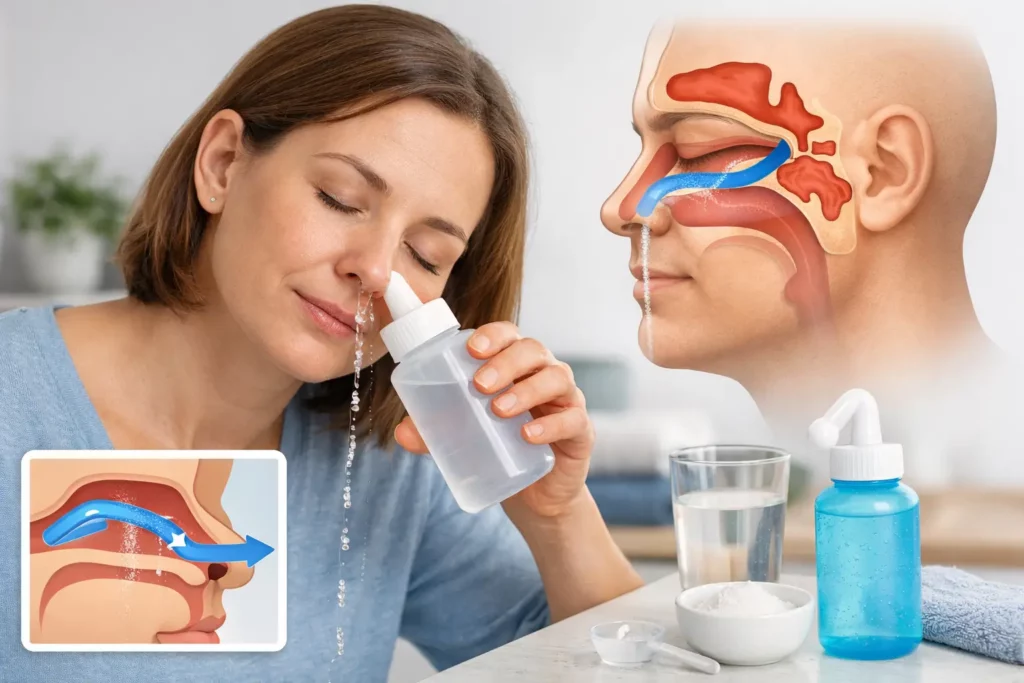
When your nose feels blocked after a cold, thick mucus and swelling inside the nasal passages can make breathing, sleeping and concentrating uncomfortable. A guide to using saline nasal rinses can help you decide whether this simple self-care option is suitable, and how to use it without introducing avoidable risks.
Saline rinses are not a cure for sinusitis or every cause of nasal symptoms. They may, however, help wash away mucus, crusting, allergens and irritants from the nasal passages. For some adults, that can make congestion feel more manageable alongside rest, fluids and appropriate advice from a pharmacist, doctor or qualified healthcare professional.
What a saline nasal rinse does
A saline nasal rinse uses salt water to gently flush one side of the nose, allowing the liquid and loosened mucus to flow out through the other nostril or the mouth. It is different from a saline spray, which moistens the nose but usually uses a much smaller volume of liquid.
Rinsing may be considered when you have temporary nasal congestion during or after a cold, exposure to airborne irritants or allergies, or a feeling of retained mucus. The evidence base suggests nasal saline irrigation can improve some nasal and sinus symptoms for some people, although the size of benefit varies and studies use different solutions and methods. It should be viewed as supportive self-care, not a replacement for assessment where symptoms may need medical attention.
A rinse should feel mildly salty, not sharply painful. Plain tap water is not suitable for rinsing the nose unless it has been appropriately treated first. This is one of the most important safety points.
Choose the right water and solution
Use a ready-made saline sachet with the volume of water stated in its instructions, or a commercially prepared sterile saline solution designed for nasal use. Sachets can help provide an appropriate salt balance and reduce the sting that can happen when water is too salty or not salty enough.
For home preparation, use water that is sterile, distilled, or previously boiled and then cooled. Boiling does not mean using hot water: the water must be comfortably lukewarm before it goes anywhere near the nose. Follow the device and saline product instructions carefully, as directions can differ.
Do not use untreated tap water, even if it is safe to drink. Water can contain very small numbers of organisms that are harmless when swallowed but not necessarily suitable for use in the nasal passages. Do not use water from a bathroom tap, or water that has been sitting in a kettle or container for an extended period.
Avoid adding essential oils, herbal preparations, hydrogen peroxide or other ingredients to a nasal rinse. These can irritate delicate nasal tissue and have not been established as safe for this use. Salt intended for cooking is also not an automatic substitute for a prepared nasal-rinse product, because additives and the amount used matter.
How to use a saline nasal rinse
The exact technique depends on whether you use a squeeze bottle, gravity-fed pot or another purpose-designed device. Read and follow the product label, package leaflet or instructions for use before starting.
In general, begin over a clean sink. Wash your hands, prepare the saline solution as directed and check that it is lukewarm. Lean forward slightly, turn your head a little to one side and keep your mouth open so you can breathe comfortably. Place the device at the upper nostril, creating a gentle seal without forcing it.
Allow the solution to pass through slowly. With a squeeze bottle, use only gentle, steady pressure. Forcing fluid through the nose can be uncomfortable and may cause a feeling of pressure in the ears. Let the solution drain from the lower nostril, then repeat on the other side if the instructions advise this.
When you have finished, bend forward and gently blow your nose. Do not blow hard. A little residual fluid may drip out when you move your head afterwards, so it can help to wait a few minutes before lying down or going out.
If the rinse causes marked burning, pain, nosebleeds, ear discomfort or worsening symptoms, stop using it and speak to a pharmacist, doctor or qualified healthcare professional. Mild, short-lived stinging can occur, particularly if the solution is too concentrated, too dilute, or too hot or cold. Check your preparation and technique before trying again.
Keep the device clean between uses
Cleaning is as important as choosing the water. A rinse bottle or pot that is left damp can become contaminated, which defeats the purpose of careful nasal hygiene.
After every use, empty any remaining solution. Wash the device according to its instructions, then allow all parts to air-dry fully on a clean surface. Do not share a nasal-rinse device with another person, even within the same household. Replace it at the interval recommended by its manufacturer, or sooner if it becomes damaged, cloudy or difficult to clean.
Some devices are dishwasher-safe and others are not. Follow the specific cleaning instructions rather than assuming that all bottles and pots can be treated in the same way. If you are unsure how to clean your device safely, ask a pharmacist.
How often should you rinse?
There is no single schedule that suits everyone. Some people use saline rinsing occasionally when congestion is troublesome; others may use it more regularly for a limited period under the advice of a healthcare professional. More frequent rinsing is not necessarily better, particularly if it leaves your nose dry, sore or irritated.
Use the frequency stated in the instructions for your chosen product or device. If you feel you need to rinse repeatedly through the day, or you are relying on it for persistent symptoms, it is sensible to seek advice about the cause of the problem and whether a different approach is needed.
Saline rinses can be part of a wider plan. Rest, staying hydrated and using paracetamol/acetaminophen for pain or fever when suitable for you may help with cold-related discomfort. A pharmacist can advise on over-the-counter options and whether they are appropriate with your health conditions or other medicines. Decongestant nasal sprays, for example, may not suit everyone and can cause rebound congestion if used for longer than directed.
When a rinse is not enough
Nasal blockage, facial pressure and headache have several possible causes. They do not always mean sinusitis, and self-care should not delay medical assessment when symptoms are significant or unclear.
Speak to a doctor or qualified healthcare professional if symptoms are severe, worsening after initially improving, lasting longer than expected, or returning frequently. Seek prompt medical advice for swelling or redness around the eyes, changes to vision, a severe headache, confusion, a stiff neck, high fever, shortness of breath, or if you feel very unwell.
You should also ask for individual advice before using a nasal rinse if you have recently had nasal, sinus or ear surgery; have frequent nosebleeds; have a completely blocked nostril; or have an ear condition that makes rinsing uncomfortable. If you are pregnant, breastfeeding, managing a long-term condition or taking regular medicines, a pharmacist or qualified healthcare professional can help you choose suitable self-care.
A practical habit, used with care
For many adults, a properly prepared saline rinse can be a straightforward way to support nasal comfort when mucus and congestion are getting in the way. The essentials are simple: use appropriately treated water, follow the device instructions, rinse gently and clean the equipment every time. If your symptoms do not follow a reassuring course, getting advice is a sensible next step, not a failure of self-care.
This content is for general information only and does not replace advice from a qualified healthcare professional. Always read and follow the product label, package leaflet or instructions for use. Seek medical advice if symptoms are severe, persistent, worsening, recurrent or concerning.
References
NHS guidance on sinusitis and nasal saline irrigation; National Institute for Health and Care Excellence guidance on acute sinusitis; US Food and Drug Administration consumer guidance on safe nasal rinsing water; Cochrane evidence reviews on saline irrigation for nasal and sinus symptoms. These sources should be reviewed against current UK guidance before publication.