


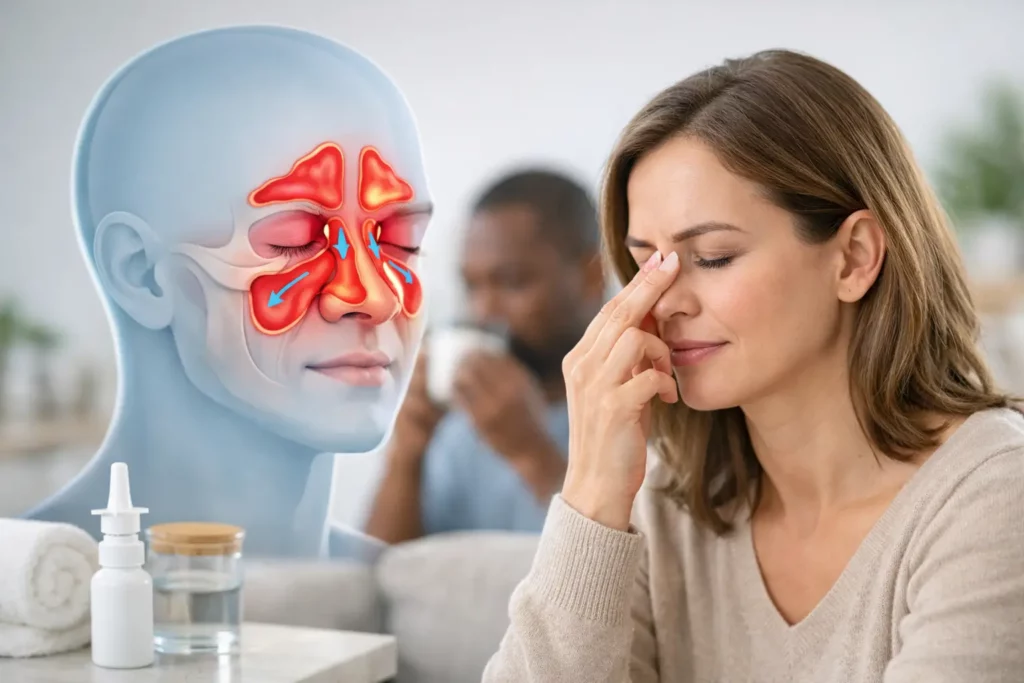
A blocked nose after a cold can be miserable, but sinus symptoms are not always something to forcefully “clear” as quickly as possible. If you are looking for how to clear blocked sinuses safely, the aim is usually to ease congestion, support normal mucus drainage and reduce irritation without doing anything that could make symptoms worse.
For many adults, blocked sinuses happen during or after a cold, with allergies, or alongside irritation in the nose. You may notice facial pressure, thick mucus, a reduced sense of smell, mouth breathing or discomfort when bending forward. In many cases, careful self-care is reasonable at first. But severe pain, swelling, fever, worsening symptoms or symptoms that keep returning deserve medical advice.
What blocked sinuses usually mean
Your sinuses are air-filled spaces around the nose that connect to the nasal passages through small openings. When the lining of the nose and sinuses becomes irritated or swollen, mucus may not move as freely and you can be left with a feeling of pressure or blockage.
That does not always mean a bacterial infection, and it does not always mean you need medicine. Viral upper respiratory infections are a common trigger. Allergies, dry air, smoke, irritants and underlying nasal conditions can also play a part. Because different causes can feel similar, it is sensible to focus on safe symptom relief rather than self-diagnosing.
How to clear blocked sinuses safely at home
The safest place to start is usually gentle, supportive care. This means methods that keep the inside of the nose comfortable and avoid unnecessary irritation.
Saline rinses or sprays
Saline may help loosen mucus and wash away irritants. Some people prefer a ready-to-use saline spray, while others use a rinse device. If you use a rinse, hygiene matters. Follow the device instructions carefully and use water that is sterile, previously boiled and cooled, or otherwise prepared exactly as recommended for nasal irrigation.
A rinse should feel gentle, not forceful. Pressurising the nose too aggressively can be uncomfortable and may irritate already sensitive tissue. If your ears hurt, the fluid does not flow properly, or you feel worse afterwards, stop and speak to a pharmacist, doctor or qualified healthcare professional.
Warm steam and moisture
Warm steam from a shower or a bowl of warm water may help some people feel more comfortable for a short time, especially if dryness is making congestion feel worse. Keep expectations realistic. Steam may soothe, but it is not a proven fix for every cause of sinus blockage.
Be careful to avoid burns. Hot water and steam can injure skin quickly, so do not put your face too close to boiling water and do not use steam with children in a way that could be unsafe.
Fluids and rest
Drinking enough fluid will not instantly unblock your sinuses, but dehydration can make you feel worse overall. Rest also matters, particularly if symptoms are part of a cold or other viral illness. Gentle self-care often works best when paired with time.
Humidified air if your home is dry
If indoor air is dry, especially in winter, a humidifier may make breathing feel more comfortable. The balance matters. Air that is too damp can encourage mould, which may aggravate symptoms in some people. Clean the unit properly and follow the manufacturer’s instructions.
What to avoid when your sinuses are blocked
The safest approach is often as much about what not to do as what to do.
Try not to blow your nose too hard. Repeated forceful blowing can increase pressure and further irritate the nasal lining. Gentle blowing, one nostril at a time, is usually better tolerated.
It is also best not to put undiluted essential oils, balms or home mixtures inside the nose. These can irritate sensitive tissue, and “natural” does not automatically mean suitable or safe. Likewise, avoid using non-sterile water for nasal rinsing.
If you are considering an over-the-counter decongestant spray, take extra care with timing. These sprays may help some adults for short-term use, but using them for too long can lead to rebound congestion and make blockage harder to manage. Read the product label, package leaflet or instructions for use and ask a pharmacist if you are unsure.
Pain relief and symptom control
If blocked sinuses are accompanied by discomfort, simple pain relief may be considered. Paracetamol or ibuprofen may help some adults, provided they are suitable for you. This depends on your age, medical history, other medicines and whether you have conditions such as stomach ulcers, kidney problems, asthma triggered by anti-inflammatory medicines or liver disease.
If you are pregnant, have a long-term health condition, take regular medicines or are not sure what is appropriate, ask a pharmacist, doctor or qualified healthcare professional before taking anything new.
When a sinus-focused product may be considered
Some adults look beyond saline for additional symptom support. A sinus-focused nasal spray may be considered where it is appropriate for the individual and used exactly as directed. If you are looking at a product such as Nasodren®, it is important to rely on the approved product information for your market and not on general claims made elsewhere.
Read and follow the product label, package leaflet or instructions for use. Check who the product is for, how often it should be used, possible side effects, and when it should not be used. A product may help some people manage symptoms, but it is not a substitute for diagnosis or medical care when symptoms are severe, persistent, worsening or unclear.
How long should blocked sinuses last?
That depends on the cause. Congestion linked to a cold often starts to improve within days, though a sense of sinus pressure or post-cold discomfort can linger a little longer. If symptoms are mild and gradually improving, supportive care may be enough.
If symptoms last more than about 10 days without improvement, become worse after initially getting better, or keep coming back, it is sensible to speak to a doctor or qualified healthcare professional. Recurring symptoms can have different causes, including allergies or structural nasal issues, and repeated self-treatment may not address the underlying problem.
When to seek medical advice sooner
Signs you should not ignore
Some symptoms need prompt assessment rather than home care alone. Seek medical advice if you have severe facial pain, significant swelling around the eyes or face, a high fever, confusion, visual symptoms, severe headache unlike your usual symptoms, or symptoms after a facial injury.
You should also seek advice if you have one-sided symptoms that are unusual for you, symptoms in the context of a weakened immune system, or if you are worried that what seems like “sinus” pain may be something else. Headache, tooth pain and facial pressure do not always come from the sinuses.
How to clear blocked sinuses safely if symptoms keep returning
Repeated sinus congestion is frustrating, but the answer is not always stronger self-care. It may be more useful to notice patterns. Do symptoms follow colds, happen during pollen season, worsen around dust, or appear alongside heartburn or exposure to smoke? Those details can help a healthcare professional suggest the next step.
For some people, managing the trigger matters as much as relieving the blockage itself. That might mean reviewing allergy symptoms, checking medicine side effects, or considering whether the issue is really persistent nasal congestion rather than a short-lived sinus problem.
A careful, evidence-aware approach
If you want to know how to clear blocked sinuses safely, start with the least irritating option: gentle saline, hydration, rest, and careful symptom monitoring. Add other measures thoughtfully, not all at once, so you can judge what is helping and what is not.
This content is for general information only and does not replace advice from a qualified healthcare professional. Always read and follow the product label, package leaflet or instructions for use. Seek medical advice if symptoms are severe, persistent, worsening, recurrent or concerning.
A calm, measured approach is usually the most useful one – support your symptoms, give your body time, and ask for help when the pattern does not seem straightforward.
References
NHS. Sinusitis.
NICE Clinical Knowledge Summaries. Sinusitis.
Patient.info. Sinusitis.
ENT UK. Rhinosinusitis information.
UK Health Security Agency and NHS guidance on upper respiratory infections and self-care.
Before publication, this content should be checked against the approved label, package leaflet, instructions for use, claims matrix and applicable market-specific requirements. If these documents are not available, it should be referred for regulatory review.