


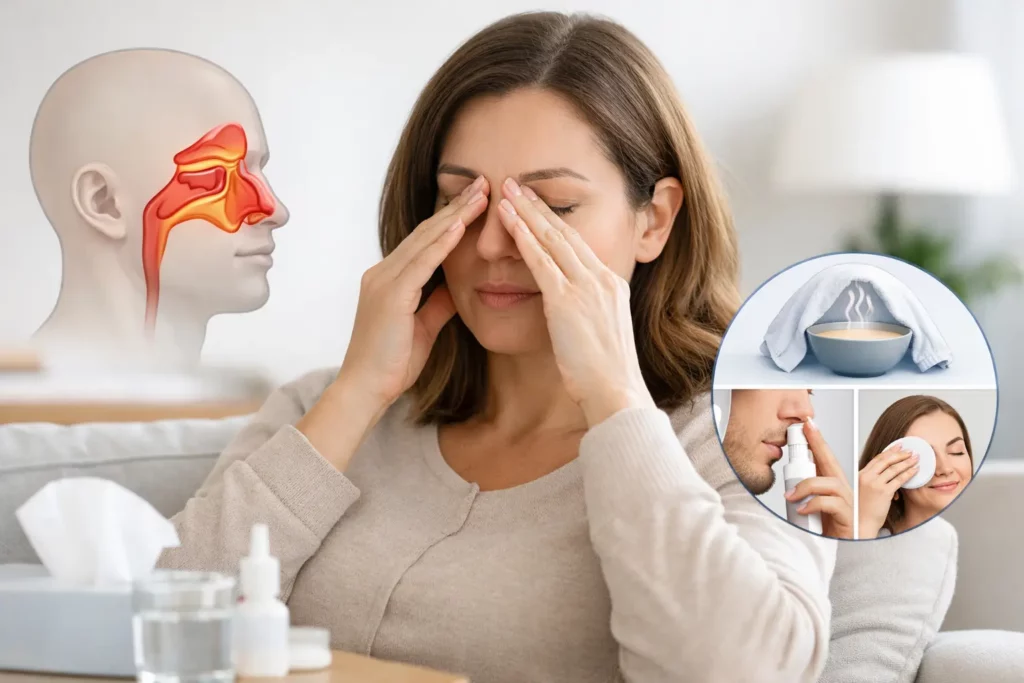
Facial pressure can make a cold feel far more draining than a blocked nose alone. You may notice a heavy feeling around your cheeks, forehead or eyes, sometimes alongside congestion, thicker mucus or reduced smell. If you are wondering how to ease facial pressure, the most useful first step is to consider the whole pattern of symptoms rather than assuming every facial ache is caused by your sinuses.
Pressure is often linked to swelling and congestion in the nose following a cold or other upper respiratory infection. It can also occur with allergies. However, migraine, tension-type headache, dental problems and other conditions can cause pain in similar areas. Safe self-care is often reasonable for mild, short-lived symptoms, but monitoring how you feel matters.
Why facial pressure happens
The sinuses are air-filled spaces in the bones around the nose, cheeks and forehead. They connect to the nasal passages through small openings. During a cold, the lining of the nose and sinuses may become irritated and swollen, while mucus can become harder to clear. This may contribute to congestion and a feeling of pressure or fullness in the face.
Acute sinus symptoms commonly improve on their own over time. The discomfort may feel worse when bending forwards, but this does not on its own confirm that sinusitis is the cause. A headache on one side, nausea, sensitivity to light, or pain that comes in episodes may point towards a different cause and is worth discussing with a qualified healthcare professional.
How to ease facial pressure with simple self-care
For mild symptoms that have started with a cold, focus on comfort, hydration and helping your nose feel less congested. These measures may not remove pressure immediately, and what helps can vary from person to person.
Use saline carefully
A saline nasal spray or rinse may be considered to moisten the nasal passages and help clear mucus. Use a product as directed. If you make up a rinse yourself, follow reliable hygiene guidance: use sterile, distilled or previously boiled and cooled water, and clean the device after use. Do not use plain tap water in a nasal-rinsing device.
Saline products are not suitable for every situation, particularly if you have recently had nasal or sinus surgery or have been given specific instructions by a clinician. Ask a pharmacist or qualified healthcare professional if you are unsure which option is appropriate.
Rest, drink regularly and choose gentle warmth
Rest can be helpful when your body is recovering from an infection. Drinking enough fluid to avoid dehydration may also make you more comfortable, especially if fever, poor appetite or mouth breathing are affecting your usual routine.
A warm, clean flannel held gently over the cheeks or forehead may feel soothing for some people. It is a comfort measure rather than a treatment for the underlying cause. Keep it comfortably warm, not hot, to avoid irritating or burning the skin.
Consider pain relief if it is suitable for you
Paracetamol/acetaminophen or ibuprofen may help with pain or fever for some adults. The right choice depends on your health, other medicines and the product instructions. For example, ibuprofen may not be appropriate for everyone, including people with certain stomach, kidney, heart or asthma conditions, or during pregnancy.
Check the label carefully and do not take more than the recommended dose. Combination cold-and-flu remedies can also contain paracetamol/acetaminophen, so check active ingredients to avoid accidentally doubling up. A pharmacist can help you choose an option that fits your circumstances.
Be cautious with decongestants
Short-term decongestant nasal sprays may provide temporary relief of a blocked nose for some people, but they are not suitable for everyone and should only be used according to the label. Using certain medicated nasal sprays for longer than advised can lead to rebound congestion, where the nose feels increasingly blocked once the medicine is stopped.
Oral decongestants can interact with medicines and may be unsuitable if you have high blood pressure, heart problems, glaucoma, thyroid disease, prostate problems or certain other conditions. Seek advice from a pharmacist before using them if you have a medical condition, are pregnant or breastfeeding, or take regular medicines.
Avoid irritating the nose
Smoke, vaping aerosols and strongly fragranced products can aggravate nasal irritation for some people. Keep the air in your room comfortably cool and avoid placing essential oils or other substances inside your nose. Steam from a hot bowl of water is not a proven treatment for sinus symptoms and carries a real risk of scalding. If a warm shower feels pleasant, keep the temperature safe and treat it as comfort rather than a cure.
What about allergy-related pressure?
If facial pressure tends to occur alongside sneezing, itchy eyes or a clear runny nose, allergy may be contributing. Reducing exposure to a known trigger where practical can help. A pharmacist may be able to advise on suitable allergy treatments, taking account of your symptoms and medical history.
It is still sensible not to self-diagnose. Allergy, a viral infection and other causes can overlap, and persistent or recurring symptoms deserve a proper discussion with a doctor or qualified healthcare professional.
When self-care may not be enough
Many cold-related sinus symptoms improve within two to three weeks. Seek advice from a doctor or qualified healthcare professional sooner if symptoms are severe, are getting worse after initially improving, or are not starting to settle after around 10 days. Recurrent episodes, symptoms lasting longer than expected, or pressure that affects sleep and daily life also merit assessment.
Contact a dentist if facial pain is centred around a tooth, is triggered by chewing or hot and cold foods, or comes with gum swelling. Dental infections can sometimes cause pain that feels similar to sinus pressure.
Get urgent medical help for red flags
Seek urgent medical advice if facial pressure comes with swelling or redness around an eye, changes to vision, severe headache, confusion, a stiff neck, a high fever with marked illness, weakness, or symptoms after a significant head injury. These symptoms are uncommon, but they need prompt assessment.
Also seek urgent help for difficulty breathing, chest pain, signs of a serious allergic reaction, or if you feel acutely unwell. For children, older adults and people with weakened immune systems, it is particularly important to seek individual advice if symptoms are concerning.
A practical way to monitor your symptoms
Rather than judging progress hour by hour, look for the overall direction over several days. Is the pressure gradually easing? Is your nasal blockage less troublesome? Are you able to sleep, drink and manage normal activities a little more easily? These are reassuring signs.
On the other hand, worsening one-sided pain, new fever, eye symptoms, or a clear decline after a short period of improvement are reasons to seek advice. Keeping a brief note of when symptoms began, what makes them better or worse, and any medicines you have tried can make a pharmacy or medical conversation more useful.
References
- National Institute for Health and Care Excellence. Sinusitis (acute): antimicrobial prescribing. NICE guideline NG79.
- NHS. Sinusitis (sinus infection): symptoms, self-care and when to seek help.
- NHS. Decongestants: use, cautions and side effects.
- UK Health Security Agency and NHS guidance on safe nasal irrigation and avoiding unsafe water use.
This content is for general information only and does not replace advice from a qualified healthcare professional. Always read and follow the product label, package leaflet or instructions for use. Seek medical advice if symptoms are severe, persistent, worsening, recurrent or concerning.
Facial pressure is uncomfortable, but it does not always need an aggressive response. Gentle self-care, sensible medicine use and knowing when symptoms have moved beyond the usual cold-recovery pattern can help you make a safer next decision.