


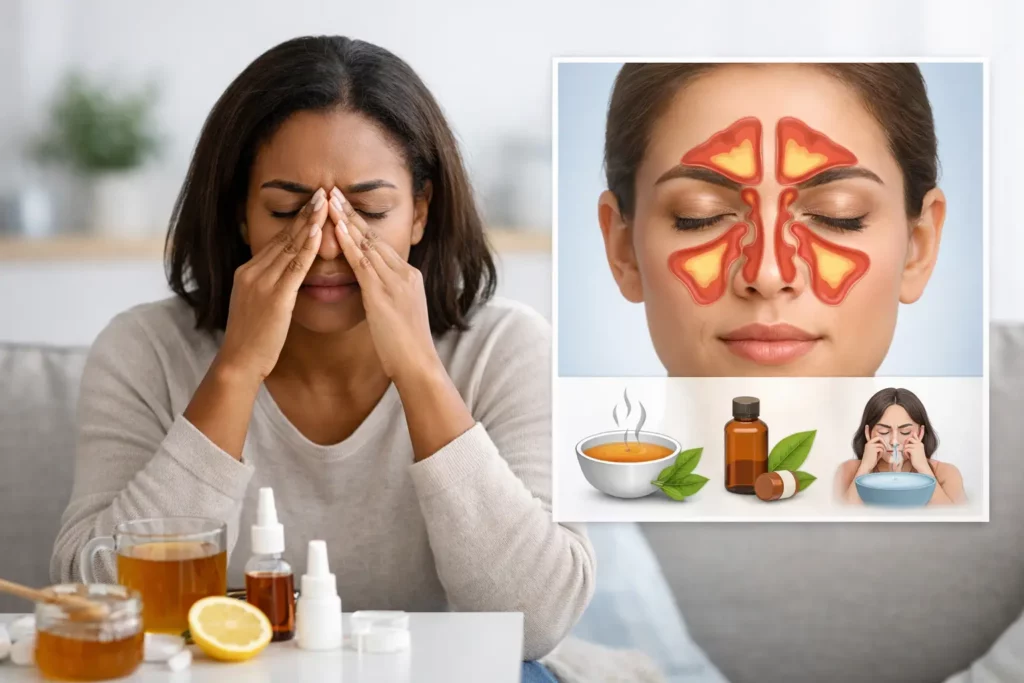
That heavy, blocked feeling across your cheeks or forehead often starts after what seemed like an ordinary cold. A few days later, your nose feels stubbornly congested, mucus seems to sit rather than clear, and bending forward can make the pressure worse. If you are searching for how to naturally cure sinusitis, it helps to start with a careful reality check: self-care may help ease symptoms and support recovery, but not every sinus problem can or should be managed at home.
Sinusitis usually means inflammation or irritation in the lining of the sinuses, often linked to a viral upper respiratory infection. In many adults, symptoms improve with time and sensible home care. But “natural” does not automatically mean effective, suitable for everyone or a replacement for medical advice. The safest approach is to focus on measures that may help comfort, hydration and mucus clearance, while keeping an eye on symptoms that need professional review.
What people mean by how to naturally cure sinusitis
In practice, most people are looking for ways to relieve congestion, facial pressure and thick mucus without jumping straight to stronger medicines. That is understandable. The difficulty is the word “cure”. Sinus symptoms can have different causes, including viral infections, allergies, irritants, nasal polyps or structural issues in the nose. Because of that, there is no single natural remedy that reliably cures all sinusitis.
A more useful goal is to manage symptoms safely and support the body while it recovers. For mild, short-lived symptoms after a cold, that often means rest, fluids, steam from a bowl kept at a safe distance or from a warm shower, and gentle nasal rinsing with properly prepared saline. These approaches may help some people feel more comfortable, although results vary.
Safe natural measures that may help sinusitis symptoms
Saline rinsing can support mucus clearance
Saline nasal irrigation is one of the better-known self-care options for blocked noses and sinus discomfort. It may help thin mucus, reduce the feeling of stuffiness and wash away irritants. The key point is safe preparation and use. Only use sterile, distilled, previously boiled and cooled, or appropriately filtered water to make up a rinse. Tap water should not be used unless it has been made safe according to product instructions.
A saline rinse is not a cure-all, and some people find it irritating if used too often or with the wrong salt balance. If it stings, worsens symptoms or causes ear discomfort, stop and speak to a pharmacist, doctor or qualified healthcare professional.
Fluids and rest are simple but worthwhile
When you feel unwell, the basics still matter. Drinking enough water and other non-alcoholic fluids may help keep mucus less thick and easier to shift. Rest can also support recovery, especially when sinus symptoms follow a cold or another upper respiratory infection.
This is not glamorous advice, but it is often the most realistic. There is limited value in expensive home remedies if you are dehydrated, sleeping poorly and pushing through symptoms without a break.
Warmth and humidity may ease discomfort
Some adults find that warm compresses over the face or breathing moist air from a steamy bathroom helps reduce the sense of facial tightness. Evidence here is mixed, and benefit tends to be modest and temporary, but these measures are low-tech and may be worth trying if used sensibly.
Take care with steam. Very hot water can cause burns, particularly if a bowl is knocked over. For that reason, a warm shower is often a safer option than leaning over a basin of hot water.
Avoid smoke and other irritants
If your sinuses are already irritated, cigarette smoke, vaping aerosols, strong cleaning products and heavy fragrance can make symptoms feel worse. Reducing exposure may help the nose settle. This matters just as much as adding remedies.
For some people, recurring sinus symptoms are strongly linked to allergic triggers such as dust, pollen or pet dander. If that pattern sounds familiar, natural self-care alone may not be enough, and a proper assessment can be useful.
What to be careful with
A lot of advice online about how to naturally cure sinusitis goes far beyond the evidence. Essential oils, herbal products, supplements and home mixtures are often promoted with certainty that the science does not support. Some may irritate the nose, interact with medicines or simply waste time while symptoms worsen.
Essential oils should not be put inside the nose. Even products that smell soothing can be irritating to delicate nasal tissues. Herbal supplements also deserve caution, especially if you are pregnant, breastfeeding, taking other medicines or managing conditions such as high blood pressure, asthma or allergies.
Pain relief may be considered if symptoms are uncomfortable, but choose it carefully and use it as directed. For adults, paracetamol may help with pain or fever for some people. If you are unsure what is suitable, ask a pharmacist or doctor.
How long should self-care be given?
For many mild cases linked to a cold, symptoms begin to improve within around 7 to 10 days, although congestion can linger a bit longer. A gradual improvement matters more than a perfect day-by-day timeline. If you are slowly feeling better, that is reassuring.
If symptoms are not improving, are getting worse after initially easing, or keep coming back, it is reasonable to stop guessing and get advice. Persistent or recurrent symptoms may have a different cause and may need assessment rather than more home remedies.
When to seek medical advice
Natural self-care has limits. Speak to a doctor or qualified healthcare professional if you have severe facial pain, swelling around the eyes, changes in vision, a high fever, confusion, symptoms that last longer than expected, or worsening symptoms after a few days. Medical advice is also important if you have repeated episodes, significant underlying illness, a weakened immune system, or you are not sure sinusitis is the right explanation.
Facial pain and headache are not always caused by the sinuses. Migraine, dental problems and other conditions can feel surprisingly similar. That is one reason it is best not to self-diagnose for too long.
Where a sinus-focused product may fit
Some adults looking for symptom support consider over-the-counter sinus products alongside general self-care. Whether that is appropriate depends on the product, the market, your symptoms and whether you are a suitable user. If considering a product such as Nasodren®, read and follow the product label, package leaflet or instructions for use, and check whether it is intended for your situation in your market. If you are unsure, ask a pharmacist or qualified healthcare professional.
That balance matters. A product may have a place in symptom management when used as directed, but it should not be presented as a substitute for diagnosis or for medical care when symptoms are severe, persistent, worsening, recurrent or concerning.
A practical approach to how to naturally cure sinusitis symptoms at home
If your symptoms are mild and you otherwise feel well, a sensible home plan is straightforward. Focus first on rest, fluids and reducing irritants. Consider gentle saline irrigation using safely prepared water if you are comfortable with it. Use warmth and humidity carefully if they bring some comfort. Then review your symptoms honestly over the next few days.
What matters is not whether a remedy sounds natural, but whether it is reasonable, low risk and helping you move in the right direction. If not, reassessment is sensible.
References
National Health Service. Sinusitis.
NICE Clinical Knowledge Summaries. Sinusitis.
Patient.info. Sinusitis.
This content is for general information only and does not replace advice from a qualified healthcare professional. Always read and follow the product label, package leaflet or instructions for use. Seek medical advice if symptoms are severe, persistent, worsening, recurrent or concerning.
When sinus symptoms drag on, the most helpful step is often not trying more remedies but choosing the right next step, whether that is a few days of careful self-care or a conversation with a healthcare professional.