


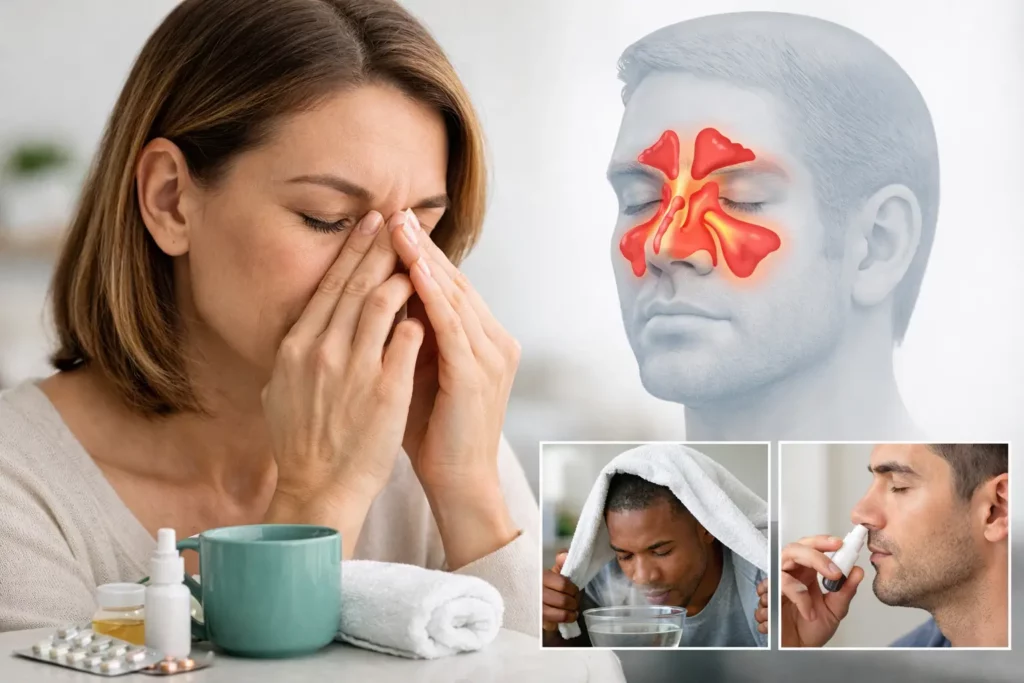
That heavy feeling across your cheeks, behind your eyes or at the bridge of your nose can make an ordinary cold feel much harder to manage. If you are wondering how to relieve sinus pressure, the first step is understanding that pressure can happen for different reasons, including swelling inside the nose, thick mucus, or irritation after a viral upper respiratory infection. The right approach depends on how severe your symptoms are, how long they have lasted and whether any warning signs are present.
What sinus pressure usually feels like
People describe sinus pressure in different ways. For some, it is a dull fullness in the face. For others, it feels like tightness around the forehead, cheeks, eyes or upper teeth, especially when bending forward. It may come with a blocked nose, reduced sense of smell, thicker mucus, post-nasal drip or a feeling that the nose will not clear properly.
Sinus pressure does not always mean a bacterial infection, and facial pain is not always caused by the sinuses. Colds, allergies and non-specific nasal irritation can all contribute. That is why symptom pattern matters more than any single sensation.
How to relieve sinus pressure at home
For mild to moderate symptoms, simple self-care measures may help reduce discomfort while the body recovers.
Keep nasal passages moist
A saline nasal spray or rinse may help loosen mucus and make the nose feel less dry or blocked. Some people prefer a spray because it is simple and quick to use, while others find irrigation more effective when congestion feels thicker. Technique matters. Always use the product exactly as instructed and use only sterile, previously boiled and cooled, or appropriately prepared water if the instructions require it.
If you are considering a sinus-focused nasal spray product, choose one that is suitable for your symptoms and follow the product label, package leaflet or instructions for use carefully. A product may help some people as part of self-care, but it is not a substitute for medical assessment when symptoms are severe, persistent or unclear.
Use steam carefully
Warm steam may make the nose feel temporarily more open and can be soothing when facial pressure is uncomfortable. A warm shower is often the safest way to try this. Bowls of very hot water can cause burns, so they are best avoided, especially around children or if you feel unwell or dizzy.
Steam can be helpful for comfort, but it does not work the same way for everyone. If heat seems to worsen throbbing facial pain or headaches, stop and try a different measure.
Drink enough fluid
Keeping well hydrated may help if mucus feels thick and sticky. Water, warm drinks and soups can all be useful. This is not about forcing large amounts of fluid, but about avoiding dehydration, particularly if you also have a fever or are not eating and drinking normally.
Rest and gentle warmth
If sinus pressure has come on with a cold, rest can make a real difference. A warm flannel placed gently over the face may also be soothing. It will not remove the cause of pressure on its own, but it may reduce the sense of tightness for a while.
Consider simple pain relief if appropriate
If pressure is painful, paracetamol or ibuprofen may be considered by some adults, provided they are suitable for you and you follow the leaflet directions. They are not right for everyone. For example, ibuprofen may not be suitable if you have certain stomach, kidney or asthma-related issues. If you are unsure, ask a pharmacist or doctor.
What can make sinus pressure worse
A few everyday factors can prolong irritation. Very dry indoor air may make the nose feel more uncomfortable. Smoking and second-hand smoke can irritate the lining of the nose and sinuses. Alcohol may make some people feel more congested. Lying completely flat can also increase the sense of pressure, especially at night.
If symptoms are linked to allergy, ongoing exposure to triggers such as dust, pollen or animal dander may keep congestion going. In that situation, relieving sinus pressure often means managing the trigger as well as the nasal symptoms.
Should you use a decongestant?
Short-term decongestants may help some adults with blocked noses, but they are not suitable for everyone and they need care. Decongestant nasal sprays should generally only be used for a limited number of days, because overuse can lead to rebound congestion. Oral decongestants may not be appropriate if you have high blood pressure, certain heart conditions, glaucoma or take some other medicines.
This is a good example of why there is no single answer to how to relieve sinus pressure. What helps one person may be unsuitable for another. If in doubt, a pharmacist can help you choose an option that fits your situation.
When symptoms may need more than self-care
Most sinus discomfort linked to a cold improves gradually. But sometimes symptoms last longer, become more intense or follow a pattern that suggests you should seek advice.
Speak to a doctor or qualified healthcare professional if symptoms are severe, if they are getting worse rather than better, or if they last beyond around 10 days without improvement. You should also ask for medical advice if sinus symptoms keep coming back, if pain is one-sided, or if you develop a high temperature that does not settle.
Red flags that need prompt medical advice
Seek urgent medical attention if you have swelling around the eyes, changes in vision, severe headache, confusion, a stiff neck, marked drowsiness, or severe facial pain with a very swollen face. These symptoms are not typical of routine self-limiting congestion and should not be managed at home without advice.
If symptoms follow a cold
Post-cold sinus pressure is common. After the main cold symptoms ease, you may still be left with lingering congestion, facial fullness and mucus that feels hard to clear. In that stage, gentle self-care often makes more sense than repeatedly switching between products.
A saline-based approach, rest, fluids and symptom monitoring are often reasonable starting points. If symptoms suddenly worsen after seeming to improve, or if thick discoloured mucus appears alongside increasing pain or fever, speak to a healthcare professional rather than assuming it will pass.
If you get sinus pressure often
Recurring symptoms deserve a closer look. Some people have repeated episodes because of allergy, structural nasal problems, irritants at work or home, or an underlying tendency to ongoing nasal inflammation. Others may be dealing with headaches or facial pain that feel sinus-related but are caused by something else.
If this is a pattern for you, keeping a simple symptom note can help. Record when symptoms start, whether they follow colds, whether one side is worse, and what else is going on such as hay fever or poor sleep. That gives a doctor or qualified healthcare professional a clearer picture than trying to remember everything during an appointment.
A careful note on sinus products
Some people exploring how to relieve sinus pressure want an option beyond basic saline, especially when congestion and facial pressure feel more pronounced. A sinus-focused product may be considered if it is appropriate for the user and the symptoms, but the details matter. Always check who the product is for, how often it should be used, who should not use it, and what side effects or warnings apply.
For branded products such as Nasodren®, any use and claims should be checked against the approved product information for the relevant market before publication or recommendation. Consumers should always read and follow the product label, package leaflet or instructions for use.
A practical way to decide what to do next
If symptoms are mild and recent, start with simple supportive care and give it a little time. If they are moderate but manageable, consider speaking to a pharmacist about suitable symptom relief options. If symptoms are severe, prolonged, worsening, recurrent or unusual, move sooner to medical advice.
That approach may feel less dramatic than searching for a quick fix, but it is often the safest and most useful one. Sinus pressure can be miserable, yet it usually responds best to a mix of patience, sensible symptom relief and knowing when not to manage it alone.
This content is for general information only and does not replace advice from a qualified healthcare professional. Always read and follow the product label, package leaflet or instructions for use. Seek medical advice if symptoms are severe, persistent, worsening, recurrent or concerning.
References:
NHS. Sinusitis.
NICE Clinical Knowledge Summaries. Sinusitis.
Patient.info. Sinusitis.
BMJ Best Practice. Acute sinusitis in adults.