


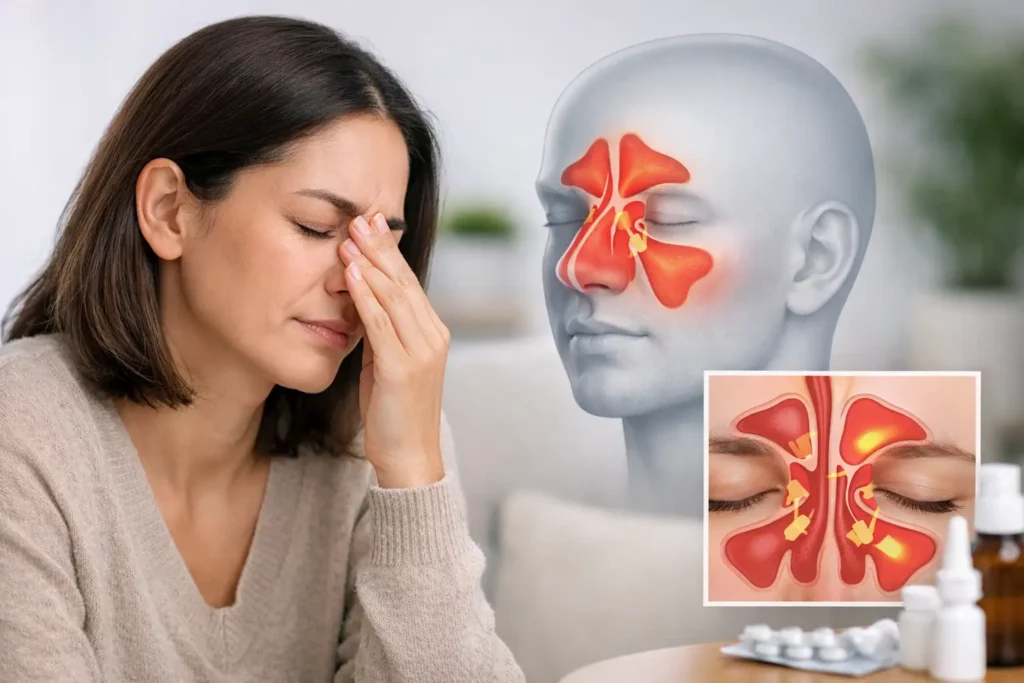
A cold that leaves you blocked up for a few days can be frustrating but common. The point at which it needs more attention is usually not one single symptom, but a change in the pattern. Knowing how to spot worsening sinus symptoms can help you decide whether to continue sensible self-care, speak to a pharmacist, or seek advice from a doctor or qualified healthcare professional.
Sinus symptoms can overlap with a cold, allergy, migraine, dental problems and other conditions. This guide cannot tell you what is causing your symptoms, but it can help you recognise changes that should not be ignored.
What a typical sinus symptom pattern can look like
The sinuses are air-filled spaces around the nose, eyes and forehead. During a cold or other upper respiratory infection, the lining of the nose and sinuses can become swollen. This may make it harder for mucus to clear and can lead to a blocked nose, reduced sense of smell, facial pressure or discomfort, nasal discharge and cough.
For many adults, these symptoms improve gradually with time. They may fluctuate through the day, feel worse when bending forward, or become more noticeable at night because a blocked nose can disrupt sleep. Improvement is not always perfectly linear, but the overall direction should usually be towards feeling better rather than increasingly unwell.
How to spot worsening sinus symptoms: watch the trend
A useful question is: compared with two or three days ago, am I clearly improving, staying much the same, or deteriorating? Worsening can mean symptoms become more intense, new symptoms develop, or you get better briefly and then become unwell again.
Symptoms that become more severe
Increasing facial pain, pressure or tenderness, particularly when it is severe or mainly on one side, deserves attention. A headache can occur with many illnesses, so it should not automatically be assumed to be sinus-related. However, a headache that is unusually severe, persistent, or different from your usual headaches should be discussed with a healthcare professional.
Also take note if nasal blockage becomes so pronounced that it affects sleep, eating, drinking or your ability to manage normal daily activities. Thick nasal discharge can be unpleasant, but its colour alone does not reliably show whether an infection is bacterial or whether antibiotics are needed. The bigger concern is a worsening overall illness pattern alongside persistent or severe symptoms.
The “better, then worse” pattern
One of the clearest changes to monitor is a second deterioration. You may start to recover from a cold, only to develop renewed or increasing facial pain, congestion, discharge, feverishness or general unwellness. This pattern is sometimes called double worsening.
It does not confirm a particular diagnosis, but it is a sensible reason to contact a doctor or qualified healthcare professional, especially if the symptoms are substantial or affecting everyday life.
Symptoms that are not improving over time
Acute sinus symptoms often settle without prescription treatment, although recovery can take longer than many people expect. NICE advises considering assessment when symptoms have not improved after around three weeks, or sooner if they are severe or worsening. If you have had symptoms for more than 10 days with no sign of improvement, it is also reasonable to seek advice, particularly when facial pain, fever or marked congestion is present.
The right timing depends on the full picture. Someone with mild but slowly improving congestion may be able to continue self-care, while someone with severe pain or a significant medical condition may need advice sooner.
Red flags that need urgent medical help
Complications from sinus infections are uncommon, but the eyes and brain are close to the sinuses. Seek urgent medical advice through NHS 111, an urgent treatment service, or a doctor if you develop swelling, redness or pain around an eye; double vision, reduced vision or difficulty moving an eye; severe swelling of the forehead; or a severe frontal headache that is getting worse.
Seek emergency help by calling 999 if you have confusion, marked drowsiness, a seizure, a stiff neck with severe illness, sudden weakness, or other signs of a medical emergency. These symptoms are not typical self-care situations.
You should also seek prompt advice if you are very unwell, have a high or persistent fever, are immunocompromised, or are pregnant and unsure which medicines or products are suitable. Children require age-appropriate assessment and product guidance; this article is written for adults.
When one-sided symptoms deserve a closer look
Persistent symptoms mainly on one side of the face or nose are worth discussing with a healthcare professional, particularly if they keep returning. Ongoing one-sided blockage, repeated nosebleeds, facial numbness, a lump or swelling, or changes in the shape of the face should not be put down to “just sinusitis” without assessment.
Toothache or pain in the upper teeth can sometimes occur alongside sinus symptoms, but dental problems can also cause pain that feels similar. If pain is focused around a tooth, worsens with chewing, or comes with gum swelling, contact a dentist as well as considering medical advice.
Practical self-care while you monitor symptoms
For mild symptoms that are stable or gradually improving, simple measures may help you feel more comfortable. Rest, regular fluids and avoiding cigarette smoke are sensible starting points. Paracetamol/acetaminophen or another suitable pain reliever may be considered for pain or fever, but always check the product label, ask a pharmacist if you are unsure, and take account of your other medicines and health conditions.
Saline nasal products may be an option for some people with nasal dryness, mucus or congestion. If you use an over-the-counter decongestant nasal spray, follow the label carefully and do not use it for longer than recommended, as prolonged use can make nasal blockage harder to manage. A pharmacist can help you compare options and check for interactions or reasons a product may not be suitable.
Steam inhalation is often suggested, but evidence for lasting benefit is limited and hot water carries a real risk of scalding. Avoid putting essential oils or other non-prescribed substances inside the nose, as they can irritate sensitive tissue and are not suitable for everyone.
It can help to keep a short symptom record for a few days: when symptoms started, whether they are improving or worsening, your temperature if you have measured it, what pain or pressure feels like, and any medicines or products you have used. This gives a pharmacist or clinician a clearer picture than trying to remember everything while feeling unwell.
Recurrent or long-lasting symptoms
If sinus-type symptoms return several times a year, continue for many weeks, or never seem to clear fully between episodes, arrange a non-urgent review with a doctor or qualified healthcare professional. Recurrent congestion can have several possible contributors, including allergies, nasal polyps, structural issues or repeated infections. The best next step depends on your history and examination, rather than on symptoms alone.
This is particularly relevant if reduced smell, sleep disruption, facial discomfort or repeated use of over-the-counter products is affecting your quality of life. A professional can help distinguish recurring sinus symptoms from other causes and discuss a plan that is appropriate for you.
A calmer way to make the next decision
You do not need to monitor every sensation closely. Focus on the direction of travel: are symptoms easing, stuck, or clearly getting worse? Severe symptoms, red flags, a second deterioration after initial improvement, and symptoms that persist or recur are all good reasons to ask for professional advice.
This content is for general information only and does not replace advice from a qualified healthcare professional. Seek medical advice if symptoms are severe, persistent, worsening, recurrent or concerning.
References
NICE. Sinusitis (acute): antimicrobial prescribing, NG79.
NHS. Sinusitis (sinus infection).
Fokkens WJ and colleagues. European Position Paper on Rhinosinusitis and Nasal Polyps 2020.