


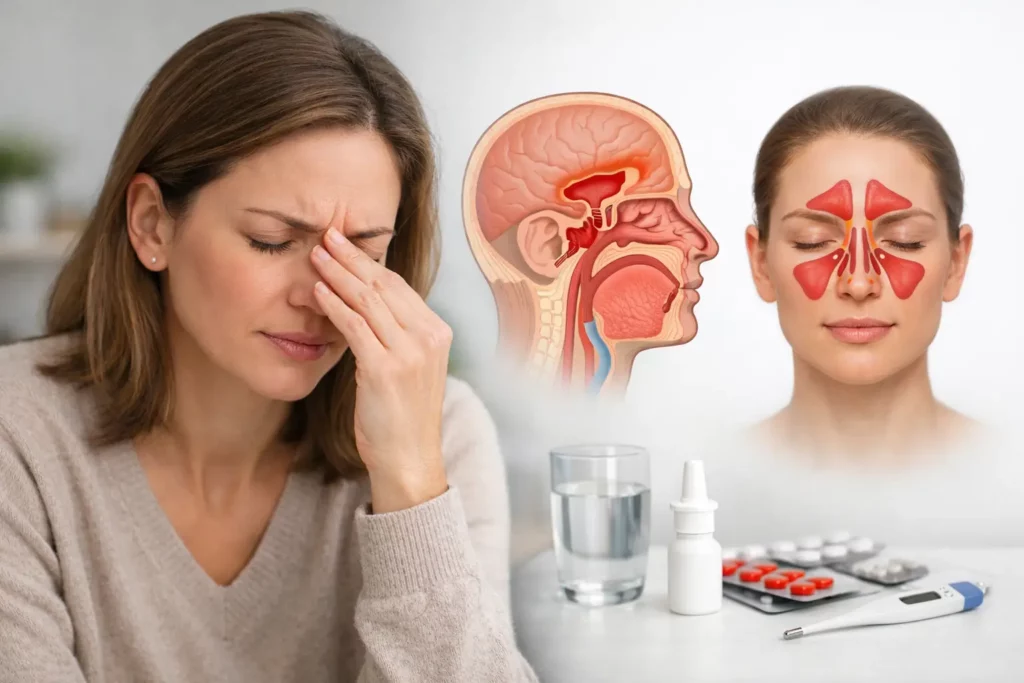
A cold may have passed, yet blocked breathing, a heavy feeling around the cheeks or forehead, and thick nasal mucus can remain. Post viral sinus symptoms are common after an upper respiratory infection, but they can be frustrating when you expected to feel fully well again. The key is to monitor the overall pattern, use sensible self-care and recognise when an assessment is needed.
Why sinus symptoms can remain after a virus
The nose and sinuses are connected spaces lined with a moist membrane. During a cold, this lining can become irritated and swollen. Mucus may become thicker, and the small openings that allow the sinuses to ventilate and drain can narrow temporarily.
That can leave you with nasal congestion, pressure around the face, reduced sense of smell, mucus running from the nose or down the throat, and a cough that is often more noticeable at night. These symptoms do not automatically mean you have a bacterial infection or that you need antibiotics. In many cases, the tissues simply need time to settle after the virus.
Facial discomfort can also have several causes. A headache, tooth pain, migraine, allergy or jaw problem may overlap with what feels like sinus pressure. If symptoms are unusual for you, severe or mainly on one side, it is sensible not to assume the sinuses are the cause.
How long do post viral sinus symptoms last?
Recovery is not always linear. You may feel better for a day or two, then notice congestion again after poor sleep, dry air, exercise or another irritant. For many adults, cold-related nasal and sinus symptoms improve gradually within two to three weeks.
Symptoms that persist beyond about 10 days without improvement, or worsen again after an initial improvement, are worth discussing with a pharmacist, doctor or qualified healthcare professional. This does not mean that a bacterial infection is certain. It means the pattern deserves a closer look, particularly if pain, fever or feeling unwell is becoming more pronounced.
Recurring episodes also merit advice. Repeated congestion and pressure can be linked with allergies, nasal polyps, structural differences inside the nose, smoking, irritant exposure or other health conditions. The right next step depends on your symptoms and medical history.
Practical self-care while you recover
Gentle measures can make the recovery period more manageable. They are not a substitute for medical assessment when symptoms are concerning, but they may support comfort while the nose and sinuses recover.
Keep fluids and rest in proportion to how you feel
Drinking regularly can help you stay hydrated, especially if you have a fever or are breathing through your mouth at night. Rest matters too. You do not necessarily need to stay in bed, but it is reasonable to reduce demanding activity for a few days if fatigue is lingering.
Sleeping with your head slightly raised may be more comfortable for some people with blocked nasal passages or post-nasal drip. If the air in your home is very dry, avoiding overheating the room may also help comfort. Steam inhalation is sometimes suggested, but evidence for sinus symptom relief is limited and hot water can cause burns. It should not be used as a substitute for appropriate care.
Consider saline nasal care carefully
Saline sprays or rinses may be considered for nasal dryness, mucus and congestion. They can be a useful non-medicated option for some adults, but use them exactly as directed. If you use a rinse device, follow its cleaning instructions and use water prepared according to the product guidance.
A pharmacist can help you decide whether a saline product is suitable and how to use it. If you are considering any sinus-focused nasal product, read and follow the product label, package leaflet or instructions for use, including warnings, contraindications and advice on when to stop use and seek help.
Use pain relief and decongestants thoughtfully
Paracetamol/acetaminophen or ibuprofen may help with pain or fever for people who can take them safely. Check the label and avoid taking more than one cold-and-flu product containing the same painkiller. Ask a pharmacist or qualified healthcare professional before using these medicines if you are pregnant, have long-term health conditions, take regular medicines or are unsure about the right option.
Decongestant nasal sprays may provide short-term relief from a blocked nose for some people, but they are not suitable for everyone. Using them for longer than the period stated on the label can lead to rebound congestion, where the nose feels more blocked after the medicine is stopped. Oral decongestants can also interact with medicines or be unsuitable with certain conditions, so pharmacist advice is valuable.
Some people may be advised to use a steroid nasal spray, particularly when allergic nasal symptoms are contributing or symptoms are prolonged. This is not the right choice for everybody, and it should be used according to the product information or advice from a qualified healthcare professional.
When to seek advice for post viral sinus symptoms
Do not wait for a set number of days if you are worried or feel significantly unwell. Contact a doctor or qualified healthcare professional if symptoms are persistent, worsening, recurrent or affecting daily life. It is also sensible to seek advice if you have a high temperature that continues, marked facial pain, symptoms largely on one side, persistent loss of smell, or thick discoloured mucus alongside worsening pain or fever.
People with a weakened immune system, significant long-term conditions, or who are receiving treatments that affect immunity should seek advice sooner when they develop persistent sinus symptoms. Children, pregnant people and those caring for them should use age- and situation-appropriate guidance from a qualified healthcare professional.
Seek urgent medical attention for swelling or redness around the eye, changes in vision, a severe frontal headache, confusion, a stiff neck, new weakness, severe illness, or symptoms that are rapidly getting worse. These symptoms are uncommon, but they need prompt assessment.
Why antibiotics are not always the next step
Antibiotics work against bacteria, not viruses. Because many sinus symptoms begin with a viral infection and improve without antibiotics, a clinician may recommend symptom management and monitoring rather than prescribing one straight away.
There are situations where a clinician may suspect a bacterial infection or another cause and consider further treatment. That decision should be based on the symptom pattern, examination and individual risk factors. Taking antibiotics when they are not needed can cause side effects and contributes to antibiotic resistance, so it is best not to use leftover antibiotics or obtain them without professional advice.
A simple way to monitor your recovery
Rather than focusing on whether every symptom has disappeared, look for the direction of travel over several days. Are you sleeping a little better? Is facial pressure less frequent? Is the mucus easier to clear? Are you relying less on symptom relief?
If the answer is generally yes, continued self-care and observation may be reasonable. If the answer is no, or you are moving in the opposite direction, arrange advice. Keeping a brief note of when symptoms began, whether you improved and then worsened, medicines used, temperature, and any one-sided symptoms can make a consultation more useful.
References
NICE. Sinusitis (acute): antimicrobial prescribing (NG79).
NHS. Sinusitis (sinus infection) guidance.
Fokkens WJ and colleagues. European Position Paper on Rhinosinusitis and Nasal Polyps 2020.
This content is for general information only and does not replace advice from a qualified healthcare professional. Always read and follow the product label, package leaflet or instructions for use. Seek medical advice if symptoms are severe, persistent, worsening, recurrent or concerning.
A slow recovery after a cold can be uncomfortable, but you do not have to guess your way through it: treat symptoms gently, watch for improvement and ask for advice whenever the pattern does not feel right.