


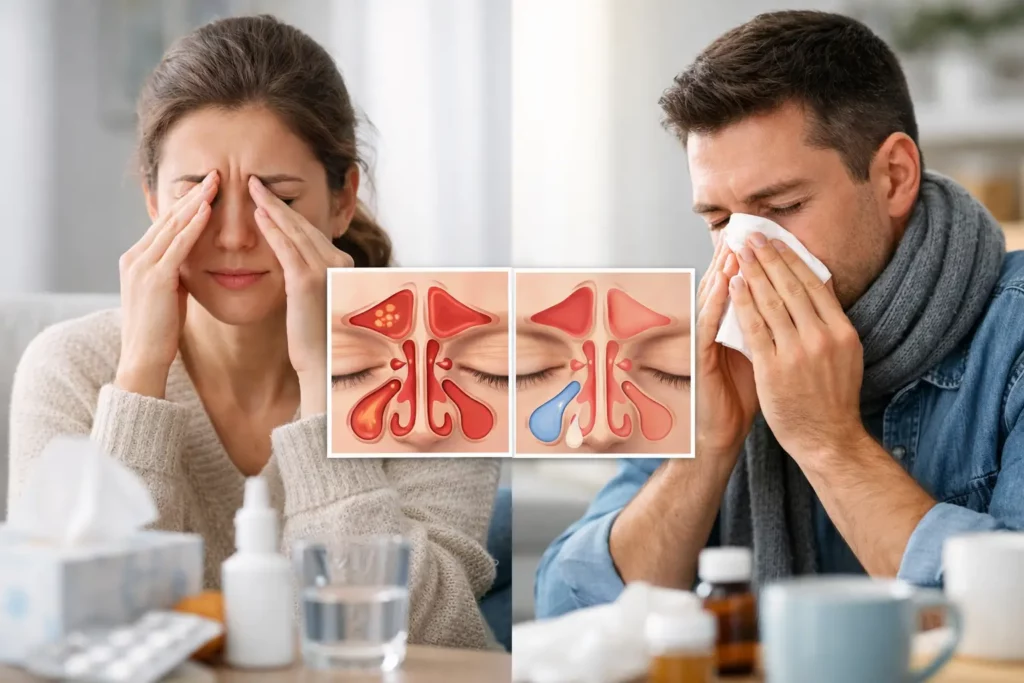
A blocked nose after a cold can make your face feel heavy, affect sleep and leave you wondering whether the infection has moved into your sinuses. Sinusitis or cold symptoms can overlap considerably, so it is rarely possible to tell from one symptom alone. The pattern over time – including whether you are improving, staying the same or getting worse – is often more useful.
Most colds settle without specific treatment. Sinus symptoms can also improve with time and simple self-care, but some situations need advice from a doctor or qualified healthcare professional. Knowing the difference can help you choose the next sensible step without assuming a diagnosis.
Why sinusitis and cold symptoms overlap
A common cold is usually caused by a virus affecting the nose and upper airways. It may cause a blocked or runny nose, sneezing, sore throat, cough, tiredness and sometimes a mild temperature. Nasal mucus can become thicker or change colour as the cold progresses. On its own, yellow or green mucus does not prove that a bacterial infection is present or that antibiotics are needed.
The sinuses are air-filled spaces around the nose, cheeks and forehead. During a cold, the lining of the nose and sinuses can become swollen, and mucus may not clear as easily. This can cause pressure, congestion and a reduced sense of smell. Acute sinusitis describes symptoms involving the sinuses that often follow a viral upper respiratory infection, although allergies and other nasal conditions can produce similar symptoms.
This is why facial pressure after a cold does not automatically mean sinusitis, and a headache is not always caused by the sinuses. Migraine, tension-type headache, dental problems and other conditions can also cause pain around the face or head.
Sinusitis or cold symptoms: look at the pattern
A cold often builds over a day or two, is at its worst within the first few days, then gradually improves. Nasal symptoms and a cough can linger, but many people feel noticeably better within one to two weeks.
Sinusitis symptoms may be more likely when nasal blockage or discharge is accompanied by pressure, pain or tenderness around the cheeks, eyes or forehead; reduced smell; or a feeling of fullness in the ears. Some people also notice discomfort in the upper teeth. Symptoms can be worse when bending forward, although this sign alone is not specific enough to confirm sinusitis.
The key question is whether there is a clear recovery trend. Seek advice from a pharmacist, doctor or qualified healthcare professional if symptoms have lasted around 10 days without improving, become markedly worse after initially getting better, or are severe. In UK guidance, a typical acute sinusitis episode may last two to three weeks, so persistence does not necessarily mean there is a serious problem. It does mean that monitoring symptoms and getting individual advice can be helpful.
Symptoms that may fit a straightforward cold
A cold is more likely when sneezing, sore throat, watery nasal discharge, cough and general tiredness are the main features, especially in the first few days. Symptoms may change from day to day, but should slowly ease overall.
Symptoms that may warrant a sinusitis assessment
Consider seeking professional advice if you have persistent nasal blockage or discharge with localised facial pain or pressure, a substantial reduction in smell, or symptoms that interfere significantly with normal activities. One-sided symptoms, repeated episodes, or symptoms that keep returning after colds also deserve a conversation with a qualified healthcare professional.
Sensible self-care while you monitor symptoms
For mild symptoms, rest, fluids and time are often the foundation of recovery. Drinking enough to stay comfortably hydrated may make secretions easier to manage, although it is not a cure for a cold or sinusitis.
Saline nasal sprays or rinses may be considered by some adults for nasal comfort and to help clear the nose. Use products as directed, and follow the hygiene instructions carefully. If you prepare a rinse yourself, use water that has been boiled and cooled, sterile, or otherwise prepared according to the device instructions – not plain water directly from the tap.
Paracetamol/acetaminophen or ibuprofen may help with pain, fever or facial discomfort for people who can use them safely. Check the product label and speak to a pharmacist if you are taking other medicines, have a long-term health condition, are pregnant, or are unsure which option is suitable. Avoid accidentally doubling up on paracetamol/acetaminophen by taking several cold and flu products at the same time.
Decongestant nasal sprays can provide short-term relief of blockage for some people, but they are not suitable for everyone and should not be used for longer than the period stated on the label. Overuse can lead to rebound congestion, where the nose feels more blocked when the spray is stopped. A pharmacist can help you weigh up whether a decongestant is appropriate, particularly if you have high blood pressure, glaucoma, thyroid disease, prostate symptoms, or take regular medicines.
Warm drinks, a warm shower and a clean, comfortably humidified room may feel soothing. However, avoid inhaling steam from a bowl of hot water: burns can occur, and evidence that steam changes the course of sinus symptoms is limited. Do not put essential oils inside the nose.
When you should seek urgent help
Most cold and sinus symptoms are not emergencies, but certain symptoms need urgent assessment. Seek urgent medical help if you develop swelling, redness or severe pain around an eye; changes to vision; confusion; a stiff neck; a severe or unusual headache; weakness or numbness; or if you feel seriously unwell.
Contact a doctor or qualified healthcare professional promptly if you have a high fever that persists, severe one-sided facial pain, significant swelling of the face, symptoms after a head injury, or a weakened immune system. Children, pregnant people and those with complex medical conditions may need more tailored advice, even when symptoms seem familiar.
What a healthcare professional may consider
A clinician can assess the duration and severity of symptoms, examine the nose, face, throat and ears where appropriate, and consider whether another condition could be involved. They may discuss self-care, pain relief and treatments suited to your situation. Antibiotics are not routinely needed for many cases of acute sinusitis, because symptoms are often linked to viral infections and can improve without them. However, they may be considered in selected circumstances after clinical assessment.
If symptoms are recurrent or ongoing for many weeks, a doctor may explore contributing factors such as allergies, nasal polyps, asthma, dental issues or structural differences inside the nose. Persistent symptoms should not simply be managed as repeated colds without advice.
A note on sinus-focused products
Different nasal products have different intended purposes, ingredients, instructions and precautions. If you are considering a sinus-focused nasal spray, including Nasodren®, choose only a product that is authorised and appropriate for your market and circumstances. Read and follow the product label, package leaflet or instructions for use, and ask a pharmacist or qualified healthcare professional if you are unsure whether it is suitable for you. A nasal product should not replace medical assessment when symptoms are severe, persistent, worsening, recurrent or concerning.
Sources and further reading
The information in this article reflects general principles in UK guidance on acute sinusitis and self-care, including NICE guidance on sinusitis, NHS information on sinusitis and colds, and the European Position Paper on Rhinosinusitis and Nasal Polyps. Individual recommendations can differ according to your health history and the medicines you use.
This content is for general information only and does not replace advice from a qualified healthcare professional. Always read and follow the product label, package leaflet or instructions for use. Seek medical advice if symptoms are severe, persistent, worsening, recurrent or concerning.
When your nose is blocked and your face feels pressured, focus less on finding a perfect label and more on the direction of travel. Gentle improvement is reassuring; a stalled recovery, a sharp deterioration or symptoms that worry you are good reasons to ask for professional advice.