


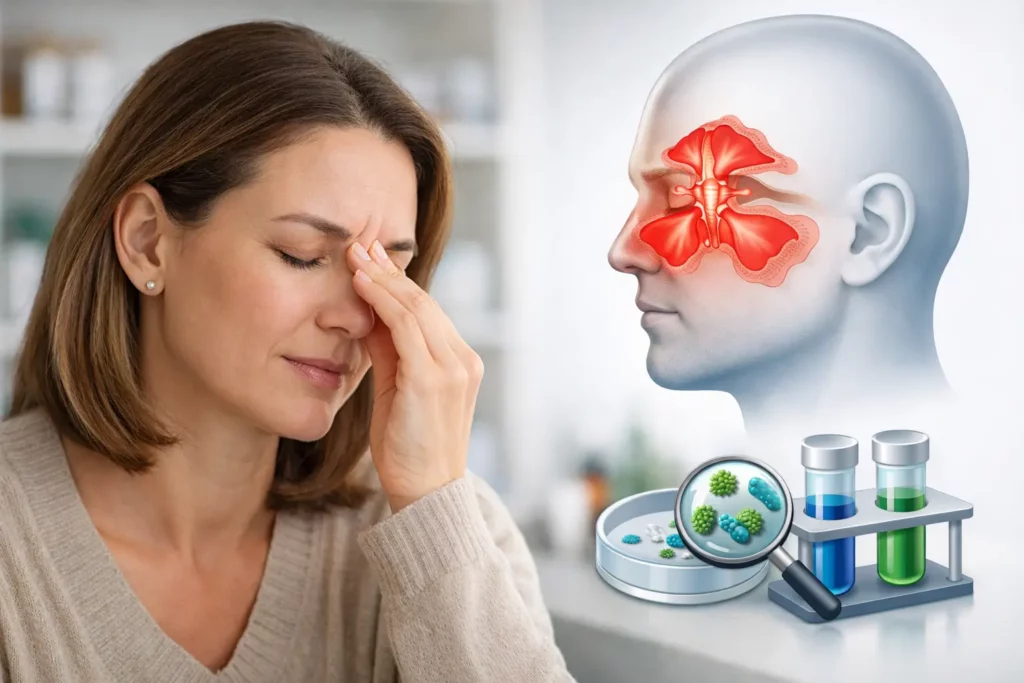
A blocked nose after a cold can feel as though it ought to have passed within days. When facial pressure, thick mucus or a reduced sense of smell linger, it is understandable to look for clearer answers. Recent sinusitis research updates are refining how clinicians distinguish short-lived post-viral symptoms from acute bacterial illness and longer-term rhinosinusitis, while reinforcing a practical message: most people benefit from careful symptom monitoring and appropriate self-care, not rushed treatment.
Sinusitis is commonly used to describe inflammation of the lining of the nose and sinuses. Clinicians may use the term rhinosinusitis because the nose and sinuses are usually affected together. Symptoms can overlap with a cold, allergy, migraine, dental problems and other conditions, so facial pain or headache alone does not confirm sinusitis.
Sinusitis research updates: diagnosis is becoming more precise
One of the most useful shifts in research is away from assuming that all sinus symptoms have the same cause. Viral infections remain a frequent trigger for short-term symptoms. In many cases, nasal blockage, discharge and pressure improve gradually as the infection settles, although recovery can take longer than people expect.
Research and clinical guidance increasingly focus on symptom pattern, duration and severity rather than relying on the colour of nasal mucus alone. Green or yellow mucus can occur during viral infections and does not, by itself, show that antibiotics are needed. A clinician will consider the full picture, including whether symptoms have lasted for around 10 days without improvement, have become severe, or improved and then noticeably worsened.
Imaging is another area where practice has become more selective. CT scans can be valuable for suspected complications, recurrent problems, surgical planning or persistent symptoms assessed by a specialist. They are not usually needed for an uncomplicated short episode. This matters because scans may show sinus changes in people who have little or no relevant illness, and an image should always be interpreted alongside symptoms and examination findings.
Why chronic symptoms need a different conversation
Symptoms lasting more than 12 weeks may be described as chronic rhinosinusitis. This is not simply an acute infection that has lasted too long. Current research recognises that chronic rhinosinusitis can involve different underlying patterns, including nasal polyps in some people, allergic disease, asthma and altered local immune responses.
That growing understanding is leading to more personalised specialist care. For selected people with severe chronic rhinosinusitis with nasal polyps, specialists may consider surgery or targeted prescription treatments after assessment. These options are not first-line self-care and are not appropriate for everyone. The useful takeaway is that recurrent or long-lasting symptoms deserve a proper review rather than repeated courses of treatments that have not helped.
What the evidence says about antibiotics
Antibiotic stewardship remains a major theme in sinusitis research. Because many acute episodes are viral, antibiotics often provide little benefit and can cause side effects such as diarrhoea, nausea, rash or thrush. Their unnecessary use also contributes to antimicrobial resistance, making infections harder to treat across the population.
This does not mean antibiotics are never appropriate. A doctor or qualified healthcare professional may recommend them when symptoms and clinical assessment suggest a bacterial infection, when someone is at higher risk of complications, or when illness is severe or prolonged. The decision depends on the individual, not a single symptom or an online checklist.
Researchers are still investigating tests that may better identify bacterial sinusitis in routine care. At present, no simple home test can reliably decide whether antibiotics are needed. If you have been prescribed an antibiotic, take it exactly as directed and contact the prescriber or pharmacist if you have concerns about side effects or treatment failure.
Self-care research is practical, but not one-size-fits-all
For mild, short-lived sinus symptoms, guidance continues to support a measured approach. Rest, drinking enough fluids and avoiding tobacco smoke can make recovery more manageable. Paracetamol/acetaminophen or ibuprofen may be considered for pain or fever where suitable for you. Check the product information and ask a pharmacist or qualified healthcare professional if you are pregnant, have stomach, kidney, liver, heart or breathing conditions, take regular medicines, or are unsure which option is appropriate.
Saline sprays or rinses may help some people feel more comfortable by moistening the nasal passages and helping to clear secretions. If using a rinse device, follow the manufacturer’s instructions carefully, keep it clean and use suitable water as directed. It is sensible to stop and seek advice if a product causes significant irritation, nosebleeds or worsening symptoms.
Decongestant nasal sprays may offer short-term relief of nasal blockage for some adults, but overuse can lead to rebound congestion. They are not suitable for everyone, including some people with high blood pressure, heart conditions, glaucoma or those taking certain medicines. A pharmacist can help assess whether a decongestant is suitable and how long it can be used.
Evidence for steam inhalation is limited. It may feel soothing for some people, but it has not been shown to resolve sinusitis and hot water carries a genuine risk of scalding. Avoid putting essential oils inside the nose. “Natural” does not automatically mean suitable or low-risk, particularly for people with allergies, asthma or sensitive skin.
Nasal corticosteroid sprays and allergy assessment
Nasal corticosteroid sprays are used for some nasal and sinus conditions, especially where allergy or persistent inflammation is part of the clinical picture. The evidence and suitability depend on the symptoms, the product and the person using it. They are not a quick fix for every blocked nose, and correct technique affects how well a spray reaches the nasal lining.
If symptoms occur repeatedly at the same time of year, after exposure to pets, dust or mould, or alongside itchy eyes and sneezing, allergy may be contributing. Discussing this with a pharmacist, doctor or qualified healthcare professional may help direct treatment more effectively. People with recurrent sinus symptoms should also mention asthma, eczema, dental symptoms and any changes in smell.
When to seek medical advice promptly
Most sinus symptoms are not dangerous, but a small number need urgent assessment. Seek urgent medical help for swelling or redness around an eye, changes in vision, severe headache unlike your usual headaches, confusion, a stiff neck, severe forehead swelling, or if you feel seriously unwell.
Arrange medical advice sooner rather than later if symptoms are severe, persist beyond the expected course of a cold, repeatedly return, worsen after initially improving, or occur mainly on one side. Persistent one-sided blockage, bleeding, a facial lump, unexplained weight loss or symptoms after a significant facial injury should also be assessed. Young children, people with a weakened immune system and those with complex health conditions may need individual advice earlier.
What researchers are still trying to answer
The next phase of sinusitis research is less about finding one universal treatment and more about identifying which approach fits which patient. Scientists are studying the nasal microbiome, immune pathways, the role of biofilms and better ways to measure symptoms that matter to patients, such as sleep disruption, smell loss and the ability to work normally.
There is promising interest in more targeted treatment for defined groups, particularly people with severe chronic disease managed in specialist settings. But research findings should not be mistaken for a reason to self-diagnose or switch treatment without advice. A headline about a new therapy rarely captures who was studied, what the risks were or whether the result applies to everyday sinus symptoms.
A symptom diary can be more useful than searching for the perfect remedy. Note when symptoms began, whether they are improving, any likely triggers, medicines tried and warning signs. That simple record can help a qualified healthcare professional make a more informed decision if you need an appointment.
This content is for general information only and does not replace advice from a qualified healthcare professional. Seek medical advice if symptoms are severe, persistent, worsening, recurrent or concerning.
References
- National Institute for Health and Care Excellence. Sinusitis (acute): antimicrobial prescribing. NICE guideline NG79.
- Fokkens WJ and colleagues. European Position Paper on Rhinosinusitis and Nasal Polyps 2020.
- NHS. Sinusitis (sinus infection): symptoms, self-care and when to seek help.
- UK Health Security Agency and NICE. Antimicrobial prescribing guidance for acute respiratory tract infections.
The most reassuring next step is often not doing more, but choosing the right level of care: gentle self-care for improving symptoms, timely professional advice when the pattern is unclear, and urgent help when warning signs appear.