


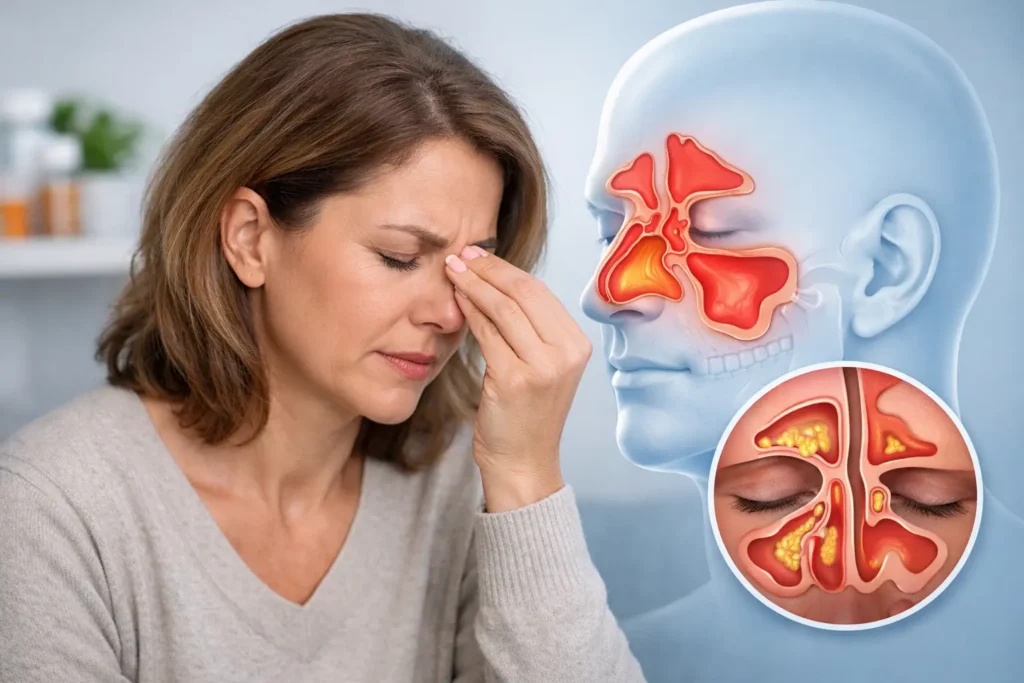
If you keep getting blocked up, headachy and full of facial pressure every few weeks or months, it is reasonable to ask what causes recurring sinus infections. Repeated sinus symptoms can be frustrating, disruptive and sometimes difficult to pin down, especially when one episode seems to blend into the next.
The short answer is that recurrent sinus infections usually happen because the sinuses are not draining well, the lining inside the nose and sinuses stays irritated, or an underlying issue keeps setting the scene for another flare-up. That underlying issue might be structural, allergic, infectious or related to the way the immune system responds. In many cases, it is not just one cause but a combination.
What causes recurring sinus infections most often?
Your sinuses are air-filled spaces connected to the nose by small drainage pathways. When those pathways become narrowed or blocked, mucus can build up. That build-up can lead to pressure, congestion and, in some people, repeated infection.
A viral upper respiratory infection, such as a common cold, is one of the most common starting points. After a cold, the sinus lining may remain swollen for a while, and mucus may not clear as easily. If that happens repeatedly, or if symptoms never fully settle between colds, sinus problems can seem as though they are constantly returning.
Allergies are another frequent factor. Ongoing allergic rhinitis can keep the nose inflamed and congested, making normal sinus drainage more difficult. Dust mites, pollen, pet dander and mould can all play a part. People sometimes focus on infection when the bigger driver is actually untreated allergy with occasional secondary infection.
Nasal polyps can also contribute. These are soft, non-cancerous growths in the lining of the nose or sinuses. They may reduce airflow and narrow drainage passages, which can make congestion and repeated sinus symptoms more likely. A deviated septum or other structural differences inside the nose may have a similar effect.
Infection is not always the whole story
One reason recurring sinus problems can be confusing is that not every episode is a bacterial infection. Many sinus symptoms follow viral infections or reflect ongoing inflammation rather than bacteria alone. Facial pressure, thick mucus and blocked breathing can occur with several nasal conditions.
That matters because the best next step depends on the cause. If symptoms are driven mainly by allergy, nasal anatomy or long-lasting irritation after a cold, treating each episode as though it is simply another infection may not solve the problem. It may be more useful to look for the pattern behind the recurrence.
Common triggers that keep sinus problems coming back
Allergies and environmental exposure
When the nasal passages are regularly exposed to allergens or irritants, the lining can stay swollen. That swelling can affect mucus flow and increase the chance of sinus symptoms returning. Tobacco smoke, air pollution, workplace dust and strong chemical fumes may also aggravate the nose and sinuses.
Sometimes the trigger is seasonal. In other cases, it is present all year round, which is why symptoms may never fully disappear.
Problems with sinus drainage
The sinuses rely on tiny hair-like structures and open drainage channels to move mucus out. If these channels are narrow to begin with, or become blocked by swelling, mucus may remain trapped. Stagnant mucus can create the conditions for infection or ongoing discomfort.
This is why some people notice that every cold seems to turn into sinus trouble. The cold itself may not be unusually severe, but their sinus drainage is already vulnerable.
Structural causes
A deviated septum, enlarged turbinates or nasal polyps can all limit airflow and drainage. These issues do not automatically cause infection, but they can make repeated congestion and retained mucus more likely. If symptoms mostly affect one side, or have been a problem for a long time, a structural factor may be worth discussing with a doctor or qualified healthcare professional.
Dental problems
In some cases, especially when symptoms affect one cheek or one side of the face, an upper tooth or dental infection can be involved. The roots of the upper back teeth sit close to the maxillary sinuses, so dental and sinus symptoms can overlap. This is less common than allergy or post-viral congestion, but it is a recognised cause.
Immune and health factors
Some adults are more prone to recurrent infections because of asthma, immune system problems or long-term conditions that affect the airways. Reflux, poor sleep and dehydration may also worsen symptoms for some people, though they are rarely the sole cause. If infections are frequent, severe or unusually slow to settle, a healthcare professional may want to consider whether there is an underlying health issue.
When repeated sinus symptoms may suggest chronic sinusitis
There is a difference between recurrent acute episodes and chronic sinusitis. Recurrent acute sinusitis means distinct flare-ups with periods of improvement in between. Chronic sinusitis usually means symptoms lasting 12 weeks or more.
The symptoms can overlap, which is why self-diagnosis is not always straightforward. Ongoing blocked nose, facial pressure, reduced sense of smell and troublesome mucus may point towards a longer-term problem rather than a series of separate infections. If that sounds familiar, it is sensible to seek medical advice rather than treating each flare in isolation.
What you can do at home
Self-care may help ease symptoms and support recovery, especially if symptoms are mild and you are otherwise well. Drinking enough fluid, resting and avoiding smoke or known irritants can help. Some people find nasal saline irrigation or saline sprays useful for clearing mucus and keeping the nose comfortable.
Pain relief such as paracetamol may be considered if needed, following the product label and checking whether it is suitable for you. A pharmacist can also advise on short-term options for congestion, although some products are not appropriate for everyone and overuse can sometimes make nasal symptoms worse.
A sinus-focused nasal spray product may also be considered where appropriate and when used as directed. Any product choice should be based on the approved product information for the relevant market, and you should always read and follow the product label, package leaflet or instructions for use.
When to seek medical advice
Signs that need prompt assessment
Speak to a doctor or qualified healthcare professional if symptoms are severe, keep coming back, last longer than expected or do not improve with self-care. Medical advice is especially important if you have swelling around the eyes, marked redness, severe headache, confusion, a high fever, worsening pain, changes in vision or symptoms affecting only one side that do not settle.
You should also seek advice if you have repeated sinus infections several times a year, if symptoms persist between episodes, or if you think allergies, polyps or a structural issue might be contributing.
Why proper assessment matters
A clinician may ask about timing, triggers, allergy history, asthma, smoking exposure and whether symptoms started after a cold. In some cases, they may examine the nose, consider allergy management or arrange further assessment if structural causes are suspected.
The goal is not simply to label the problem, but to understand why it is recurring. That is often what leads to a more useful long-term plan.
Can recurring sinus infections be prevented?
It depends on the cause. If allergy is the main driver, reducing exposure and managing allergy symptoms may lower the chance of repeated sinus problems. If recurrent episodes follow every cold, simple measures such as hand hygiene, good hydration and early symptom management may help to some extent, though they cannot guarantee prevention.
Where nasal polyps, septal deviation or chronic inflammation are involved, prevention may be less about home remedies and more about getting the right medical assessment. That does not mean every case needs specialist treatment, but it does mean recurring symptoms deserve a closer look.
For many adults, the most helpful shift is to stop thinking only in terms of infection and start asking what is keeping the sinuses irritated, blocked or slow to drain. That question often reveals the real reason symptoms keep coming back.
This content is for general information only and does not replace advice from a qualified healthcare professional. Always read and follow the product label, package leaflet or instructions for use. Seek medical advice if symptoms are severe, persistent, worsening, recurrent or concerning.
If your sinuses never seem to get a proper break, that is worth paying attention to – not with panic, but with a clear plan to understand the pattern and get the right support.