


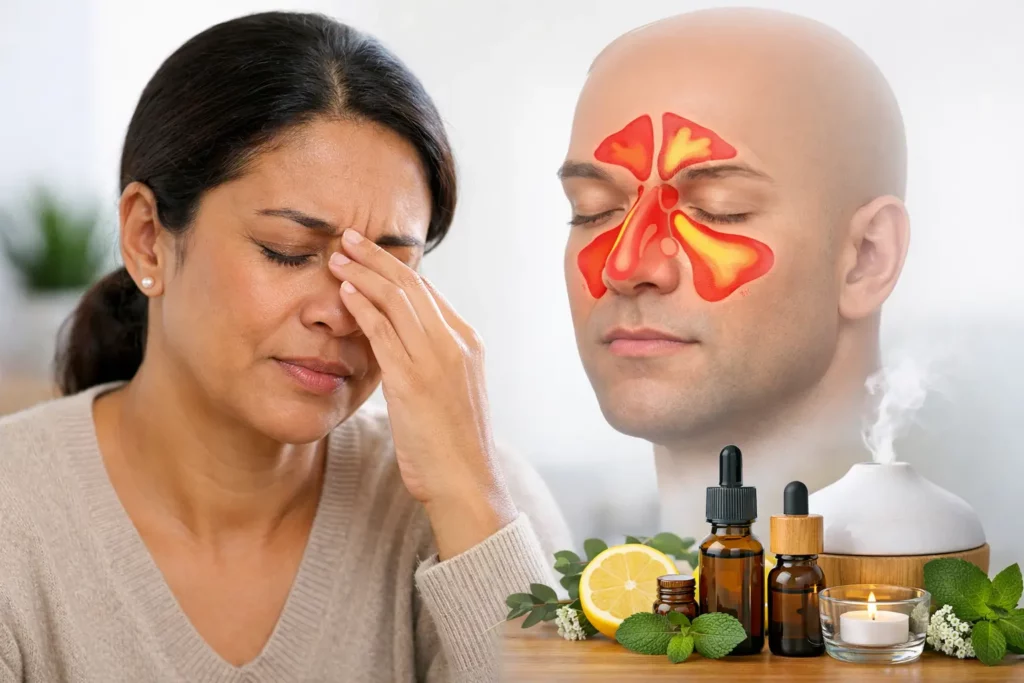
A blocked nose, facial pressure and a reduced sense of smell can make almost any remedy sound appealing. But essential oils for sinus symptoms safety is not simply a question of whether a scent feels clearing or soothing. It is about the route of exposure, the oil used, your medical history and whether your symptoms need medical assessment rather than further self-care.
Essential oils are concentrated plant extracts. Their strong smell can create a temporary sensation of easier airflow, particularly with menthol-like aromas. That sensation does not necessarily mean congestion has reduced or that a sinus problem is being treated. Evidence that essential oils improve sinusitis symptoms is limited, and they should not replace advice or treatment from a doctor or qualified healthcare professional.
What sinus symptoms can – and cannot – tell you
Sinus-type symptoms often follow a cold and may include nasal blockage, discharge, pressure around the cheeks, eyes or forehead, and a change in smell. Allergies, migraine, dental problems and other conditions can also cause some similar symptoms. Facial pain or headache is not always caused by the sinuses.
Most short-lived cold-related symptoms improve with time. However, persistent, recurrent or severe symptoms deserve a closer look. Essential oils may be part of a personal wellbeing routine for some adults, but they are not a reliable way to identify the cause of symptoms or judge whether an infection is present.
Essential oils for sinus symptoms safety: the main risks
The word “natural” can be misleading in this context. Essential oils contain active chemical compounds and can cause harm, especially when used undiluted, swallowed, placed in the nose or used around people with certain health conditions.
Do not put essential oils inside the nose
Do not apply drops of essential oil to the nostrils, nasal lining or a nasal rinse. The tissue inside the nose is delicate. Oils can cause burning, irritation and allergic reactions, and oily substances entering the airways create an avoidable risk. A nasal spray, rinse or other product should only be used in the nose if it is specifically designed, labelled and authorised for that use, and used according to its product label, package leaflet or instructions for use.
This also applies to cotton buds, tissues or other items coated in oil and inserted into the nostrils. “Diluted” does not automatically mean appropriate for nasal use.
Do not swallow essential oils for sinus symptoms
Essential oils should not be taken by mouth unless a qualified healthcare professional has specifically advised a suitable product and dose. Swallowing even a small amount of some oils may cause poisoning, vomiting, drowsiness, seizures or breathing problems. The risk varies by oil, amount and person, but home dosing is not a safe way to manage sinus discomfort.
Store bottles upright, tightly closed and out of the reach of children. If an essential oil has been swallowed, or you suspect poisoning, seek urgent advice from NHS 111, a poison service or emergency services as appropriate. Do not induce vomiting unless you are told to do so by a healthcare professional.
Skin application can still cause reactions
Applying oil to the chest, temples or face may cause redness, stinging, contact dermatitis or an allergic reaction. Some oils can also make skin more sensitive to sunlight. Applying an oil near the eyes adds a further risk of irritation.
If an adult chooses to use an essential oil on skin, it should be properly diluted in a suitable carrier product and kept away from the eyes, mouth, broken skin and irritated areas. Follow the manufacturer’s instructions closely. Stop using it if burning, rash, wheezing, dizziness or any other unwanted effect occurs. A previous uneventful use does not guarantee that a reaction will not happen later.
Diffusers and steam are not risk-free
A diffuser can expose everyone in the room to an oil for a prolonged period. Strong fragrances may trigger coughing, headache, nausea or breathing symptoms in some people, including those with asthma or fragrance sensitivity. Use only as directed, in a ventilated space, and stop if it makes symptoms worse. Take extra care where children, pets or other vulnerable household members are present.
Adding oils to a bowl of hot water is also not a harmless shortcut. Steam can cause scalds, particularly if a bowl is knocked over, and scented vapour can irritate the eyes or airways. For sinus symptoms, do not lean over hot water or use essential oils in steam inhalation. If warm humidity feels comfortable, a warm shower may be a lower-risk option, provided you avoid excessively hot water and do not expect it to treat an underlying condition.
Who should seek personalised advice first?
Speak to a pharmacist, doctor or qualified healthcare professional before using essential oils if you are pregnant or breastfeeding, have asthma or another respiratory condition, epilepsy, significant allergies, a skin condition, or take regular medicines. Individual oils may have specific precautions and interactions.
Extra caution is sensible if symptoms affect a child, an older person with complex health needs, or someone with a weakened immune system. Essential oils are not suitable for every age group or household setting, and advice intended for an adult should not be assumed suitable for a child.
Safer ways to support comfort while monitoring symptoms
For uncomplicated nasal symptoms, practical measures may be more useful than strong scents. Rest, adequate fluids and avoiding tobacco smoke can support general recovery from a cold. A pharmacist can advise whether a saline nasal product, pain relief such as paracetamol/acetaminophen or ibuprofen, or another option is appropriate for you. These choices have their own precautions, so check the label and ask for advice if you have medical conditions, take other medicines or are unsure.
If you use a saline rinse device, follow its instructions carefully. Water quality and cleaning matter: use water prepared as directed by the manufacturer, rather than assuming ordinary tap water is suitable. Do not add essential oils or other home ingredients to a nasal rinse.
It can help to keep track of when symptoms began, whether they are improving, and what makes them worse. That information is more useful to a healthcare professional than repeatedly trying new scented products when symptoms are not settling.
When sinus symptoms need medical advice
Contact a doctor or qualified healthcare professional if symptoms are severe, getting worse after initially improving, lasting longer than expected, or returning frequently. Seek advice sooner if pain relief is not helping, you feel very unwell, or you have a condition or treatment that affects your immune system.
Get urgent medical help for swelling or redness around an eye, changes to vision, severe headache, confusion, a stiff neck, significant facial swelling, difficulty breathing, chest symptoms, or a high fever with marked deterioration. These symptoms are uncommon, but they should not be managed with home remedies alone.
References
NHS. Sinusitis (sinus infection): symptoms, self-care and when to seek medical advice.
NICE Clinical Knowledge Summaries. Sinusitis (acute): assessment and management.
NHS. Essential oils: safety information and poisoning advice.
National Poisons Information Service. Advice on accidental poisoning and exposure to household substances.
This content is for general information only and does not replace advice from a qualified healthcare professional. Always read and follow the product label, package leaflet or instructions for use. When sinus symptoms are unclear or persistent, choosing appropriate advice over a stronger fragrance is the safer next step.