


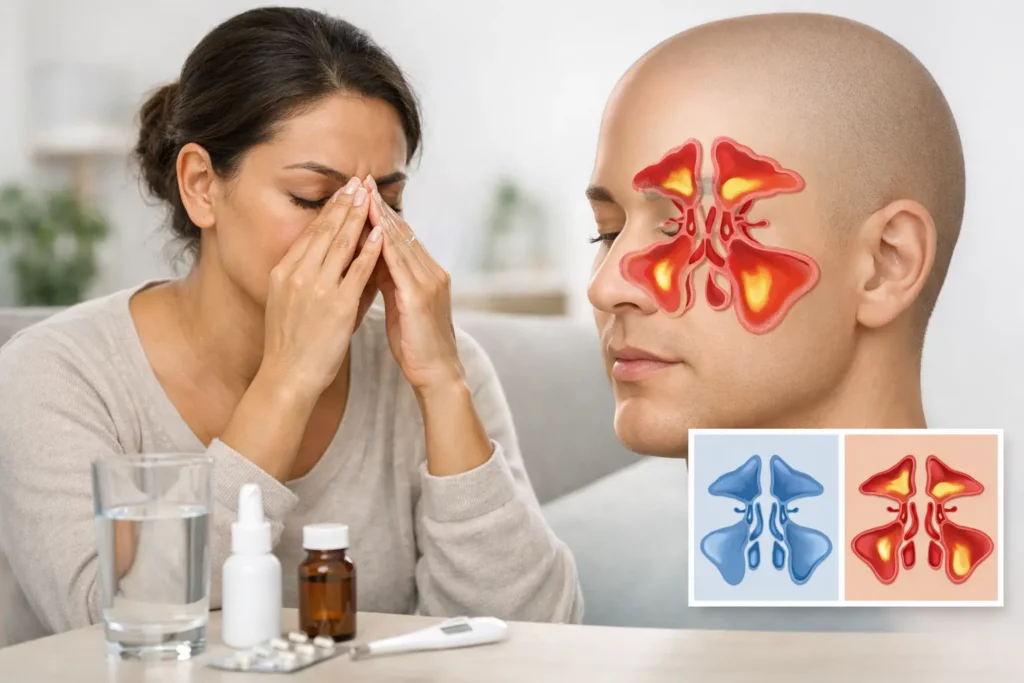
A blocked nose after a cold can make your whole face feel heavy. Pressure around the cheeks, eyes or forehead, thick mucus and reduced smell can be uncomfortable, but they do not automatically mean a bacterial infection or a need for antibiotics. Knowing how to treat acute sinusitis starts with easing symptoms safely, allowing time for recovery and recognising when professional advice is needed.
Acute sinusitis, often called acute rhinosinusitis, is swelling of the lining of the nose and sinuses. It commonly follows a cold and usually improves on its own. Symptoms often settle within two to three weeks, although recovery is not always linear: congestion and facial pressure may feel worse on some days before they improve.
How to treat acute sinusitis with self-care
For most adults with mild to moderate symptoms, self-care is the first step. The aim is to make you more comfortable while your body recovers, rather than to force a quick cure.
Rest where possible and drink regularly. Fluids will not cure sinusitis, but staying hydrated can be helpful when you have a fever, sore throat or thick nasal secretions. Choose warm drinks or foods if they feel soothing, but there is no need to follow a restrictive diet.
Simple pain relief may help with facial discomfort, headache or fever. Paracetamol (acetaminophen) or ibuprofen may be appropriate for some adults when used as directed on the pack. However, ibuprofen is not suitable for everyone, including some people with stomach ulcers, kidney disease, certain heart conditions, asthma that is affected by anti-inflammatory medicines, or during pregnancy. Ask a pharmacist or qualified healthcare professional if you are unsure which option is suitable for you.
Use saline carefully for nasal comfort
A saline nasal spray or rinse may be considered to moisten the nasal passages and help clear mucus. If you use a rinse or irrigation device, follow its instructions closely and use water that is sterile, distilled, or previously boiled and cooled. Keep the device clean and do not share it.
Some people find saline soothing; others find that it causes temporary stinging or does not make much difference. Stop and seek advice if it causes persistent irritation, pain or nosebleeds. It is also sensible to speak to a healthcare professional before using nasal irrigation if you have recently had nasal surgery or have been told you have a structural problem inside the nose.
Keep the air comfortable, not excessively humid
A comfortably cool bedroom and avoiding cigarette smoke can make breathing easier when your nose is blocked. Smoking and second-hand smoke can irritate the nose and airways, potentially making symptoms more troublesome.
Steam inhalation is often suggested for sinus pressure, but evidence that it improves acute sinusitis is limited. It can also cause serious scalds, particularly when using bowls of hot water. A warm shower may feel comforting, but avoid leaning over boiling water or adding essential oils to the nose.
Medicines: what may help and what needs caution
There is no single over-the-counter medicine that is right for every person with acute sinusitis. A pharmacist can help you weigh up symptoms, other medicines and health conditions.
Decongestant sprays or drops may temporarily ease a blocked nose for some people. They should only be used for a short period, generally no more than seven days, because longer use can lead to rebound congestion, where the nose becomes more blocked when the medicine is stopped. Oral decongestants can also cause side effects and may not be suitable if you have high blood pressure, heart disease, glaucoma, an overactive thyroid, prostate problems, or take certain medicines.
A steroid nasal spray may be considered for some adults, particularly where symptoms have lasted for around 10 days or more without improvement. It is not an instant treatment, and the potential benefit is usually modest. A pharmacist, doctor or other qualified healthcare professional can advise whether it is appropriate, how to use it and whether an existing condition or medicine affects its suitability.
Combination cold and flu products require extra care. They can contain pain relief, decongestants or antihistamines, so it is easy to accidentally take the same ingredient twice. Check the active ingredients before combining products. Antihistamines are mainly useful for allergy symptoms and are not routinely helpful for acute sinusitis following a cold unless an allergy is also playing a part.
Do antibiotics treat acute sinusitis?
Most acute sinusitis is caused by a viral infection and gets better without antibiotics. Antibiotics do not work against viruses, and when they are used unnecessarily they can cause side effects such as diarrhoea, nausea and allergic reactions. Their overuse also contributes to antibiotic resistance.
That does not mean antibiotics are never needed. A clinician may consider them when symptoms suggest a bacterial infection is more likely, when a person is very unwell, or when there is a higher risk of complications. Symptoms that have not improved after around 10 days, or that get distinctly worse after an initial milder phase, are good reasons to contact a doctor or qualified healthcare professional for assessment.
Do not use leftover antibiotics, share them with another person or expect them automatically for facial pain and congestion. The right decision depends on the full pattern of symptoms, your medical history and an examination where needed.
When to seek medical advice urgently
Sinus symptoms can overlap with dental problems, migraine, allergies and other conditions. Facial pain or headache is not always caused by sinusitis. Seek advice promptly if symptoms are severe, unusual, recurrent, or you are unsure what is causing them.
Contact a doctor or qualified healthcare professional urgently if you have a very high temperature, severe or worsening facial pain, symptoms that are getting worse despite self-care, or symptoms that last longer than about three weeks. You should also seek advice sooner if you have a weakened immune system, are receiving cancer treatment, or have a health condition that raises your risk from infection.
Seek urgent medical help if you develop swelling, redness or pain around an eye; changes in vision; severe headache; confusion; a stiff neck; persistent vomiting; weakness; or marked drowsiness. These symptoms are uncommon, but they need prompt assessment.
A realistic recovery timeline
During the first week, congestion, nasal discharge, pressure and a reduced sense of smell are common. Self-care and symptom relief may be all that is needed. By the second week, many people begin to notice gradual improvement, although a lingering blocked nose or cough can remain.
If there is no meaningful improvement after 10 days, symptoms become more severe, or you improve and then clearly worsen, speak to a qualified healthcare professional. This is not a sign that you have done anything wrong. It simply means the next step should be based on an individual assessment rather than self-care alone.
If you experience frequent episodes of sinus symptoms, ongoing symptoms between colds, or a persistent loss of smell, arrange a non-urgent review. Recurrent or long-lasting problems may need a different approach from a single short-lived episode.
References
- National Institute for Health and Care Excellence. Sinusitis (acute): antimicrobial prescribing. NICE guideline NG79.
- NHS. Sinusitis (sinus infection): symptoms, self-care and when to get help.
- European Position Paper on Rhinosinusitis and Nasal Polyps 2020.
This content is for general information only and does not replace advice from a qualified healthcare professional. Seek medical advice if symptoms are severe, persistent, worsening, recurrent or concerning. When using any nasal or over-the-counter product, always read and follow the product label, package leaflet or instructions for use. Giving symptoms a little time is often reasonable, but knowing when to ask for help is part of treating yourself well.