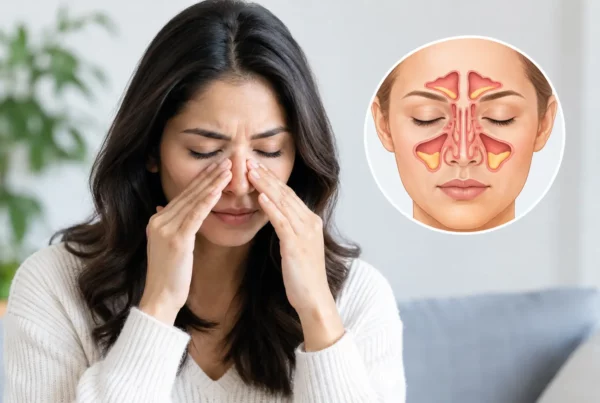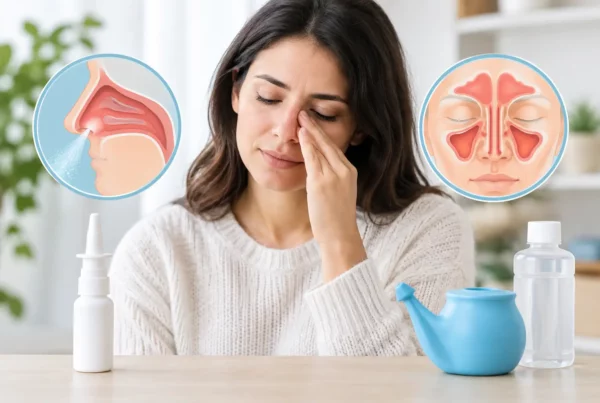
A blocked nose after a cold can feel miserable for days, and once facial pressure, thick mucus or post-nasal drip appear, many people start weighing up natural sinus spray versus antibiotics. That comparison matters, but it is not a simple choice between a “gentle” option and a “strong” one. The right approach depends on what may be causing the symptoms, how long they have lasted, how severe they are and whether any warning signs are present.
Most short-term sinus symptoms in adults follow a viral upper respiratory infection such as a common cold. In those situations, antibiotics often do not help because antibiotics work against bacteria, not viruses. That is one reason doctors do not usually prescribe them straight away for every episode of sinus discomfort. A natural sinus spray or other self-care measures may be considered for symptom support in some people, but they are not a replacement for medical assessment when symptoms are severe, worsening or unclear.
Natural sinus spray versus antibiotics: what is the real difference?
The biggest difference is purpose. Antibiotics are prescription medicines used when a doctor or qualified healthcare professional believes a bacterial infection is likely or confirmed, and that the expected benefit outweighs the downsides. A sinus spray marketed as natural may be intended to support nasal or sinus symptom management, depending on its approved product information, but it should not be assumed to treat infection or replace prescription care.
That distinction matters because sinus symptoms can overlap. Nasal congestion, facial pressure, reduced smell and thick discharge may happen with a cold, viral sinusitis, allergies or bacterial sinusitis. Symptoms alone do not always tell you which one it is. That is why responsible self-care means monitoring the pattern, not only the discomfort.
Some adults hope antibiotics will shorten any sinus episode. In practice, the benefit can be limited in many uncomplicated cases, while side effects such as diarrhoea, nausea or thrush are still possible. Wider concerns around antibiotic resistance also matter. Used appropriately, antibiotics are important medicines. Used when they are unlikely to help, they expose people to risk without much gain.
When a natural sinus spray may be considered
For mild to moderate sinus-related symptoms after a cold, some people look for ways to manage congestion and retained mucus at home. Depending on the product and its authorised intended purpose, a sinus spray may be considered as part of self-care. The key is to use it only as directed and to avoid assuming that “natural” means suitable for everyone or suitable for every cause of symptoms.
A product in this category may be intended to support symptom relief or help with nasal and sinus comfort when used according to the product label, package leaflet or instructions for use. Whether it is appropriate depends on the individual, the symptoms, other health conditions and the product’s specific warnings or contraindications.
In some cases, people also use simple supportive measures such as rest, fluids and suitable pain relief such as paracetamol or acetaminophen if needed. These measures do not treat the underlying cause directly, but they can make a difficult few days more manageable.
If you are considering a sinus-focused spray, keep expectations realistic. It may help some symptoms in some users, but it does not diagnose the cause, guarantee relief or remove the need for medical advice when symptoms persist or become more severe.
When antibiotics may be needed
Antibiotics are not the first answer for every stuffy nose or pressure headache, but there are times when a doctor may consider them. That usually happens when symptoms suggest a bacterial infection is more likely, when symptoms are prolonged, or when a person is at higher risk of complications.
Clinicians often look at the timeline. A cold usually starts to improve within around 7 to 10 days, although some congestion may linger. Medical advice becomes more important if symptoms last beyond about 10 days without improvement, if they become markedly worse after seeming to improve, or if they are severe from the outset. Severe symptoms can include a high temperature, significant facial pain or pronounced swelling.
Even then, antibiotics are not automatic. A doctor will take the whole picture into account, including other possible causes and whether another treatment or watchful waiting is more suitable. That is one reason self-prescribing expectations can be frustrating. What feels intense may still be viral, and what seems minor may need closer attention in someone with other medical conditions.
Natural sinus spray versus antibiotics in day-to-day decisions
For many adults, the practical question is not which option is “better”, but which fits the situation now. If symptoms began with a typical cold, are improving gradually and there are no red flags, supportive self-care may be reasonable. If symptoms are dragging on, recurring frequently or interfering heavily with sleep and daily life, it is sensible to speak to a doctor or qualified healthcare professional.
There is also a middle ground. Someone may start with self-care and later need medical review if the pattern changes. That is not a failure of home management. It is the normal course of monitoring symptoms and responding appropriately.
This is where the comparison of natural sinus spray versus antibiotics often becomes less about products and more about timing. Self-care options may have a role in symptom management. Antibiotics have a role when a bacterial infection is suspected and a prescriber decides they are appropriate. One should not be presented as a substitute for the other.
What to watch for before choosing self-care alone
A sinus problem is not always straightforward. Facial pain can come from teeth, migraine or other causes. Headache is not always sinus-related. Thick mucus does not automatically mean a bacterial infection. Because symptoms overlap, it helps to pay attention to the broader picture.
Speak to a doctor or qualified healthcare professional promptly if you have swelling around the eyes, changes in vision, confusion, a very severe headache, a stiff neck, breathing difficulty, symptoms that are rapidly worsening, or severe pain that is not settling. Medical advice is also important if you are immunocompromised, pregnant, have significant underlying illness, or are unsure whether a product is suitable for you.
Recurring episodes deserve attention too. Repeated sinus symptoms may point to allergy, structural nasal issues, ongoing irritation or another condition that needs proper assessment rather than repeated short-term self-treatment.
A careful note on “natural” products
The word natural can be reassuring, but it should not do more work than the evidence allows. A natural-origin ingredient is not automatically risk-free, side-effect free or appropriate during pregnancy, while breastfeeding or alongside other medicines. Some products may irritate the nose, interact with other treatments or be unsuitable for certain users.
That is why evidence-aware self-care starts with the product information. Always read and follow the product label, package leaflet or instructions for use. If anything is unclear, ask a pharmacist, doctor or another qualified healthcare professional.
Nasodren is one example of a sinus-focused nasal spray brand, but any product information should be checked against the approved label and local market guidance before use. Product suitability, intended purpose and claims can vary by market.
What a sensible self-care plan looks like
If your symptoms are mild to moderate and there are no warning signs, a sensible plan is simple. Give the illness a little time, support comfort, keep an eye on the timeline and do not ignore a change for the worse. If you choose a sinus spray, use it exactly as directed rather than more often in the hope of stronger effects.
It can help to ask yourself a few practical questions over several days. Are you improving, even slowly? Are symptoms stable rather than escalating? Are you sleeping, drinking and functioning reasonably well? Or are you moving in the opposite direction?
That kind of monitoring is often more useful than trying to guess whether mucus colour alone tells the whole story. It usually does not.
The balanced answer
For many routine post-cold sinus symptoms, antibiotics are not the starting point, and self-care may be enough while the body recovers. For some people, a natural sinus spray may be considered as part of that self-care, provided it is used as directed and with realistic expectations. But if symptoms are severe, last longer than expected, worsen after initial improvement, keep coming back or raise any concern, professional assessment matters.
This content is for general information only and does not replace advice from a qualified healthcare professional. Always read and follow the product label, package leaflet or instructions for use. Seek medical advice if symptoms are severe, persistent, worsening, recurrent or concerning.
When sinus symptoms leave you tired, blocked up and tempted to reach for the strongest-sounding option, the most helpful approach is usually the calmest one: match the treatment to the likely cause, and get advice when the pattern does not look right.