


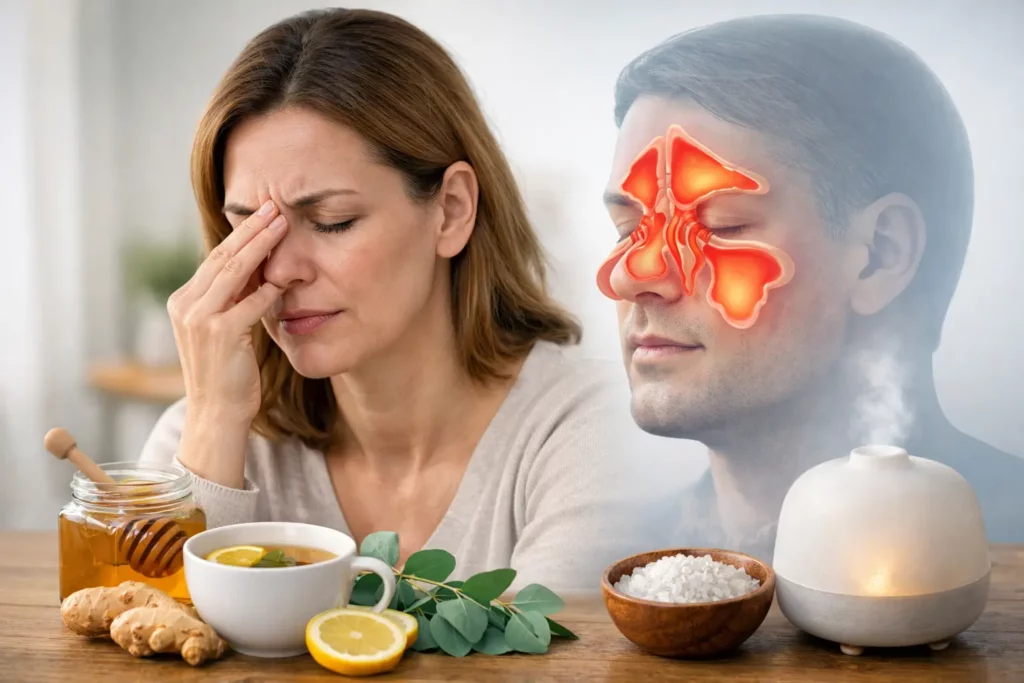
A blocked nose after a cold can make ordinary things feel disproportionately difficult: sleeping, concentrating, exercising and even tasting food. When people look for a natural treatment for sinus congestion, they are usually looking for practical ways to feel more comfortable without reaching straight for another medicine. Some self-care measures may help, but the right approach depends on what is causing the congestion and how severe or long-lasting the symptoms are.
Sinus congestion can occur with a common cold, allergies, irritants such as smoke, or sinusitis. It may come with a stuffy or runny nose, reduced sense of smell, facial pressure, post-nasal drip or thicker mucus. These symptoms overlap with other conditions, so it is best not to assume that every headache, facial pain or blocked nose is caused by the sinuses.
Natural treatment for sinus congestion starts with simple care
For most short-lived symptoms, the aim is comfort and recovery rather than trying to force a quick cure. Viral colds commonly improve on their own over time. Self-care can support hydration, ease nasal dryness and help you monitor whether symptoms are settling or moving in the wrong direction.
Saline nasal rinsing or sprays
Saline solutions are among the best-known non-medicated options for nasal congestion. A saline spray may moisturise dry nasal passages and help loosen mucus. Some adults prefer nasal irrigation using a squeeze bottle, neti pot or similar device, which can wash mucus and irritants from the nasal cavity.
Technique and water safety matter. Use a product as directed and only use sterile or distilled water, or water that has been boiled and allowed to cool, when preparing a rinse. Do not use untreated tap water. Keep the device clean and allow it to dry between uses. If rinsing causes significant pain, nosebleeds, ear discomfort or worsening symptoms, stop and ask a pharmacist, doctor or qualified healthcare professional for advice.
Saline does not suit every situation equally. It may be less comfortable when the nose is completely blocked, after some nasal procedures, or for people with particular ear problems. A pharmacist can help you choose a suitable option and use it correctly.
Fluids, rest and a comfortable environment
Drinking regularly can help you stay hydrated when you have a cold, fever or dry mouth from mouth-breathing. Warm drinks may feel soothing, although they are not a treatment for sinusitis itself. Rest is also worthwhile: recovery from a viral illness takes energy, and poor sleep can make congestion feel harder to manage.
Keeping the room comfortably humid rather than excessively dry may ease irritation for some people. A clean humidifier can be used if needed, following the manufacturer’s cleaning instructions. Evidence for steam inhalation is limited, and bowls of hot water carry a real risk of scalding. A warm shower may be a safer way to enjoy humid air if it feels pleasant.
Avoid smoking and, where possible, second-hand smoke. Smoke can irritate the lining of the nose and airways, which may make blocked-nose symptoms more troublesome.
Sleep with your head slightly raised
Congestion can seem worse when lying flat. An extra pillow or a gentle elevation of the upper body may make sleeping more comfortable for some adults. This is a comfort measure, not a cure, but better rest can make a meaningful difference while symptoms pass.
Be cautious with popular natural remedies
“Natural” does not automatically mean effective, suitable or risk-free. Essential oils, herbal preparations and supplements are often promoted for sinus symptoms, but evidence varies considerably and products can cause irritation, allergic reactions or interact with medicines.
Do not put essential oils inside the nose or apply undiluted oils to the skin. Strong fragrances can also aggravate symptoms for some people with asthma or sensitivity to scents. If you are considering an oral herbal product or supplement, speak to a pharmacist first, especially if you are pregnant, breastfeeding, have a long-term condition or take regular medicines.
Honey and lemon in a warm drink may soothe a sore throat associated with a cold, but they do not clear a sinus infection. Likewise, spicy food may briefly make the nose run, yet it is not a reliable treatment for congestion. Modest expectations are useful: comfort measures can be worthwhile without needing to promise more than they can deliver.
When non-natural options may be considered
It is reasonable to compare self-care with pharmacy treatments when symptoms are affecting daily life. A pharmacist can advise on the most appropriate option based on your symptoms, other health conditions and medicines.
A short course of a decongestant nasal spray may help some adults with a blocked nose, but these products should not usually be used for more than seven days because overuse can lead to rebound congestion. Decongestants are not suitable for everyone, including some people with high blood pressure, heart problems, glaucoma or certain thyroid conditions.
If allergies appear to be a trigger, a pharmacist or qualified healthcare professional may suggest approaches that target allergy symptoms, such as an antihistamine or a steroid nasal spray. These are not natural treatments, and they should be chosen and used according to the product information and individual advice. Pain or fever may be managed with paracetamol/acetaminophen or ibuprofen when suitable for you, following the label and pharmacist advice.
Antibiotics are not routinely useful for a typical cold, and many sinus symptoms are viral. However, only a clinician can assess whether an antibiotic or another treatment is appropriate in your particular circumstances.
How long should sinus congestion last?
Congestion linked to a cold often starts to improve within one to two weeks. Acute sinusitis symptoms can take longer to settle, sometimes two to three weeks. What matters is the overall direction: gradual improvement is generally more reassuring than symptoms that become more intense after initially getting better.
If congestion returns often, lasts beyond a few weeks, or seems linked to a particular season, workplace exposure or home environment, arrange advice from a doctor or qualified healthcare professional. Recurring symptoms may need a closer look for allergies, nasal polyps, structural issues or another cause.
When to seek medical advice promptly
Seek urgent medical advice for swelling or redness around the eyes, changes to vision, severe or unusual headache, confusion, a stiff neck, severe facial swelling, or if you feel very unwell. These symptoms are uncommon but should not be managed with home care alone.
Speak to a doctor or qualified healthcare professional if symptoms are severe, persist without improvement, worsen after initial improvement, occur repeatedly, or are accompanied by a high fever. It is also sensible to seek advice if you have a weakened immune system, are receiving treatment that affects immunity, or have a condition that makes infections more complicated.
For day-to-day sinus congestion, a careful combination of saline, rest, fluids and symptom monitoring may be enough to support comfort while your body recovers. Give yourself permission to keep the plan simple, and seek professional advice when the pattern of symptoms does not feel straightforward.
This content is for general information only and does not replace advice from a qualified healthcare professional. Always read and follow the product label, package leaflet or instructions for use. Seek medical advice if symptoms are severe, persistent, worsening, recurrent or concerning.
Sources and further reading
NHS guidance on sinusitis, including typical symptom duration, self-care and when to seek medical advice.
NICE clinical knowledge summaries on sinusitis, including assessment of symptoms and antimicrobial prescribing considerations.
UK Health Security Agency and NHS advice on common cold symptoms and home care.
US Food and Drug Administration safety advice on safe water for nasal rinsing and irrigation devices.