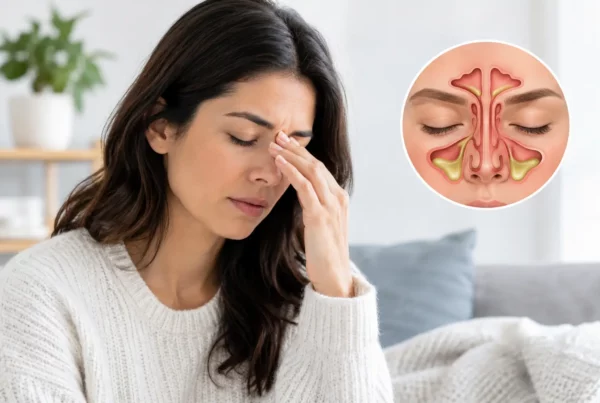
Does Acute Sinusitis Go Away on Its Own?
A blocked nose that lingers after a cold can be surprisingly draining. If you are dealing with facial pressure, thick mucus and that heavy, bunged-up feeling, it is natural to ask: does acute sinusitis go away on its own?
Often, yes — many cases of acute sinusitis settle without antibiotics, especially when they follow a viral upper respiratory infection such as a cold. But that does not mean every case is straightforward. How long symptoms last, how severe they are, and whether they are improving all matter when deciding whether home care is reasonable or whether it is time to speak to a doctor or qualified healthcare professional.
Does acute sinusitis go away in most cases?
Acute sinusitis usually means short-term inflammation or irritation affecting the sinuses, often linked to a cold or another upper respiratory infection. In many adults, symptoms improve gradually within days to a few weeks as the infection and swelling settle.
That said, “go away” can mean different things in real life. For some people, the worst congestion and facial pressure ease fairly quickly, but post-cold nasal blockage or mucus can hang on for longer. Others feel better and then seem to worsen again. A slower recovery does not always mean something serious, but it is one reason symptom monitoring matters.
Most cases are viral rather than bacterial. That is why antibiotics are not automatically needed, and why self-care often plays a big part early on. Even so, if symptoms are severe, persistent, recurrent or changing in a way that worries you, professional advice is sensible.
What acute sinusitis usually feels like
People use the word “sinus” to describe many different symptoms, and not every headache or blocked nose is sinusitis. Still, acute sinusitis often involves a combination of nasal congestion, pressure around the cheeks, eyes or forehead, thicker nasal discharge, reduced sense of smell and discomfort that becomes more noticeable when bending forward.
Some people also notice post-nasal drip, a cough that is worse at night, tiredness or ear pressure. These symptoms can overlap with a cold, allergies or other causes of nasal irritation, which is one reason self-diagnosis has limits.
Pain can happen, but it varies. Mild pressure is common. More intense facial pain, swelling around the eyes, or symptoms affecting vision need more urgent assessment.
How long does it take to clear?
There is no single timeline that fits everyone. Acute sinusitis may start during a cold or just after it, and improvement is often gradual rather than dramatic. Many people start to feel clearly better within 7 to 10 days, while others may take around 2 to 3 weeks to recover fully.
A useful question is not just how many days you have had symptoms, but whether the trend is moving in the right direction. If congestion, pressure and mucus are easing bit by bit, that is generally more reassuring than symptoms that are getting worse or returning after initial improvement.
If symptoms continue beyond around 10 days without improvement, become more severe, or last several weeks, it is reasonable to seek medical advice. Persistent symptoms do not always mean a bacterial infection, but they do deserve a closer look.
Why some cases take longer than others
Recovery depends on more than the germ involved. Swelling inside the nose can block sinus drainage, which may leave mucus sitting in the sinuses longer and keep that pressure going. People with allergies, smoking exposure, nasal structural issues or repeated upper respiratory infections may find symptoms linger.
Dehydration, poor sleep and dry indoor air can also make recovery feel slower. And if what seems like sinusitis is actually mainly allergic rhinitis, migraine, dental pain or another issue, the usual self-care approach may not help much.
This is where a balanced approach matters. It is reasonable to try simple self-care for a short period if symptoms are mild to moderate and you are otherwise well. It is equally reasonable to stop and ask for advice if things do not add up.
What you can do at home while waiting for it to settle
Home care is often aimed at comfort and symptom support while the body recovers. Drinking enough fluid may help if you are run down or feverish. Rest matters more than most people would like to admit, especially in the first few days.
A saline nasal rinse or spray may help some people clear mucus and reduce the feeling of blockage. If you use one, make sure it is used exactly as directed and kept hygienic. Steam from a shower may feel soothing, although evidence for meaningful benefit is limited and hot steam can cause burns, so caution is important.
For pain or fever, some adults may consider paracetamol/acetaminophen or ibuprofen if suitable for them. These medicines are not right for everyone, so it is worth checking the label and asking a pharmacist if you have other medical conditions, take regular medicines, are pregnant, or are unsure.
A pharmacist may also advise on short-term options for congestion, including whether a decongestant is suitable for you. These products can have restrictions and are not appropriate in every situation, including for some people with high blood pressure or certain other conditions.
Some adults exploring sinus-focused products may come across options such as Nasodren®. Whether any product is appropriate depends on the approved product information in your market, your symptoms and your personal circumstances. Always read and follow the product label, package leaflet or instructions for use, and speak to a qualified healthcare professional if you are unsure whether a product is suitable for you.
When self-care may not be enough
The tricky part with sinus symptoms is that many improve on their own, but a minority need medical assessment. The main thing to watch is the pattern.
If you felt as if you were recovering from a cold and then developed worsening facial pain, thicker discharge and increasing pressure, that change may justify advice. The same applies if symptoms carry on without improvement, keep coming back, or are affecting sleep, work or your ability to function.
There are also situations where waiting it out is not a good idea.
When to seek medical advice urgently
Speak to a doctor or qualified healthcare professional promptly if you have severe facial pain, swelling around the eyes, vision changes, confusion, a high fever, marked drowsiness, a stiff neck, or symptoms that are rapidly worsening. These features are uncommon, but they need urgent attention.
You should also seek advice sooner if you are immunocompromised, have a significant underlying health condition, are pregnant and worried about treatment options, or are not sure whether your symptoms are really sinus-related.
Dental pain, one-sided symptoms, repeated nosebleeds or a very foul smell can also point to other causes and are worth checking rather than assuming it is simple sinusitis.
Does acute sinusitis always need antibiotics?
No. Because many cases are linked to viruses, antibiotics are often not helpful at the start. They are usually only considered in selected situations, such as when a clinician suspects a bacterial infection based on the history, symptom pattern and severity.
This is one area where expectations can clash with reality. Feeling awful does not automatically mean antibiotics will help, and avoiding unnecessary antibiotics matters. On the other hand, it would be wrong to suggest they are never needed. If a healthcare professional believes a bacterial infection or complication is possible, treatment decisions should be based on that clinical judgement.
A simple way to judge whether you are improving
Ask yourself three questions. Is the congestion easing at all? Is the facial pressure becoming less intense or less frequent? Are you gradually returning to normal sleep and activity?
If the answer is yes, even if progress is slow, that usually suggests the condition is moving in the right direction. If the answer is no, or if symptoms are becoming harder to manage rather than easier, it is time to reassess.
It can help to think in trends rather than single bad days. Sinus symptoms often fluctuate. One poor night does not always mean you are worsening, but several worsening days in a row deserve attention.
This content is for general information only and does not replace advice from a qualified healthcare professional. Always read and follow the product label, package leaflet or instructions for use. Seek medical advice if symptoms are severe, persistent, worsening, recurrent or concerning.
For many adults, acute sinusitis does go away with time, rest and sensible symptom care — but paying attention to what your body is doing is just as important as being patient.