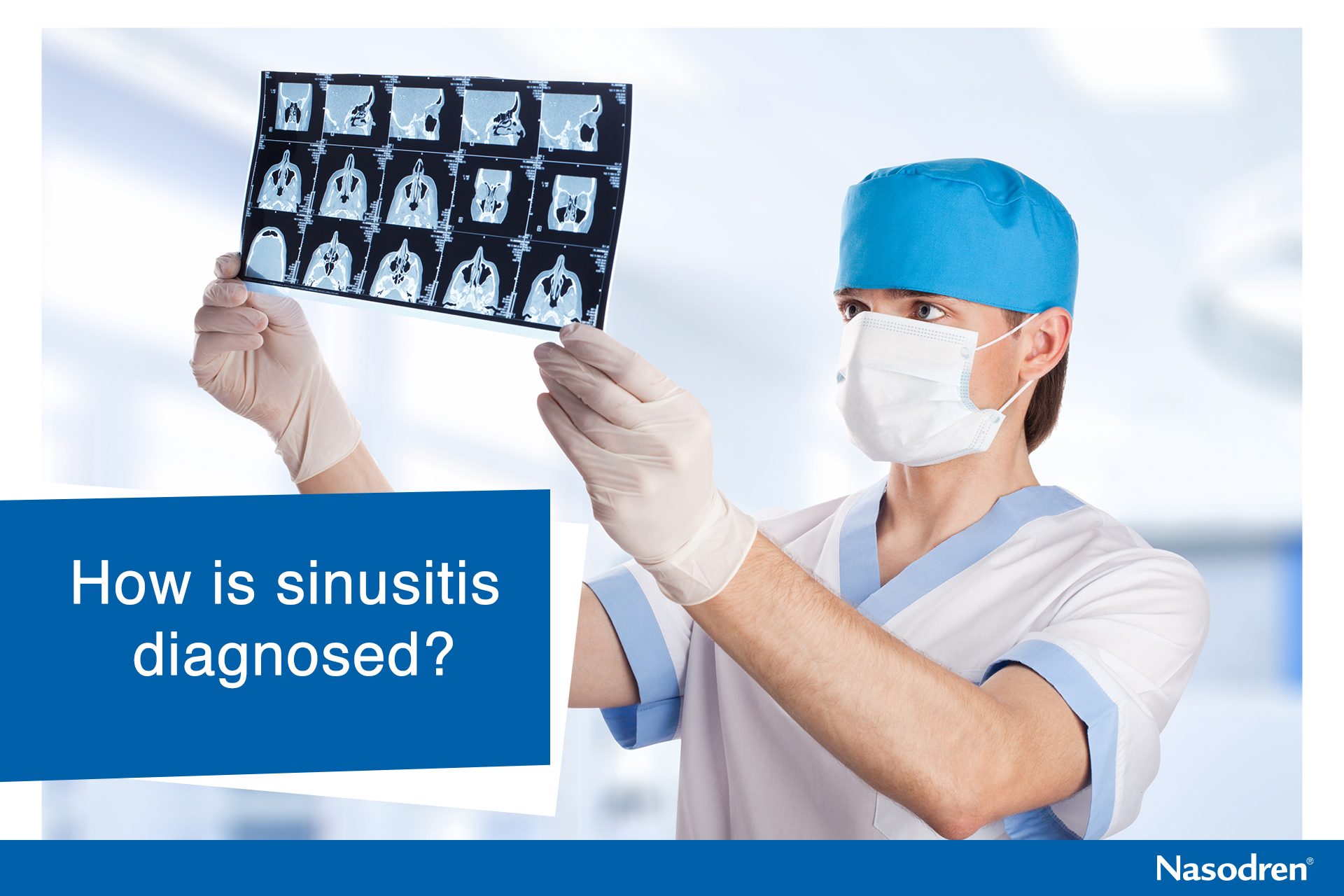
Sinusitis diagnosis usually begins with symptoms and a physical exam. In many cases, that is enough for a provider to recognize the pattern, identify the likely cause, and decide whether the case is simple, recurrent, allergic, or severe.
The main point for readers is that diagnosis is usually stepwise. Doctors do not jump to a scan for every sinus problem. They start with the story the symptoms tell, then use tools like nasal endoscopy or CT only when the situation needs more detail.
How Doctors Diagnose Sinusitis?
Cleveland Clinic explains that providers diagnose sinusitis based on symptoms and health history, then check the ears, nose, and throat for swelling or other clues. That first pass matters because the timing, severity, and pattern of symptoms often tell the clinician whether the condition is likely viral, bacterial, allergic, chronic, or recurrent.
This is why readers should not assume that diagnosis always means a scan. A good clinical exam often gives the answer quickly, especially in acute cases.
Symptoms That Point Toward Sinusitis
Common clues include facial pain or pressure, stuffy or runny nose, thick mucus, decreased smell, headache, fever, bad taste, bad breath, cough, and tiredness. Mayo Clinic and Cleveland Clinic both describe this symptom cluster as the usual starting point for diagnosis.
- Facial pressure around the nose, cheeks, or forehead
- Thick yellow or green mucus
- Nasal congestion or blockage
- Headache or tooth pressure
- Symptoms that last too long or return repeatedly
What the Physical Exam Includes?
During the office visit, the provider checks tenderness in the nose and face, looks inside the nose, and looks for swelling, drainage, or blockage. That exam can reveal whether the sinus passages appear inflamed and whether the symptoms fit sinusitis better than another condition.
The physical exam is often the fastest way to narrow the diagnosis before moving to anything more advanced.
Nasal Endoscopy: When and Why It Is Used?
If the diagnosis is unclear or the symptoms keep coming back, a provider may use nasal endoscopy. Cleveland Clinic describes it as a procedure in which a thin, flexible tube with a light and camera is inserted into the nose so the clinician can see the sinus openings and nasal passages directly.
Nasal endoscopy is usually quick, outpatient, and doesn’t require sedation. It is especially useful when a clearer look is needed for persistent congestion, facial pain, nosebleeds, sinus headaches, or loss of smell.
When CT Scan or Imaging Is Needed?
Mayo Clinic notes that imaging is not usually used for simple acute sinusitis. A CT scan is more useful when doctors need to rule out another cause, investigate a difficult case, or look into complications or recurrent disease. In other words, the scan is a problem-solving tool, not a routine first step.
This helps readers understand why a doctor may treat a case based on symptoms first and only order imaging later if the pattern does not make sense or does not improve.
How Allergy Testing Helps?
Allergy testing becomes relevant when the symptoms suggest that allergic inflammation may be triggering or worsening the sinus problem. Cleveland Clinic notes that allergies, nasal polyps, and structural issues such as a deviated septum can all contribute to sinusitis, especially when the problem is chronic or recurrent.
For that reason, allergy testing is not for every patient, but it can be important when the clinician suspects a noninfectious driver.
When Labs or Samples Are Used?
Some cases may need nasal swabs or tissue samples, but those are selective tools rather than routine ones. They are usually reserved for cases that are worsening, not improving, or otherwise hard to classify. The idea is to identify the cause when the regular clinical picture is not enough.
When Sinusitis Is Diagnosed Without Extra Tests?
For many acute cases, symptoms plus a physical exam are enough. Mayo Clinic says most acute sinusitis gets better on its own, and self-care is usually enough to ease symptoms. That is why a clinician may diagnose the problem and recommend watchful waiting instead of ordering a scan right away.
This is also why not every sinus problem needs antibiotics. If the cause is viral, antibiotics will not help; doctors often wait unless symptoms are severe, worsening, or long-lasting.
How Nasodren® Fits Into Symptom Management?
Nasodren® does not diagnose sinusitis, but it can fit into the symptom-management phase while the reader is waiting for the condition to improve or for the clinician to decide the next step. It is a 100% natural, CE 0051 Class IIA medical device (not a medicine), used once daily, priced at €29.50 (30+ applications per bottle). Around 94% of users report significant or complete symptom improvement. Its mechanism is tied to trigeminal nerve stimulation and improved sinus drainage, supported by 30+ published clinical studies and an EPOS2012 Level A recommendation (though Cochrane 2018 notes further evidence is needed to confirm efficacy). Short-term burning and sneezing after application can be expected and normal.
When to See an ENT or Doctor Again?
Repeat evaluation makes sense when symptoms last longer than expected, become severe, keep returning, or improve and then get worse again. Recurrent episodes, persistent blockage, or significant pain may point to a chronic issue that needs specialist review.
That follow-up step matters because the diagnosis can change once the pattern becomes chronic rather than acute.
Key Takeaways
- Sinusitis is usually diagnosed with symptoms and a physical exam first.
- Nasal endoscopy helps when doctors need a clearer look inside the nose and sinus openings.
- CT scans are selective, not routine, for simple acute cases.
- Allergy testing matters when allergies may be driving the problem.
- Nasodren® can support symptom relief, but it is not a diagnostic tool.
Bottom line: the diagnosis path is usually simple at the start and more detailed only when the case needs it. That helps readers understand why one person gets a quick office diagnosis while another may need imaging, endoscopy, or specialist follow-up.