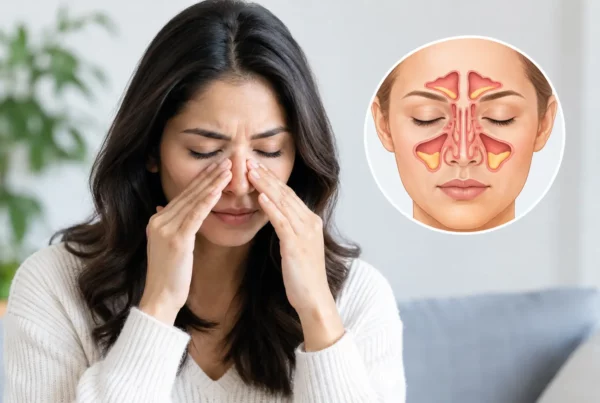
A blocked nose, facial pressure and thick mucus can make ordinary routines feel surprisingly difficult. Knowing the things to avoid during sinusitis can help you make sensible self-care choices without overlooking symptoms that need a doctor or qualified healthcare professional.
Sinusitis means inflammation of the lining of the sinuses, often following a cold. Similar symptoms can also have other causes, including allergies, migraine or dental problems, so facial pain or headache should not automatically be assumed to be sinus-related. Most short-lived symptoms improve with time and supportive care, but a few common habits can make discomfort worse or create avoidable risks.
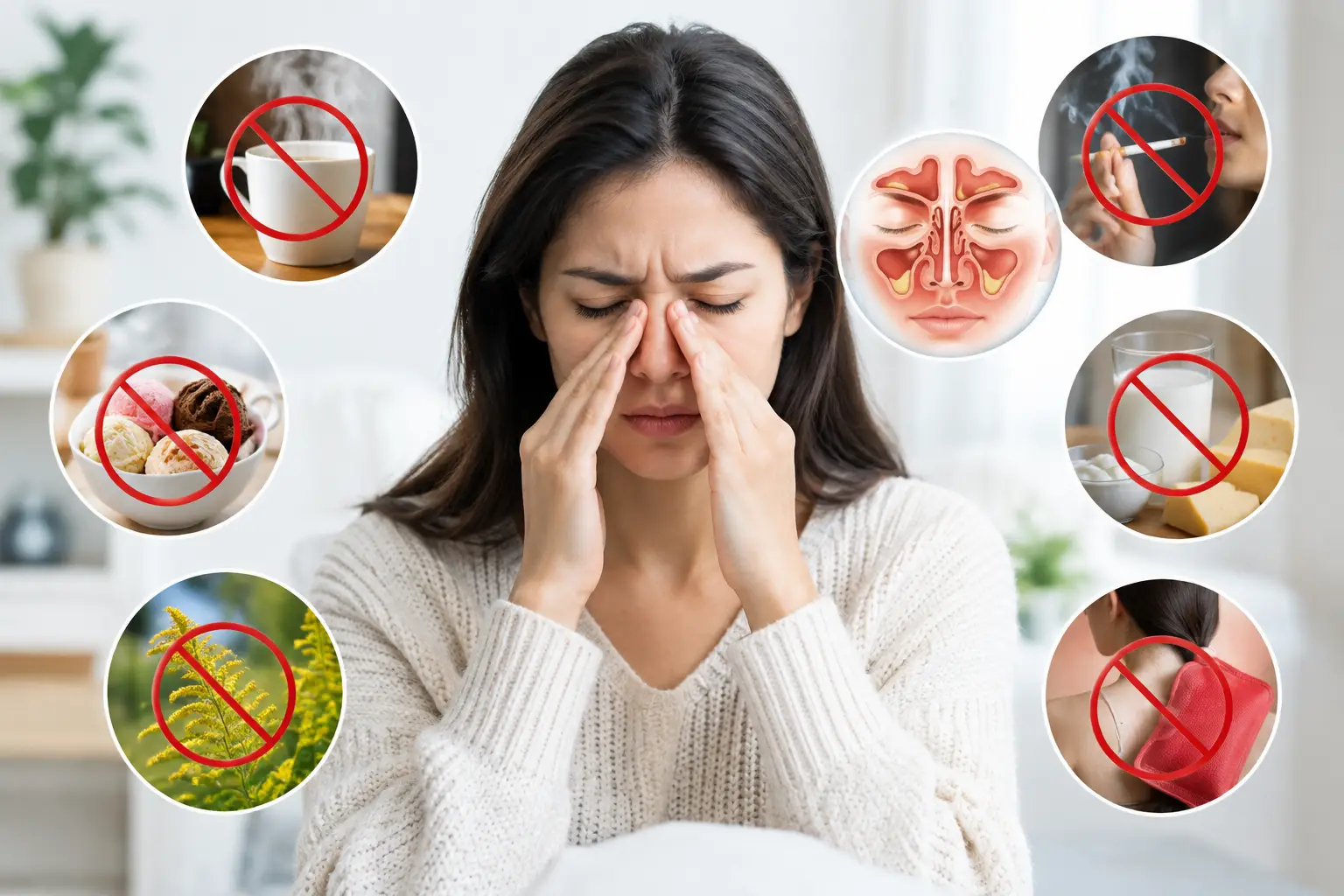
Things to avoid during sinusitis
1. Avoid smoking and second-hand smoke
Tobacco smoke irritates the nose and airways and can interfere with the normal clearance of mucus. If you smoke, reducing or stopping may benefit your wider respiratory health as well as helping to limit irritation while you are unwell. Try to avoid smoky indoor spaces and ask others not to smoke around you.
This also applies to vaping aerosols if they irritate your nose or throat. The priority is reducing exposures that leave your nasal passages feeling more congested, dry or sore.
2. Avoid using decongestant nasal sprays for too long
A pharmacy decongestant spray may provide short-term relief from a blocked nose for some adults, but it is not suitable for everyone. Using certain sprays for longer than the period stated on the label can lead to rebound congestion, where the nose feels even more blocked when the medicine is stopped.
Check with a pharmacist before using a decongestant if you are pregnant or breastfeeding, have high blood pressure, heart disease, glaucoma, thyroid problems, prostate symptoms, or take regular medicines. Follow the product label and do not combine products with the same active ingredient without advice.
3. Avoid antibiotics left over from a previous illness
Many episodes of acute sinusitis are linked to viral infections, and antibiotics do not help viral illnesses. Taking leftover antibiotics, sharing someone else’s prescription or stopping a prescribed course early can cause harm and contributes to antibiotic resistance.
A clinician may decide antibiotics are appropriate in selected circumstances, based on your symptoms, medical history and examination. That decision should not be replaced by self-treatment with medicines from a cupboard.
4. Avoid forcing nasal rinses or using unsafe water
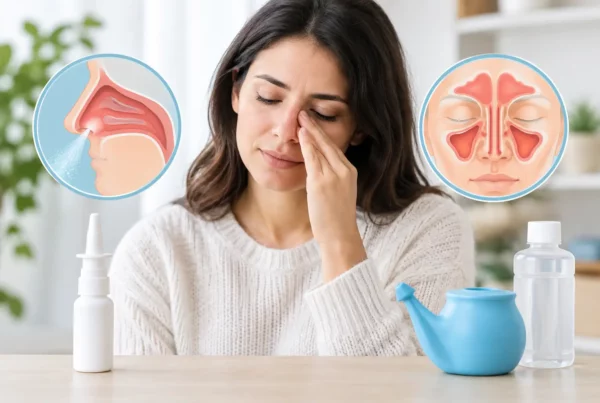
Saline sprays or nasal irrigation may be considered by some people for nasal symptoms. However, technique and hygiene matter. Do not force liquid through a completely blocked nose, and stop if rinsing causes significant pain, ear pressure or nosebleeds.
Use the device exactly as instructed, keep it clean and use water prepared as directed by the manufacturer or healthcare professional. Tap water is not always appropriate for nasal irrigation unless it has been properly treated according to those instructions. If you are unsure which option suits you, ask a pharmacist.
5. Avoid strong scents and irritants
Perfume, cleaning sprays, paint fumes and heavily fragranced products can trigger or worsen nasal irritation in some people. There is no need to remove every scent from your life, but it is reasonable to minimise exposures that clearly make your congestion, coughing or eye irritation worse.
Be cautious with essential oils too. Evidence for them as sinusitis treatments is limited, and they can irritate the skin and airways or trigger allergy symptoms. Do not put essential oils inside the nose or add them to nasal-rinse solutions.
6. Avoid very dry or overheated air
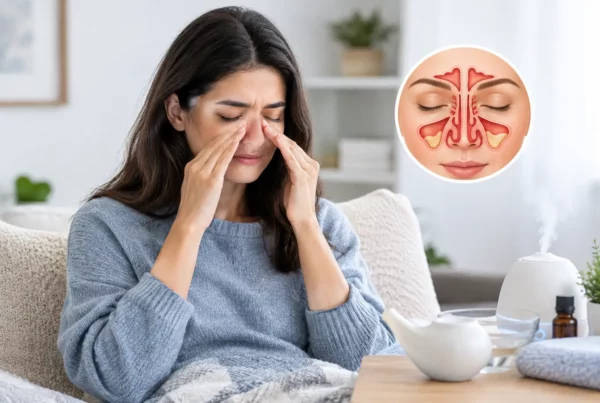
Central heating can leave indoor air dry, which may make the nose and throat feel uncomfortable. Aim for a comfortable room temperature, drink regularly and consider whether heating is set higher than necessary. A clean humidifier may help some people feel more comfortable, but it is not a treatment for sinusitis and poorly maintained units can encourage mould or germs.
Steam inhalation is also often suggested. It may feel soothing for a short time, but it does not treat the underlying cause of sinusitis, and hot water carries a real risk of scalds. Avoid leaning over bowls of boiling water, particularly when tired, dizzy or caring for children.
7. Avoid ignoring sleep and hydration
There is no special drink that clears sinusitis, but regular fluids can support general comfort when you have a cold-like illness. Alcohol may worsen dehydration, disrupt sleep and interact with some medicines, so it is sensible to limit it while you are unwell.
Rest is not always convenient, but poor sleep can make pain, fatigue and congestion harder to manage. Try sleeping with your head slightly raised if lying flat makes nasal blockage feel worse. This is about comfort rather than a cure, and what works can vary between individuals.
8. Avoid taking pain relief without checking what is in it
Paracetamol/acetaminophen or ibuprofen may be suitable for pain or fever for some adults, depending on their health and other medicines. Cold and flu products may already contain pain relief, so taking multiple products can accidentally lead to too much of the same ingredient.
Read every label carefully. Ask a pharmacist or qualified healthcare professional before taking pain relief if you have stomach ulcers, kidney disease, liver disease, asthma that is affected by anti-inflammatory medicines, take blood-thinning medicine, or are pregnant. Do not give adult medicines to children unless a healthcare professional advises it.
9. Avoid treating persistent or recurring symptoms as ‘just another cold’
Acute sinus symptoms often settle within a few weeks, but persistent, frequently recurring or one-sided symptoms deserve assessment. A doctor or qualified healthcare professional can consider whether allergies, nasal polyps, dental infection, medication effects or another condition may be contributing.
Seeking advice is particularly worthwhile if symptoms are not improving after around three weeks, keep returning, or are affecting sleep, work and daily life. It does not mean something serious is necessarily wrong. It means you deserve clearer guidance than repeated self-care alone can provide.
10. Avoid delaying advice when warning signs appear
Sinus symptoms can usually be managed safely, but urgent assessment is needed for severe or rapidly worsening illness. Seek urgent medical advice for swelling or redness around an eye, changes in vision, severe headache unlike usual headaches, confusion, stiff neck, persistent vomiting, significant swelling of the face, or if you feel very unwell.
Contact a doctor or qualified healthcare professional promptly if you have a weakened immune system, are receiving treatment that affects immunity, or have severe symptoms that are worsening after initial improvement. These situations need individual assessment rather than online advice.
What to do instead
Keep your approach simple. Rest where possible, drink enough to stay comfortable, avoid smoke and known irritants, and use over-the-counter medicines only as directed. A pharmacist can help you compare options and check whether they are appropriate alongside your other medicines or health conditions.
If you choose a sinus-focused nasal product, use only one that is appropriate for you and read and follow the product label, package leaflet or instructions for use. A product should not be used as a substitute for diagnosis or clinician-led care when symptoms are severe, unclear, persistent or recurrent.
Sources consulted
This article reflects general consumer guidance consistent with information from the NHS on sinusitis, NICE guidance on acute sinusitis antimicrobial prescribing, and public health advice on the safe use of over-the-counter medicines. Individual recommendations may differ according to your health history and the specific product involved.
This content is for general information only and does not replace advice from a qualified healthcare professional. Always read and follow the product label, package leaflet or instructions for use. Seek medical advice if symptoms are severe, persistent, worsening, recurrent or concerning.
When sinus symptoms are making the day feel longer, the most useful next step is usually the least dramatic one: remove likely irritants, use medicines carefully, give your body time to recover, and ask for professional advice when the pattern does not feel right.