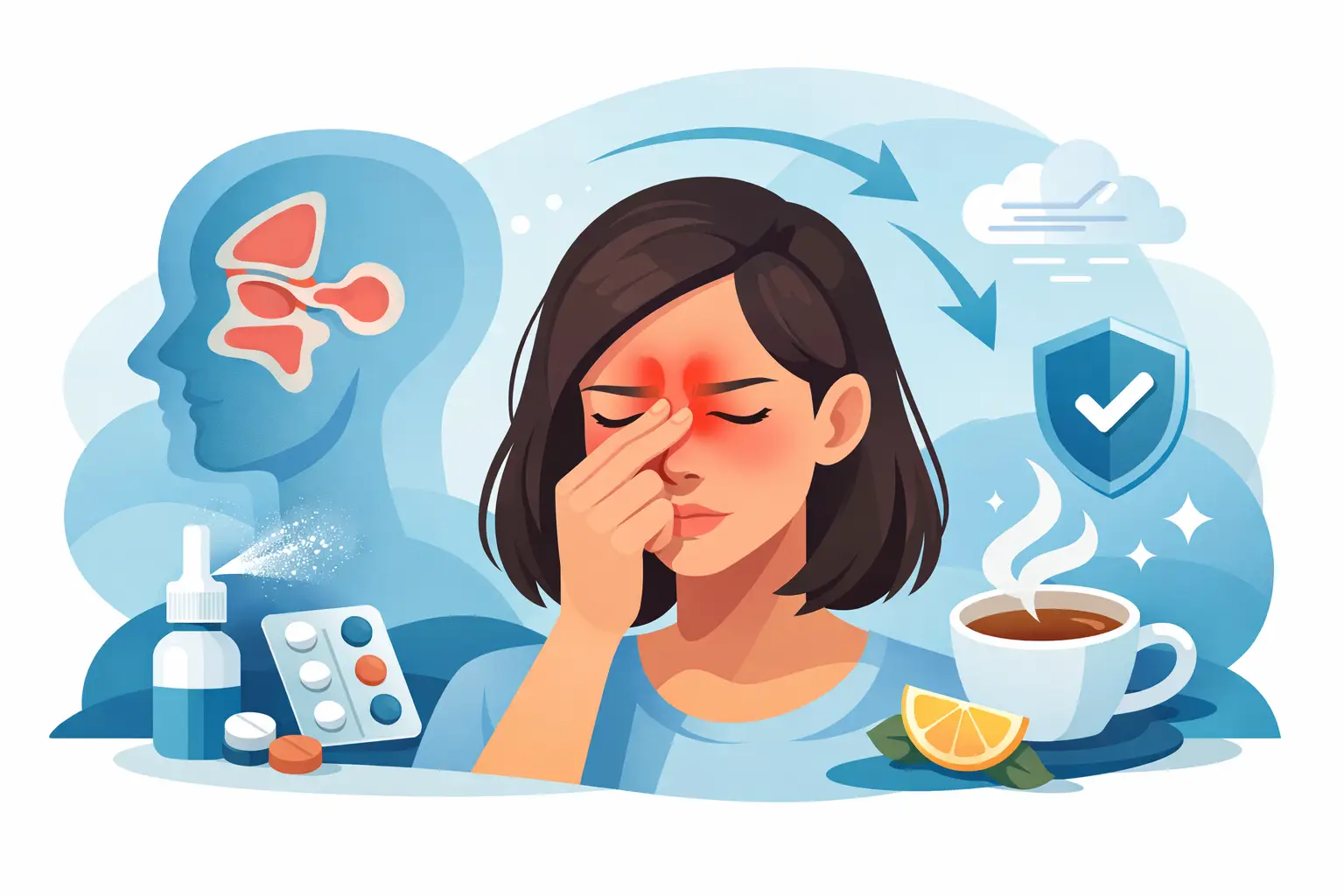
When your face feels heavy, your nose is blocked and every time you bend forward the pressure ramps up, acute sinusitis relief becomes less about comfort and more about getting through the day. Work, sleep and concentration can all suffer quickly, especially when thick mucus, facial pain and a dulled sense of smell arrive together.
Acute sinusitis usually develops after a cold, flu or upper respiratory infection. The lining of the sinuses becomes inflamed, drainage slows down and mucus starts to build. That combination is what creates the familiar feeling of congestion, pressure and pain around the cheeks, eyes and forehead. For many people, the main question is simple: what will actually help, and how quickly?
What acute sinusitis feels like
Acute sinusitis is not the same as ordinary nasal stuffiness. The pressure tends to feel deeper and more localised, and the blockage often comes with pain or tenderness in the face. Some people also notice thick nasal discharge, reduced smell, headache, post-nasal drip, bad breath or discomfort in the upper teeth.
Symptoms can vary in intensity. One person may mainly struggle with blocked nasal passages and poor sleep, while another may be dealing with marked facial pressure and difficulty breathing through the nose. That difference matters because the best approach often depends on whether the main problem is inflammation, trapped mucus, or both.
Acute sinusitis relief starts with drainage
One of the biggest drivers of symptoms is poor sinus drainage. When swollen sinus linings narrow the natural openings, mucus cannot move out properly. Pressure builds, the nose feels blocked and the environment inside the sinuses becomes harder to clear.
That is why effective acute sinusitis relief is not just about masking symptoms. It should support mucus drainage, reduce inflammation and help restore normal nasal function. If a treatment only gives a brief sensation of opening the nose without addressing mucus retention, relief may be short-lived.
For many adults, the most useful approach combines practical self-care with a sinus-focused treatment. Steam may feel soothing, but it does not reliably resolve the underlying blockage. Hydration helps keep mucus from becoming overly thick, yet on its own it is unlikely to shift significant sinus congestion. These measures can support recovery, but they are rarely enough when sinus pressure is established.
What treatments can help
Saline rinses or sprays can be useful in mild cases. They help moisten the nasal passages and may assist with clearing surface mucus. They are generally well tolerated, but they may not provide enough relief if the sinuses are already significantly inflamed or if mucus is trapped deeper in the sinus cavities.
Oral pain relief can help with headache, facial pain and general discomfort. This can make the condition more manageable while the inflammation settles. Still, pain relief does not treat the cause of the blockage, so it works best as part of a wider plan rather than as a standalone answer.
Short-term decongestants may reduce swelling in the nasal lining and offer temporary improvement in airflow. The trade-off is that they are not suitable for everyone, and overuse of some nasal decongestant sprays can lead to rebound congestion. For people looking for a more sinus-specific option, that limitation matters.
A targeted natural nasal spray designed for sinusitis may offer a more direct route to relief. Rather than simply shrinking blood vessels for a short period, a specialist treatment can be aimed at promoting drainage, reducing retained mucus and helping the sinuses return to more normal function over a defined course of use. This is where a product such as Nasodren may be relevant for adults seeking a natural, once-daily option supported by clinical evidence.
Why inflammation matters as much as congestion
People often describe the problem as being blocked, but inflammation is usually doing much of the damage. When the sinus lining becomes irritated and swollen, normal ventilation and drainage are disrupted. The result is not only congestion but also pressure, pain and a sense that the nose simply is not working properly.
This is why symptom management can feel frustrating if it focuses only on airflow. You may notice a little improvement in nasal breathing, yet still feel heaviness in the face or ongoing post-nasal drip. Better relief usually comes when treatment addresses the inflammatory process and the mucus retention that follows it.
When to treat at home and when to get advice
Most cases of acute sinusitis improve without invasive treatment, but that does not mean every case should be ignored. Home treatment is often reasonable when symptoms are relatively recent and there are no warning signs such as severe swelling around the eyes, confusion, chest pain or significant breathing difficulty.
If symptoms are getting worse rather than better, last longer than expected, or keep returning, it is worth getting medical advice. A high temperature, severe one-sided facial pain or symptoms after an initial improvement can also justify review. The same applies if you have an underlying condition that affects immunity or if sinus issues are becoming a recurring pattern.
There is also an it-depends factor with antibiotics. Some people assume sinusitis always needs them, but many cases are viral and will not benefit from antibiotic treatment. Overprescribing is not helpful. On the other hand, there are situations where a clinician may suspect a bacterial infection and consider them appropriate. The key is choosing treatment based on the pattern of symptoms, not guesswork.
A practical timeline for acute sinusitis relief
In the first few days, the priority is usually easing pressure and supporting drainage. Rest, fluid intake, gentle saline use and pain relief can help. If symptoms are clearly sinus-based rather than just part of a common cold, using a sinus-focused treatment early may make a meaningful difference to comfort and recovery.
Over the next several days, you should start to see some shift in pressure, mucus flow and nasal function. Relief is not always instant or linear. Some people notice improved drainage first, then less pressure, then easier breathing. Others feel facial pain settle before congestion fully clears.
If there is no meaningful improvement, or if symptoms intensify, reassessment becomes more important. Persistent blockage, ongoing thick discharge and recurrent episodes can point to a broader sinus problem rather than a one-off short illness.
Choosing a treatment that fits real life
The best treatment is not only the one that works on paper. It also needs to be practical enough that you will actually use it properly. Adults dealing with work, family and interrupted sleep tend to prefer options that are straightforward, fast to use and designed specifically for sinus symptoms.
That is one reason broad cold-and-flu products can disappoint. They may target several symptoms at once, but not always the ones that matter most in sinusitis. If your main issues are pressure, inflammation and poor mucus drainage, a sinus-specific treatment is often a better fit than a general congestion remedy.
Natural origin is another factor many people care about, but it should not come at the expense of evidence. A credible product should combine a clear mechanism of action with safety and efficacy data. That balance between natural composition and clinical support is often what gives patients confidence to try something more specialist.
How to support recovery at home
Small adjustments can make treatment work better. Try to rest with your head slightly elevated, especially at night, as this may reduce the feeling of pressure. Keep indoor air comfortable rather than overly dry, and avoid irritants such as cigarette smoke, which can aggravate already inflamed nasal passages.
It is also sensible not to overdo multiple products at once. Layering sprays, tablets and home remedies without a clear plan can leave you unsure what is helping and may increase irritation. A focused routine is usually better than a crowded one.
Relief should feel specific, not vague
When sinus symptoms are pronounced, you can usually tell the difference between superficial relief and genuine improvement. Real progress tends to mean less facial pressure, freer mucus drainage, better nasal breathing and a gradual return of normal daily function. You sleep more comfortably. You stop thinking about your sinuses every hour.
That is the standard worth aiming for. Acute sinusitis relief should not be about putting up with symptoms and hoping for the best. It should be about choosing a treatment approach that makes clinical sense, supports the body’s normal drainage and helps you get back to breathing, sleeping and functioning properly.
If your symptoms are recent but clearly sinus-related, acting early with the right support can make the episode easier to manage and, in some cases, shorter and less disruptive. When your sinuses are blocked, inflamed and under pressure, targeted treatment is often the difference between simply waiting and actually feeling better.