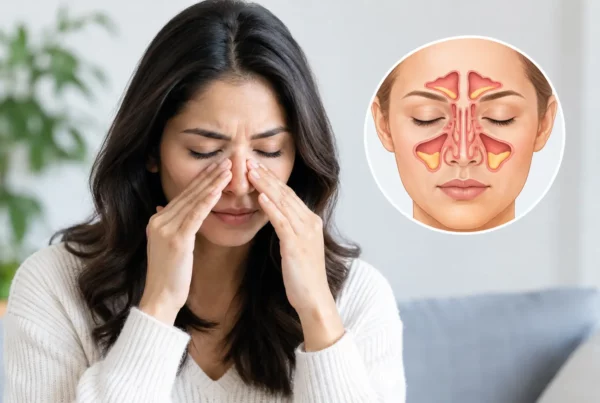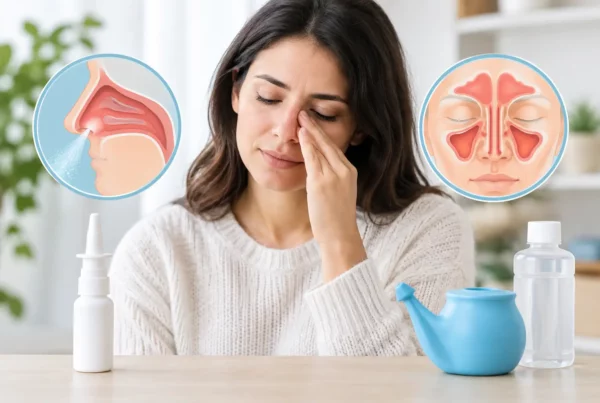
A blocked nose that will not shift can make it difficult to tell whether you have allergic rhinitis or sinusitis. Both can cause congestion, altered smell and pressure around the face. However, the pattern of symptoms, what triggers them and how long they last can offer useful clues. They can also occur together, so the answer is not always clear-cut.
The aim is not to self-diagnose, but to understand what may be contributing to your symptoms, try appropriate self-care and recognise when a doctor or qualified healthcare professional should assess you.
Allergy rhinitis or sinusitis: what is the difference?
Allergic rhinitis is an allergic response inside the nose. It happens when the immune system reacts to a trigger that is usually harmless, such as pollen, house dust mites, mould spores or animal dander. It is sometimes called hay fever when pollen is the trigger.
Sinusitis describes inflammation and swelling of the lining of the sinuses – the air-filled spaces around the nose, cheeks, eyes and forehead. It commonly follows a cold or other upper respiratory infection. Swelling can make it harder for mucus to clear normally, leading to congestion, nasal discharge and facial discomfort.
Allergies can contribute to sinus symptoms by causing nasal swelling, while a cold can also irritate the nose and sinuses. That overlap is why symptoms alone do not always provide a definite answer.
Clues that point towards allergic rhinitis
Allergic rhinitis often brings itching. An itchy nose, eyes, throat or roof of the mouth, together with repeated sneezing and watery eyes, makes an allergy more likely. Nasal discharge is commonly clear and runny, especially early on.
Symptoms may appear at particular times of year, after gardening, when windows are open, around pets or in dusty environments. They may improve when you are away from the trigger. Some people have symptoms only during pollen season, while others experience them throughout the year.
Facial pressure can happen with a very blocked nose, but prominent pain in the cheeks, forehead or around the eyes is less typical of allergic rhinitis alone. Fever is also not a usual feature of an allergy.
Clues that point towards sinusitis
Acute sinusitis often develops during or after a cold. A blocked nose and reduced sense of smell are common, alongside thicker mucus that may be yellow or green. The colour of mucus alone does not prove a bacterial infection or mean that antibiotics are needed.
You may notice pressure, tenderness or aching in the cheeks, forehead or around the eyes. Symptoms can feel worse when bending forward. Some people develop a cough, particularly at night, because mucus is running down the back of the throat. Tiredness, ear pressure and discomfort in the upper teeth can also occur.
Most acute sinus symptoms improve over time, often within two to three weeks. A cold-related sinus problem can feel unpleasant, but it is commonly caused by a virus. Antibiotics are not routinely used for uncomplicated cases, although a clinician may consider them in selected situations after assessing the symptoms and your health history.
Facial pain and headache have many possible causes, including migraine, dental problems and jaw conditions. Do not assume that every headache or episode of facial pain is due to the sinuses.
When both may be playing a part
It is possible to have allergies and sinusitis at the same time. For example, pollen-related nasal swelling may make you feel more congested during a cold, or long-standing allergic rhinitis may leave the nose more sensitive to other irritants.
A useful question is whether itching and sneezing were present before the cold-like symptoms began. Another is whether your symptoms follow a familiar seasonal or environmental pattern. Keeping a brief note of timing, triggers, nasal symptoms and any medicines used can make a conversation with a pharmacist or healthcare professional more productive.
Sensible self-care for nasal and sinus symptoms
The best approach depends on the likely cause, the severity of symptoms and your individual circumstances. A pharmacist can help you choose an option that is appropriate alongside any existing medicines or health conditions.
For suspected allergies, reducing exposure to known triggers may help. During high-pollen periods, this might mean checking pollen forecasts, changing clothes after spending time outdoors and keeping windows closed when pollen levels are high. Regular cleaning can help with indoor triggers such as dust, but it is rarely possible to remove every trigger completely.
Non-prescription antihistamines may help some people with sneezing, itching and watery eyes. Steroid nasal sprays may also be considered for allergic rhinitis, but they need to be used correctly and may take several days of regular use before their full benefit is felt. A pharmacist can explain suitable options and nasal spray technique.
For congestion linked to a cold or sinus discomfort, rest, drinking enough fluids and using paracetamol/acetaminophen for pain or fever, if suitable for you, may be helpful. Saline sprays or rinses may help to moisturise the nose and clear mucus. Follow the product instructions carefully. If preparing a rinse yourself, use water that has been boiled and allowed to cool, rather than straight tap water.
Decongestant nasal sprays can provide short-term relief for some adults, but should not usually be used for more than seven days because longer use can worsen congestion. Decongestants are not suitable for everyone, including some people with high blood pressure, heart conditions, glaucoma, thyroid disease or those taking certain medicines. Ask a pharmacist before using them if you are unsure.
Steam inhalation is sometimes tried for a blocked nose, but evidence of lasting benefit is limited and there is a real risk of scalds from hot water. Essential oils should not be put inside the nose, as they can irritate delicate nasal tissues and are not suitable for everyone.
If you are considering a sinus-focused nasal product, use it only for its authorised intended purpose and read and follow the product label, package leaflet or instructions for use. A product is not a substitute for an assessment when symptoms are severe, unusual or persistent.
When to speak to a healthcare professional
Seek advice from a doctor or qualified healthcare professional if symptoms are severe, getting worse after initially improving, lasting longer than around three weeks, or returning frequently. It is also sensible to seek advice if allergy symptoms are affecting sleep, work, daily activities or asthma control, or if non-prescription treatment is not helping.
People with a weakened immune system, significant long-term health conditions, or a history of repeated sinus problems may need earlier assessment. Symptoms lasting 12 weeks or more may be described as chronic rhinosinusitis and should be assessed rather than managed indefinitely as a simple cold or seasonal allergy.
Seek urgent medical help for swelling or redness around an eye, changes to vision, severe or escalating headache, confusion, a stiff neck, marked drowsiness, or if you feel seriously unwell. These symptoms are uncommon, but they need prompt assessment.
A practical way to decide what to do next
If sneezing, itching and watery eyes are the main issue, particularly when symptoms follow a known trigger, allergic rhinitis is a reasonable possibility to discuss with a pharmacist. If symptoms began with a cold and include persistent congestion, altered smell and facial pressure, acute sinusitis may be more likely.
Whatever the cause, pay attention to the direction of travel. Gradual improvement supports continued self-care within its limits. Symptoms that persist, recur or become more intense deserve professional advice. A careful assessment can help avoid treating the wrong problem and provide a clearer plan for breathing more comfortably.
References
NHS. Allergic rhinitis.
NHS. Sinusitis (sinus infection).
National Institute for Health and Care Excellence. Sinusitis (acute): antimicrobial prescribing.
Allergic Rhinitis and its Impact on Asthma (ARIA). Guidance on allergic rhinitis management.
This content is for general information only and does not replace advice from a qualified healthcare professional. Always read and follow the product label, package leaflet or instructions for use. Seek medical advice if symptoms are severe, persistent, worsening, recurrent or concerning.