A cold may be fading while your nose still feels blocked, your face feels heavy and pressure seems to build when you bend forward. This guide to post-cold sinus discomfort explains why that can happen, what sensible self-care may look like and when it is worth speaking to a doctor or qualified healthcare professional.
Why sinus discomfort can linger after a cold
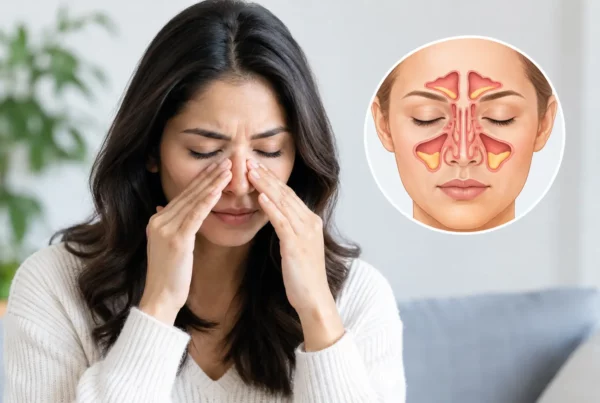
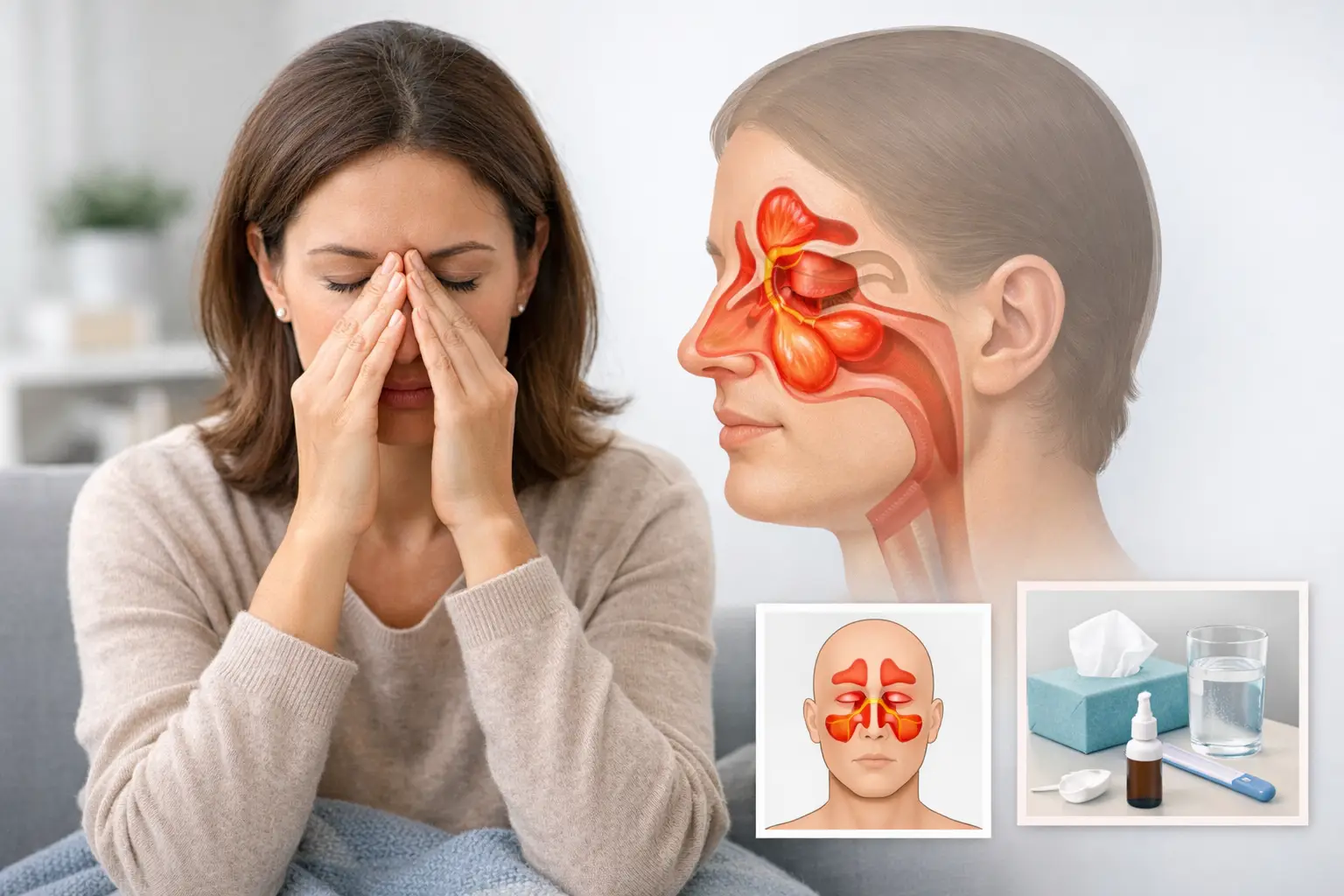
The lining of the nose and sinuses can remain irritated after a viral cold. The sinuses are air-filled spaces around the nose, connected by small openings. When the nasal lining is swollen or there is thicker mucus, those openings may not ventilate as freely as usual. This can contribute to congestion, a reduced sense of smell, nasal discharge or pressure around the cheeks, forehead or eyes.
These symptoms are often described as rhinosinusitis, meaning inflammation affecting the nose and sinuses. A cold is a common trigger, but it is not possible to tell the precise cause from symptoms alone. Facial pain and headache, for example, can have several causes and are not always due to the sinuses.
For many adults, post-cold symptoms improve gradually over days to a few weeks. The pace varies. It may depend on the severity of the original cold, allergies, smoking or vaping, exposure to irritants, and whether you have had similar problems before.
What post-cold sinus discomfort can feel like
Symptoms can be uncomfortable without necessarily meaning that something serious is happening. You may notice a blocked or runny nose, mucus that feels difficult to clear, pressure in the face, reduced smell, a cough caused by mucus at the back of the throat, or a feeling of fullness in the ears.
Mucus that is yellow or green can occur during a cold and its aftermath. Colour alone does not reliably show that antibiotics are needed. A healthcare professional will consider the full picture, including how long symptoms have lasted, whether they are improving, and whether there are signs of a more serious illness.
A practical guide to post-cold sinus discomfort at home
The aim of self-care is comfort while your body recovers, rather than forcing a quick fix. Choose measures that suit your symptoms, health conditions and regular medicines.
Keep fluids and rest realistic
Drinking regularly can make you more comfortable if you have a dry mouth, sore throat or fever. There is no need to force large quantities of water, but aim to stay normally hydrated. Rest, lighter activity and avoiding cigarette smoke may also be helpful while symptoms settle.
Sleeping with an extra pillow may reduce the feeling of nasal blockage for some people. If lying flat worsens coughing or pressure, a more upright position can be more comfortable.
Consider saline carefully
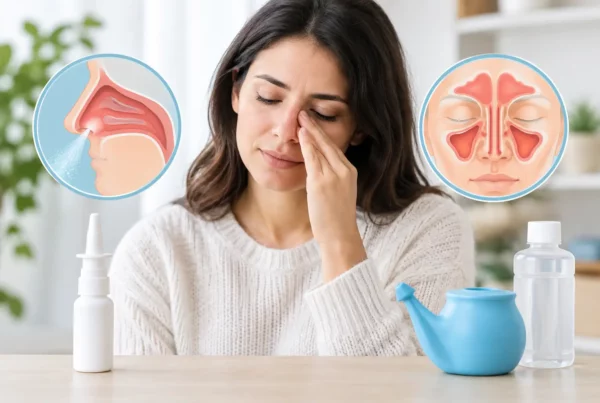
Saline nasal sprays or rinses may be considered to moisturise the nose and help wash away mucus. Some people prefer a simple saline spray; others use a rinse device. Results and comfort vary, and saline is not suitable for every situation.
If you use a nasal rinse, follow the device instructions closely. Use water that is sterile, distilled, or previously boiled and cooled, rather than water straight from the tap. Keep the device clean and do not share it. Stop and seek advice if rinsing causes significant pain, bleeding or ear discomfort.
Use pain relief appropriately
Facial tenderness, headache and fever can sometimes be managed with paracetamol/acetaminophen or ibuprofen, if these medicines are appropriate for you. Check the package instructions and avoid taking more than one product containing the same ingredient.
Ibuprofen is not suitable for everyone, including some people with stomach ulcers, kidney problems, certain heart conditions, asthma that is affected by anti-inflammatory medicines, or during pregnancy. A pharmacist can help you choose an option that fits your circumstances.
Be cautious with decongestants
Decongestant nasal sprays may offer short-term relief from a blocked nose for some adults, but they can cause rebound congestion if used for longer than stated on the label. They may also be unsuitable if you have high blood pressure, heart disease, glaucoma, thyroid problems, prostate symptoms, are pregnant or breastfeeding, or take certain medicines.
Oral decongestants also have important cautions and can cause side effects such as palpitations, restlessness or disturbed sleep. Ask a pharmacist or qualified healthcare professional before using them if you are unsure.
Avoid remedies that can irritate or burn
A warm shower may feel soothing, but steam inhalation has limited evidence for sinus symptoms and carries a real risk of scalding, particularly when using bowls of hot water. Essential oils should not be put inside the nose, as they can irritate sensitive tissue and may not be appropriate for everyone.
When symptoms need more than self-care
A cold-related sinus problem often begins to improve over time. Arrange advice from a doctor or qualified healthcare professional if symptoms are severe, last around 10 days without improvement, worsen after seeming to improve, or keep returning. It is also sensible to seek advice if facial pain is pronounced, you have a persistent high temperature, or symptoms are affecting sleep, work or daily life despite appropriate self-care.
A clinician may ask about allergies, asthma, dental problems, regular medicines and previous episodes. Dental infections can sometimes cause pain that feels like sinus pressure, especially in the upper teeth, so do not assume the cause based on location alone.
Seek urgent medical help for swelling or redness around an eye, changes in vision, severe headache unlike your usual headaches, confusion, a stiff neck, weakness, severe vomiting, or if you are very unwell. These symptoms are uncommon, but they need prompt assessment.
People with a weakened immune system, significant long-term health conditions, or a history of sinus surgery should have a lower threshold for seeking professional advice. Children need age-appropriate assessment and treatment advice rather than adult self-care recommendations.
What a healthcare professional may consider
Most post-cold sinus symptoms are assessed from the history and an examination of the nose, throat, ears and face. Scans and antibiotics are not routinely needed for uncomplicated symptoms, but they may be considered in selected situations.
Antibiotics do not help viral colds and are not automatically appropriate for sinus symptoms. However, a doctor may consider treatment differently where symptoms, examination findings or personal health factors suggest a bacterial infection or another cause. This is why monitoring the pattern of symptoms matters more than trying to self-diagnose from mucus colour or pressure alone.
If symptoms are recurrent, last for many weeks, or are associated with ongoing loss of smell, allergy symptoms or nasal blockage on one side, a healthcare professional can help explore the possible causes and next steps.
A calmer way to track recovery
Rather than judging every hour, check whether you are gradually able to breathe more comfortably, sleep better and return to normal activities over several days. A brief note of your temperature, pain level, nasal symptoms and any medicines used can be useful if you need to speak to a pharmacist or doctor.
This content is for general information only and does not replace advice from a qualified healthcare professional. Seek medical advice if symptoms are severe, persistent, worsening, recurrent or concerning.
References
NHS. Sinusitis (sinus infection): symptoms, self-care and when to seek medical advice.
NICE Clinical Knowledge Summaries. Sinusitis (acute): assessment and management.
UK Health Security Agency and NICE. Managing common infections: guidance for primary care.
For any nasal product, read and follow the product label, package leaflet or instructions for use. Recovery after a cold is not always perfectly linear, but worsening symptoms, persistent pain or uncertainty are good reasons to ask for individual advice rather than simply putting up with them.