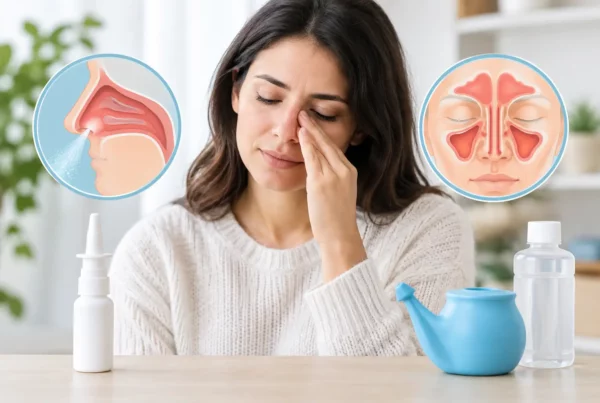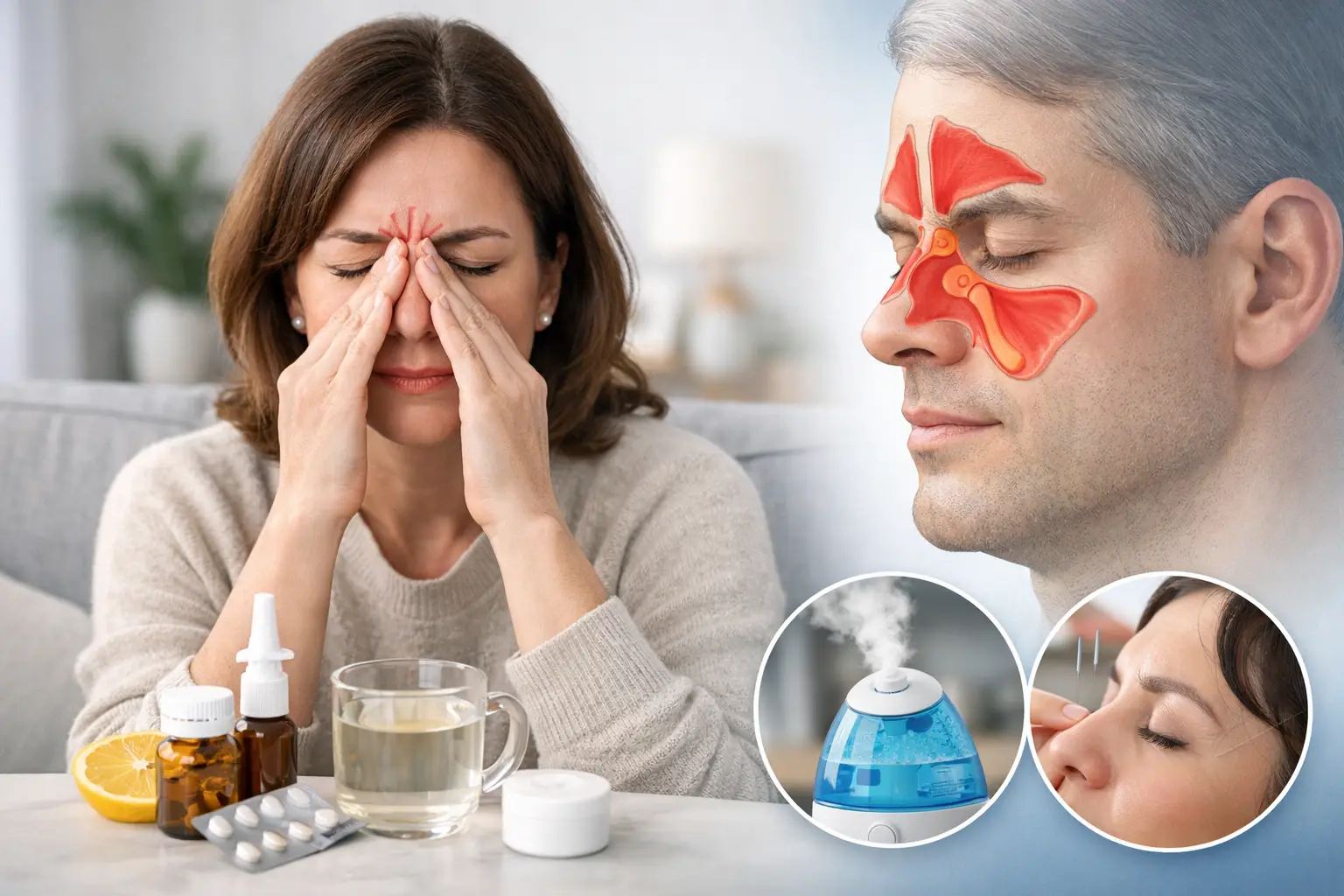
Facial pressure can make an ordinary cold feel far more draining. A blocked nose, aching cheeks or forehead, and a heavy feeling around the eyes may all be part of the picture. This guide to sinus pain relief options explains what may help at home, what to discuss with a pharmacist, and when symptoms need medical assessment.
Sinus pain is not always caused by a sinus problem. Migraine, tension-type headache, dental conditions and other causes can create pain in similar areas. That is why it is sensible to focus on the full pattern of symptoms rather than treating facial pain alone.
Why sinus symptoms can feel painful
The sinuses are air-filled spaces around the nose, cheeks, eyes and forehead. During a cold, allergy flare-up or other upper respiratory illness, the lining of the nose and sinuses can become irritated and swollen. Nasal mucus may be harder to clear, and this can be associated with congestion, pressure and discomfort.
Acute sinus symptoms commonly follow a viral cold and often improve gradually without antibiotics. Green or yellow mucus alone does not confirm a bacterial infection or mean that antibiotics are needed. A doctor or qualified healthcare professional can assess the whole clinical picture if symptoms are severe, prolonged or getting worse.
Guide to sinus pain relief options at home
For mild to moderate symptoms, the first aim is usually comfort, rest and helping the nose feel less blocked. There is no single option that suits everyone, and it may take a little trial and error to find a routine that is tolerable and useful for you.
Pain relief for facial pressure and headache
Paracetamol/acetaminophen may be considered for pain or fever when it is suitable for you. Some adults may also be able to use ibuprofen, which can help with pain, but it is not appropriate for everyone. For example, seek advice before using ibuprofen if you have had a stomach ulcer, kidney problems, certain heart conditions, asthma affected by anti-inflammatory medicines, or are pregnant.
Check the product label carefully and avoid accidentally taking the same ingredient in more than one cold-and-flu medicine. A pharmacist can help you choose an option that fits with your other medicines and health conditions.
Saline rinses or sprays
Saline nasal sprays or rinses may help moisturise the nasal passages and clear mucus for some people. They can be particularly useful when the nose feels dry, crusted or congested. Their effect can be modest, but they are a reasonable self-care option when used correctly.
If using a rinse device, follow its instructions exactly. Use sterile, distilled or previously boiled and cooled water as directed, and keep the device clean. Do not force a rinse through a completely blocked nose, and stop if it causes significant pain, nosebleeds or ear discomfort.
Rest, fluids and a comfortable environment
Resting and drinking enough fluid can support recovery from a cold or similar illness, even though they do not directly cure sinus symptoms. Some people find that sleeping with an extra pillow helps them feel more comfortable overnight. A clean humidifier may make dry indoor air easier to tolerate, although evidence that humidifiers relieve sinusitis itself is limited.
Steam inhalation is often suggested, but it has not been shown to provide reliable relief and can cause serious scalds. Avoid bowls of hot water and take particular care around children. Essential oils should not be put inside the nose, as they can irritate delicate nasal tissue and may not be suitable for everyone.
Pharmacy options: benefits and limitations
A pharmacist can be a useful first point of contact when symptoms are troublesome but do not appear urgent. They can check for medicine interactions, pregnancy considerations and conditions that affect which products are appropriate.
Decongestant sprays and tablets
Short-term decongestant nasal sprays may reduce the feeling of nasal blockage for some adults. However, using them for longer than the period stated on the label can lead to rebound congestion, where the nose feels even more blocked after the medicine wears off. They are not suitable for everyone, including some people with high blood pressure, heart disease, glaucoma, thyroid disease or prostate problems.
Oral decongestants can also cause side effects such as palpitations, poor sleep or raised blood pressure. Ask a pharmacist before using them, especially if you take regular medicines. They are not a substitute for an assessment when symptoms are worsening or persistent.
Nasal corticosteroid sprays
A nasal corticosteroid spray may be considered when allergy is contributing to ongoing nasal congestion or when a healthcare professional recommends it. These sprays generally need regular use and may not provide an immediate change in symptoms. Technique matters: aim the spray slightly outwards, away from the middle wall of the nose, and follow the product label, package leaflet or instructions for use.
They can cause local irritation or nosebleeds in some people. Speak to a pharmacist or doctor if you are unsure whether a steroid spray is suitable, particularly if you have recently had nasal surgery, frequent nosebleeds or use other steroid medicines.
When to seek advice rather than self-treat
Most post-cold sinus discomfort improves over time, but the trend matters. Arrange advice from a doctor or qualified healthcare professional if symptoms have lasted around three weeks without improvement, become worse after initially improving, recur frequently, or are affecting daily life despite sensible self-care.
It is also worth seeking assessment for severe one-sided facial or dental pain, persistent fever, a marked reduction in smell, or symptoms that are unclear. Dental infections can sometimes feel like sinus pain, particularly in the cheeks or upper teeth, and need different care.
Seek urgent medical advice if you develop swelling or redness around an eye, changes in vision, severe headache unlike usual headaches, confusion, a stiff neck, significant drowsiness, or if you feel very unwell. These symptoms are uncommon, but they should not be managed as routine sinus discomfort.
People with a weakened immune system, those receiving treatment that affects immunity, and anyone with serious long-term conditions should consider getting advice earlier. The same applies if symptoms occur after an injury or if a child is unwell, as children need age-appropriate assessment and treatment.
A simple way to decide what to try
If your symptoms are mild, recent and clearly linked to a cold, start with rest, fluids, appropriate pain relief and a saline product if it feels helpful. If blockage is the main issue, a pharmacist can advise whether a brief course of a decongestant is suitable. If allergies are a familiar trigger, discuss an allergy-focused plan rather than repeatedly treating each episode as an infection.
Keep an eye on the direction of travel. Gradual improvement is reassuring, while escalating pain, new symptoms or a failure to improve are reasons to step back from self-care and seek professional advice. If you choose any nasal product, read and follow the product label, package leaflet or instructions for use.
References
- NICE. Sinusitis (acute): antimicrobial prescribing. NICE guideline NG79.
- NHS. Sinusitis (sinus infection): symptoms, self-care and when to get help.
- NHS. Decongestants: uses, cautions and side effects.
- NHS. Steroid nasal sprays: uses and possible side effects.
This content is for general information only and does not replace advice from a qualified healthcare professional. Always read and follow the product label, package leaflet or instructions for use. Seek medical advice if symptoms are severe, persistent, worsening, recurrent or concerning.
The most useful next step is rarely the strongest product on the shelf. It is choosing an option that suits your symptoms and health circumstances, then getting advice promptly if the pattern does not fit a straightforward recovery.