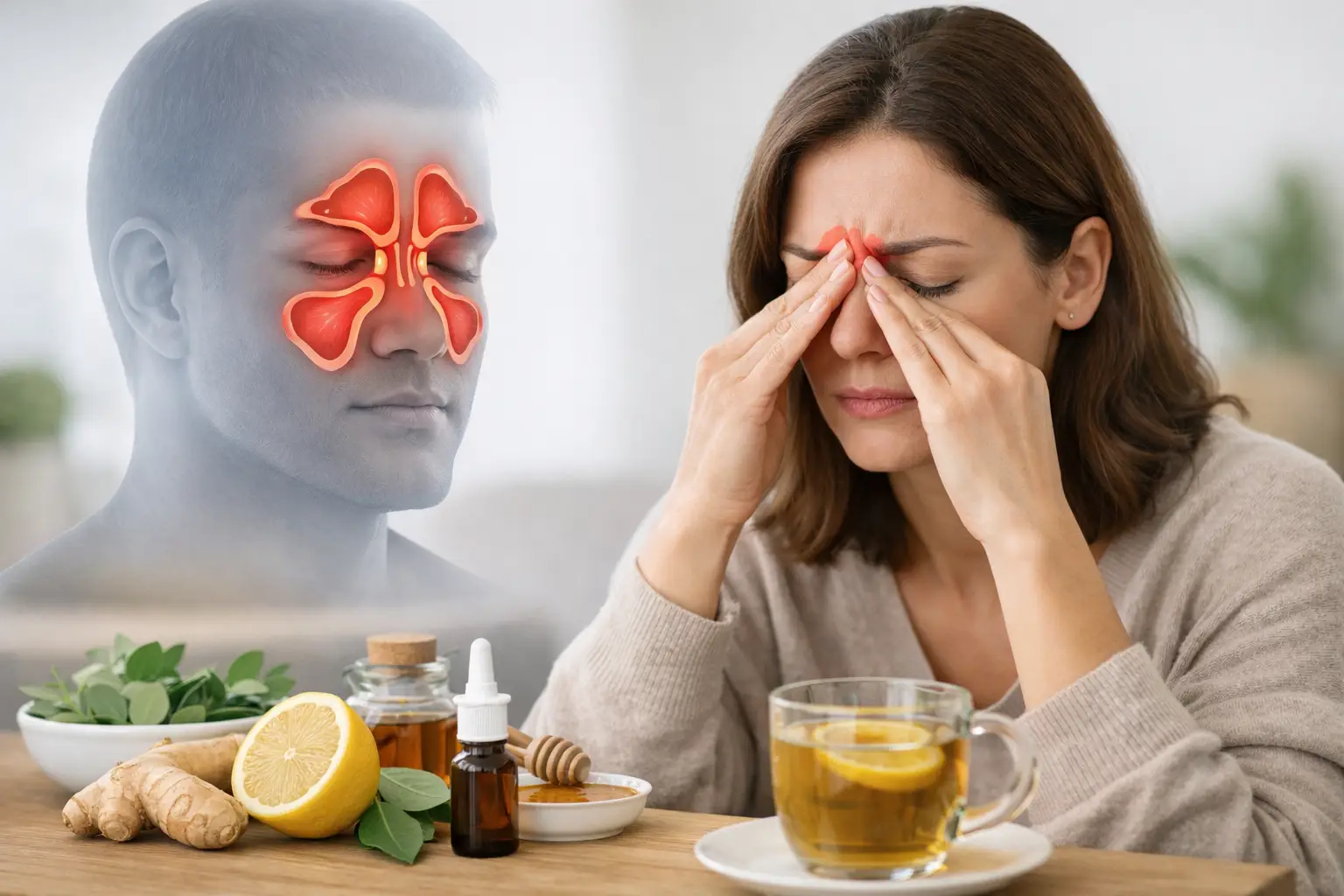
That heavy, pressing pain across the forehead or around the eyes often sends people searching for a natural treatment for sinus headache straight away. The difficulty is that not every headache linked to the face or nose is truly coming from the sinuses, so sensible self-care starts with understanding what your symptoms may be telling you.
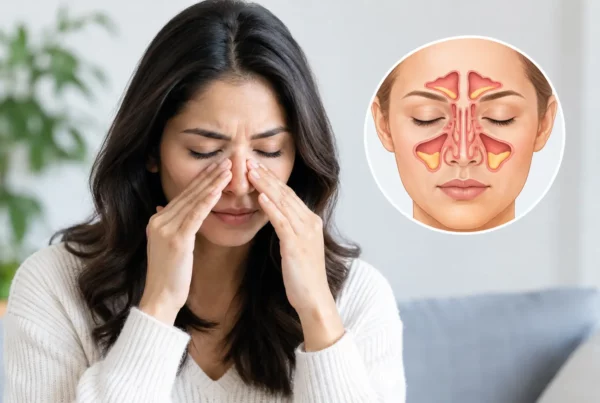
A sinus headache is usually talked about as pain or pressure felt in the cheeks, around the eyes, across the bridge of the nose or in the forehead, often alongside nasal congestion, thick mucus, reduced sense of smell or discomfort after a cold. For some people, bending forward makes the pressure feel worse. But similar symptoms can also happen with migraine or tension-type headache, which is one reason persistent or recurrent pain deserves proper medical assessment rather than endless self-treatment.
When natural treatment for sinus headache may help
If your symptoms have appeared with a cold, blocked nose or short-term sinus irritation, non-drug self-care may help you feel more comfortable while things settle. Natural approaches are usually aimed at supporting moisture in the nose, reducing irritation and helping mucus move more easily. They are not a diagnosis, and they will not suit every situation.
The most useful place to begin is often with the basics. Rest, fluids and gentle symptom monitoring are less glamorous than “miracle” remedies, but they are often the most sensible first step. If your headache is mild to moderate and comes with obvious congestion, these measures may be considered before moving on to stronger treatments.
Practical natural options to try at home
Steam and warm moisture
Warm steam may help some adults feel less blocked, at least for a short time. This could be from a warm shower or from sitting in a steamy bathroom. Some people also find that placing a warm flannel over the nose, cheeks and forehead eases pressure.
It depends on the person. Steam can feel soothing, but it does not work for everyone, and there is a real burn risk with bowls of boiling water. If you try steam, keep it gentle and avoid anything that could spill or scald.
Saline nasal rinses or sprays
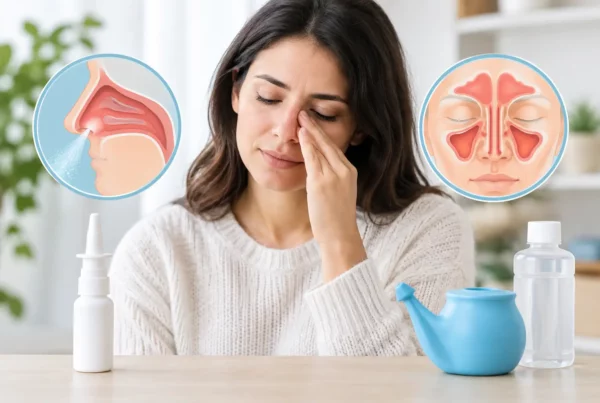
Saline is one of the better known non-medicinal options for nasal congestion linked to sinus discomfort. It may help moisten the nasal passages and wash away some mucus and irritants. That, in turn, may make pressure feel easier to manage.
Saline rinses are not the same as every other sinus product, and technique matters. Use products exactly as directed and pay close attention to hygiene, especially if a rinse bottle or irrigation device is involved. If a sinus-focused product such as Nasodren® is being considered, read and follow the product label, package leaflet or instructions for use, and make sure any claims relied on are appropriate for your market and the approved product information.
Hydration and gentle rest
When you are congested, dry air, poor sleep and not drinking enough can make everything feel worse. Keeping fluids up may help secretions stay less thick, although it is not a cure. Rest also matters because sinus symptoms often arrive during or after an upper respiratory infection, when the body is already under strain.
This does not mean forcing large amounts of water. It simply means drinking regularly and avoiding becoming dehydrated.
Humidified air
If the air in your home is dry, especially in winter or with indoor heating, a humidifier may make the nose and throat feel less irritated. The benefit tends to be about comfort rather than dramatic symptom change. Too much humidity can encourage mould, though, so balance matters.
Clean the device properly as directed. A poorly maintained humidifier can create other problems rather than help.
Sleep position and gentle pressure relief
Lying flat can sometimes make facial pressure feel more obvious. Sleeping with the head slightly raised may help some people feel less congested overnight. During the day, avoiding sudden head movements and bending down repeatedly can also reduce that pounding, full sensation.
Small adjustments like these are easy to overlook, but for a short-lived sinus flare they can be genuinely useful.
What about herbs, essential oils and “natural” remedies?
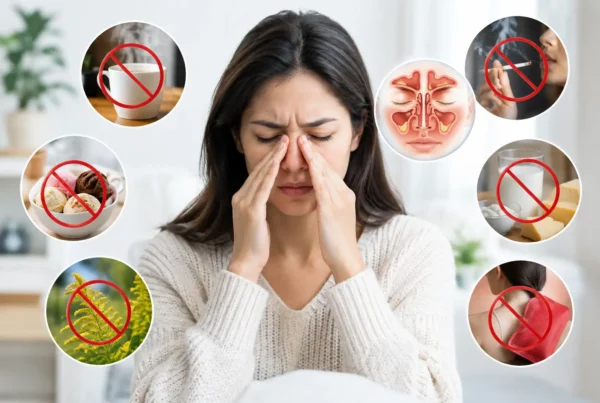
This is where a bit of caution is helpful. Many products are marketed as natural treatment for sinus headache, but “natural” does not automatically mean effective, suitable or low risk. Essential oils, menthol rubs and herbal preparations may smell strong enough to create the feeling of clearer breathing, yet the evidence for meaningful benefit is often limited or mixed.
Some people find scents such as eucalyptus or menthol comforting. Others find they irritate the nose, trigger headache or aggravate asthma. Essential oils should not be applied inside the nose, and concentrated products can irritate the skin and airways.
Herbal supplements deserve the same care. They can interact with medicines, may not be suitable during pregnancy or with certain medical conditions, and quality can vary. If you are thinking about trying one, speak to a doctor, pharmacist or qualified healthcare professional first.
Pain relief and natural care can sometimes sit together
Some adults prefer to avoid medicines where possible, but there are times when a balanced approach makes more sense than struggling through pain. If the headache is uncomfortable, standard pain relief such as paracetamol/acetaminophen may be considered, provided it is suitable for you and used according to the label.
That does not cancel out natural care. You might still use saline, rest, fluids and warm compresses alongside it. The key is not to layer multiple treatments without understanding what each one is for.
Signs it may not be a simple sinus headache
Facial pain is commonly blamed on the sinuses, but true sinus-related headache is often overestimated. If the pain keeps returning without obvious nasal symptoms, or if light, sound, nausea or one-sided throbbing are part of the picture, migraine may need to be considered. Tension-type headache can also cause pressure around the head and face.
This matters because the best treatment depends on the cause. Repeatedly trying natural sinus remedies for a problem that is not mainly sinus-related can delay more appropriate care.
When to seek medical advice
Home care has limits. Speak to a doctor or qualified healthcare professional if symptoms are severe, worsening, recurrent, or not improving after a reasonable period. Medical advice is especially important if you have fever, significant swelling around the eyes, vision changes, severe one-sided facial pain, confusion, a very intense headache, symptoms after a facial injury, or symptoms that persist well beyond a typical cold.
You should also get advice if you are pregnant, immunocompromised, have significant underlying health conditions, or are unsure whether a product or self-care measure is appropriate for you. Children, older adults and people with complex medical histories may need more tailored guidance.
Making sense of sinus-focused products
Many people comparing options want to know where a sinus-focused product fits in relation to saline, decongestants or simple home care. The honest answer is that it depends on the product, your symptoms and whether your situation is suitable for self-care at all.
A responsible approach is to look closely at the approved intended purpose, who the product is for, how it should be used, and its warnings and limitations. Avoid assuming that because something is available without a prescription, it is right for every type of facial pain or nasal congestion. Always read and follow the product label, package leaflet or instructions for use.
A sensible way to approach natural treatment for sinus headache
The most reliable natural approach is usually the least dramatic one: moisture, saline, rest, hydration and careful observation of how symptoms are changing. These steps may help with short-term sinus discomfort, particularly around a cold, but they are not a cure-all and they are not a substitute for proper assessment when symptoms are unclear or persistent.
This content is for general information only and does not replace advice from a qualified healthcare professional. Always read and follow the product label, package leaflet or instructions for use. Seek medical advice if symptoms are severe, persistent, worsening, recurrent or concerning.
If your head feels heavy and your face feels full, it is understandable to want quick answers. Often, the best next step is simply the safest one – ease the congestion gently, give it a little time, and pay attention to any sign that your body may need more than home care.