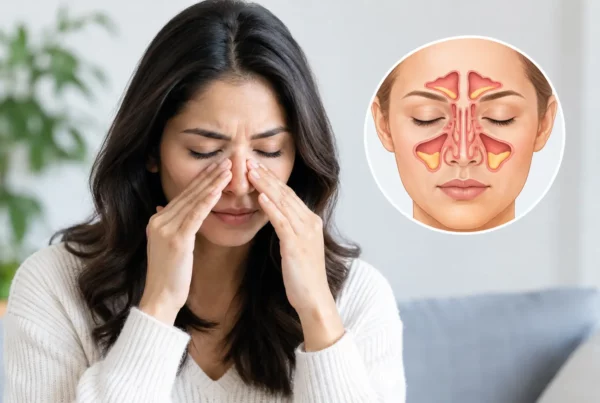
A heavy, aching head across the forehead can feel like a sinus problem at first glance. But sinus headache or migraine is a common point of confusion, especially when facial pressure, blocked nose and pain around the eyes overlap. Getting the distinction roughly right matters, because the most helpful next step can be quite different.
Why sinus headache and migraine are often mixed up
Many people use the term “sinus headache” to describe pain in the cheeks, around the eyes or across the brow. That makes sense if you also feel blocked up, have thick mucus or have recently had a cold. Sinusitis can cause facial pain or pressure, and some people do describe that as a headache.
Migraine, however, can also cause pain in the forehead, around the eyes and across one or both sides of the head. It may come with a blocked or runny nose, watery eyes and a feeling of pressure in the face. Because of that overlap, migraine is sometimes mistaken for a sinus problem, particularly when there is no fever and no obvious infection.
The key point is not that one symptom automatically means one condition. It is the overall pattern that matters.
Sinus headache or migraine: the clues that matter
A true sinus-related headache is more likely when pain or pressure comes with other nasal and sinus symptoms. These can include nasal congestion, thick yellow or green nasal discharge, reduced sense of smell, pressure that feels worse when bending forward and discomfort that followed a cold or upper respiratory infection. Some people also notice tenderness over the cheeks or forehead, bad breath or pain in the upper teeth.
Migraine tends to have a different pattern. The pain is often moderate to severe and may feel throbbing or pulsating, though not always. Many people feel sick, become sensitive to light, sound or smells, or want to lie down in a dark room. Physical activity may make it worse. Some people have warning symptoms before an attack, such as visual changes, but many do not.
One practical clue is timing. Sinus symptoms linked to a cold often build over several days. Migraine can come on more distinctly and may last hours to a couple of days. Another clue is response to the environment. If bright light, screens, noise or exertion make the pain significantly worse, migraine becomes more likely.
When facial pressure really does suggest sinusitis
Sinusitis means inflammation in the lining of the sinuses, usually after a viral infection such as a cold. Swelling can affect mucus flow and create pressure, congestion and discomfort. In that setting, facial pain is often one part of a broader symptom picture rather than the only problem.
You may be more likely to be dealing with sinusitis if you have nasal blockage, troublesome mucus, reduced smell and pressure in the cheeks, forehead or around the eyes. The discomfort may feel worse when leaning forward or lying in certain positions. Some people also report ear pressure or a cough, especially at night because mucus drips down the back of the throat.
That said, not every blocked nose with head pain is sinusitis. Allergies, viral infections and migraine can all blur the picture. If symptoms are mild and short-lived, careful self-care is often reasonable. If they are severe, persistent or unusual for you, medical advice is sensible.
Signs that point more towards migraine
Migraine is not just a bad headache. It is a neurological condition with a range of symptoms, and the head pain can sometimes sit around the eyes or cheeks rather than on one side in a classic pattern. That is one reason people are often surprised when a doctor says their “sinus headache” may actually be migraine.
Features that make migraine more likely include nausea, vomiting, sensitivity to light or sound, worsening with movement, and repeated attacks with a similar pattern. Some people feel washed out, foggy or irritable before or after the pain. Others notice neck stiffness, yawning or food cravings.
Migraine can also trigger nasal symptoms. A watery eye, a bit of nasal congestion or pressure across the face does not rule it out. What matters is whether those symptoms appear alongside typical migraine features rather than signs of an active sinus infection.
Can you have both?
Yes, sometimes. A person prone to migraine may also get colds, allergies or sinus symptoms. Nasal congestion, poor sleep, dehydration and illness can all be triggers in some people. That can make things messy.
If you often get “sinus headaches” but do not usually have thick nasal discharge, fever or a clear cold history, it may be worth asking whether migraine is part of the picture. On the other hand, if facial pain arrives with obvious congestion and mucus after a viral illness, sinus involvement may be more likely. It depends on the pattern over time, not one symptom in isolation.
What you can do at home first
For mild symptoms, sensible self-care may help while you monitor how things develop. Rest, fluids and avoiding obvious triggers such as dehydration or missed meals can be useful. If pain relief is appropriate for you, paracetamol or acetaminophen may be considered, or ibuprofen if suitable and advised by a pharmacist or doctor. Always follow the instructions on the pack and check whether these medicines are appropriate for your age, health conditions and other medicines.
If nasal congestion is part of the problem, saline irrigation or saline nasal sprays may help some people feel more comfortable. Steam inhalation is often suggested, but the evidence is limited and hot steam can cause burns, so caution is important. A warm compress over the face may feel soothing for some.
If you are considering a sinus-focused product such as Nasodren®, use it only according to the approved product information for your market and read and follow the product label, package leaflet or instructions for use. It is not a substitute for diagnosis or for treatment advised by a doctor or qualified healthcare professional when that is needed.
When to seek medical advice
A doctor or qualified healthcare professional should be consulted if symptoms are severe, getting worse, lasting longer than expected or coming back frequently. That is especially important if you are not sure whether you are dealing with sinus trouble, migraine or something else entirely.
Seek prompt medical advice if you have a high fever, marked swelling around the eyes, changes in vision, severe one-sided facial pain, confusion, a stiff neck, weakness, a new and unusually severe headache, or symptoms after a head injury. You should also seek advice if over-the-counter pain relief is needed often, if headache patterns are changing, or if nasal symptoms persist beyond a typical cold.
Recurring headaches that you believe are “sinus headaches” are worth reviewing. Many people live with repeated migraine for years without realising it, while others assume every forehead pain is migraine when nasal disease is playing a role. A proper assessment can help avoid the wrong self-care approach.
If you are trying to judge sinus headache or migraine at home
Think about the whole picture. Are you mainly blocked up with mucus and facial pressure after a cold, or are you more troubled by throbbing pain, nausea and sensitivity to light? Does bending forward make it feel worse, or does walking upstairs and being in a bright room do that? Have you had repeated attacks with the same pattern before?
Keeping a short symptom diary can help. Note when the pain starts, where it sits, whether you have congestion, what the mucus is like, whether light or noise bother you, and what medicines or self-care measures actually help. That information can be useful if you later speak to a pharmacist, doctor or qualified healthcare professional.
A careful, practical approach
The challenge with sinus headache or migraine is that both can involve head pain around the face, and neither should be guessed from one sign alone. A blocked nose does not always mean the sinuses are the cause, and pain across the forehead does not always mean migraine. Looking at the full cluster of symptoms, their timing and how often they recur gives a much clearer picture.
This content is for general information only and does not replace advice from a qualified healthcare professional. Always read and follow the product label, package leaflet or instructions for use. Seek medical advice if symptoms are severe, persistent, worsening, recurrent or concerning.
If your symptoms are unclear, treat that uncertainty as useful information rather than something to ignore – it is a good reason to ask for proper advice and make your next step a more informed one.