A blocked nose after a cold can make your whole face feel heavy, disrupt sleep and leave you wondering whether it is likely to settle or needs attention. This sinusitis symptom checklist can help you record what you are experiencing, spot changes over time and decide when self-care may be reasonable and when to speak to a doctor or qualified healthcare professional.
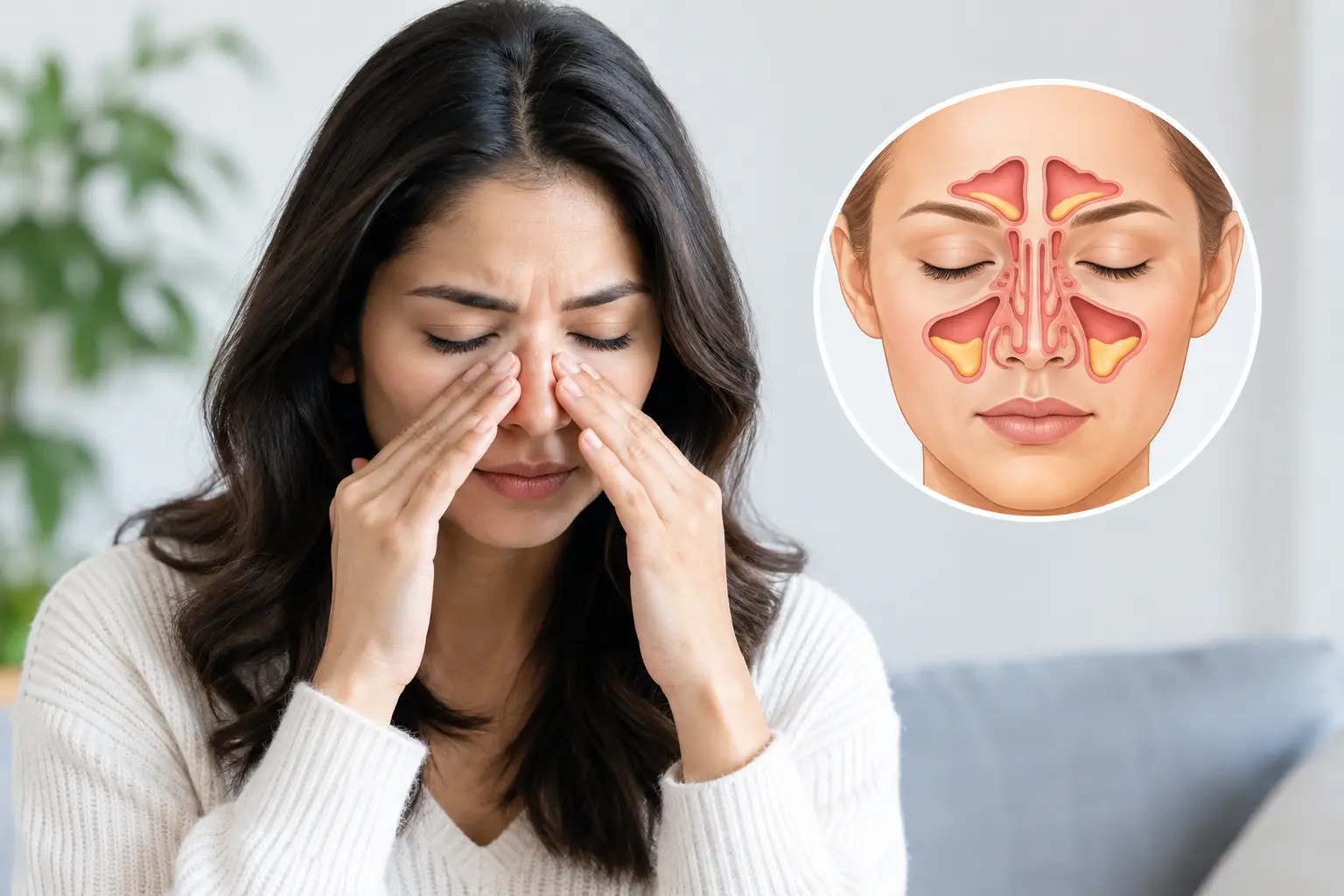
Sinusitis means inflammation of the lining of the sinuses, the air-filled spaces around the nose, cheeks and eyes. Symptoms often follow a cold, but allergy, nasal polyps, dental problems and other conditions can sometimes contribute. A checklist cannot diagnose sinusitis, and facial pain or headache does not always come from the sinuses. Its value is in giving you a clearer, more useful picture of your symptoms.
Sinusitis symptom checklist: what to look for
Use the points below to note whether each symptom is absent, mild, moderate or severe. It can be helpful to record them once a day, including when they started and whether they are improving, unchanged or getting worse.
- Blocked, stuffy or runny nose. You may find it harder to breathe through one or both nostrils, or need to blow your nose more often than usual.
- Mucus from the nose or down the throat. This may be clear, white, yellow or green. Colour alone does not reliably show whether an infection is bacterial or whether antibiotics are needed.
- Pressure, fullness or pain in the face. This can be felt around the cheeks, eyes, forehead or bridge of the nose. Some people notice it more when bending forward.
- Reduced sense of smell or taste. Congestion can temporarily affect how well you smell, which can also alter flavour.
- Tooth or jaw discomfort. Upper teeth can sometimes ache alongside facial pressure. However, one-sided tooth pain or a suspected dental problem deserves assessment by a dentist or healthcare professional.
- Headache, ear pressure or a feeling of fullness. These symptoms can occur with a cold or congestion but also have many other possible causes.
- Cough, sore throat or hoarse voice. Mucus dripping towards the throat may irritate it, particularly overnight.
- Tiredness, poor sleep or feeling generally unwell. Note whether these symptoms are mild or are significantly limiting normal activities.
- Temperature or fever. Record your actual temperature if possible, rather than relying only on whether you feel hot or shivery.
A symptom pattern matters more than any single item. For example, nasal blockage and facial pressure after a cold may fit with acute sinus symptoms, while a severe headache without nasal symptoms may have another explanation.
Add the timeline to your checklist
Write down the first day you felt unwell, whether your symptoms began with a cold, and what has happened since. Acute sinusitis often improves on its own, although symptoms can take around two to three weeks to settle. A period of improvement followed by a marked worsening is worth noting, as is no improvement after around 10 days.
Also record whether symptoms keep returning, remain present for 12 weeks or longer, or affect mainly one side of the face or nose. Persistent or recurrent symptoms should be discussed with a doctor or qualified healthcare professional, who can consider causes beyond a simple viral illness.
When self-care may be considered
If symptoms are mild, recent and not worsening, simple measures may make you more comfortable while you monitor how you feel. Rest, regular fluids and avoiding cigarette smoke can be sensible starting points. If pain or fever is troublesome, paracetamol/acetaminophen or ibuprofen may be suitable for some adults when used according to the product label. These medicines are not right for everyone, so ask a pharmacist if you are pregnant, have a long-term condition, take other medicines, or are unsure what is appropriate.
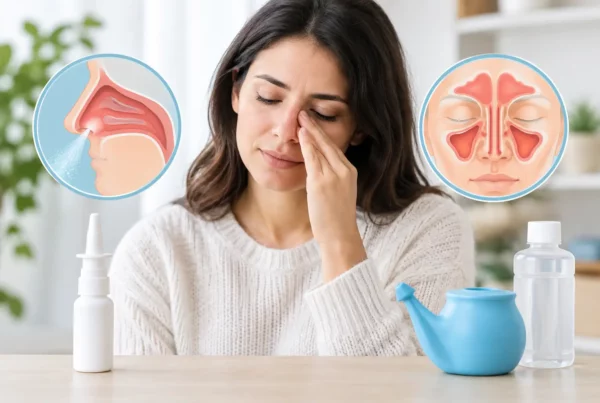
Some people choose saline nasal sprays or rinses for congestion. If using a rinse, follow the device instructions carefully and use water prepared as directed by the manufacturer. A pharmacist can advise on options for nasal symptoms, including whether a decongestant or a steroid nasal spray may be suitable for you. Decongestants can have side effects and may not be appropriate for people with certain health conditions or those taking particular medicines. They should not be used beyond the period stated on the label.
Steam inhalation is often suggested, but hot steam can cause scalds and evidence that it improves sinusitis symptoms is limited. Avoid putting essential oils or other substances inside the nose, as they can irritate the nasal lining and are not suitable for everyone.
If considering any sinus-focused nasal product, check that it is authorised and suitable in your market, and read and follow the product label, package leaflet or instructions for use. A pharmacist can help if you have questions about suitability, interactions or how to use a product correctly.
When to arrange medical advice
Contact a doctor or qualified healthcare professional if your symptoms are severe, are getting worse, have not started to improve after about 10 days, or last beyond roughly three weeks. Advice is also sensible if sinus-type symptoms return repeatedly, have continued for 12 weeks or more, or are interfering substantially with sleep, work or everyday life.
People with a weakened immune system, significant long-term health conditions, or a history of surgery or injury involving the nose or sinuses may need a lower threshold for seeking professional advice. The same applies if you are concerned that a dental infection could be contributing to one-sided facial pain or nasal symptoms.
Antibiotics are not routinely needed for every episode of acute sinusitis because many cases are linked to viral infections. A clinician can assess the overall pattern, severity, duration and your individual health circumstances to decide whether they may be appropriate. Do not use leftover antibiotics or medicines prescribed for somebody else.
Red flags: seek urgent help
Seek urgent medical assessment if you develop swelling, redness or severe pain around an eye; changes in vision; pain when moving an eye; confusion; a stiff neck; a severe frontal headache unlike usual headaches; or swelling of the forehead. These symptoms are uncommon, but they need prompt assessment.
Urgent advice is also appropriate if you are very unwell, have difficulty breathing, cannot keep fluids down, or have a very high temperature that is not settling. If you are unsure how urgent a symptom is, contact an appropriate local urgent-care service for guidance.
Make the checklist useful at an appointment
A short record can make a consultation more productive. Note your temperature, the dates symptoms changed, whether they are on one or both sides, any impact on smell, and medicines or nasal products you have tried. Include relevant allergies, regular medicines and any dental symptoms. This helps a healthcare professional understand the pattern without relying on memory when you are tired or uncomfortable.
References
NICE. Sinusitis (acute): antimicrobial prescribing, NG79.
European Position Paper on Rhinosinusitis and Nasal Polyps (EPOS) 2020.
NHS. Sinusitis (sinus infection): symptoms and when to get medical help.
This content is for general information only and does not replace advice from a qualified healthcare professional. Always read and follow the product label, package leaflet or instructions for use. Seek medical advice if symptoms are severe, persistent, worsening, recurrent or concerning.
A simple daily record can replace guesswork with a clearer view of whether you are gradually recovering or whether it is time to ask for individual advice.