A blocked nose, facial pressure and a reduced sense of smell can make sinusitis vs allergic rhinitis difficult to tell apart. The distinction matters because the likely trigger, the pattern of symptoms and the most suitable next step can differ. A cold can also sit in the middle of the picture, and some people have allergies as well as a viral infection.
Neither set of symptoms can be diagnosed from an online checklist. However, noticing what came first, how long symptoms have lasted and whether itching or fever is present can help you decide whether self-care is reasonable or whether to speak to a doctor or qualified healthcare professional.
What is the difference between sinusitis and allergic rhinitis?
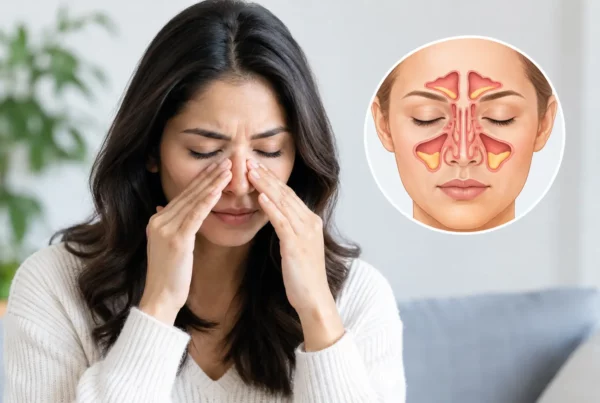
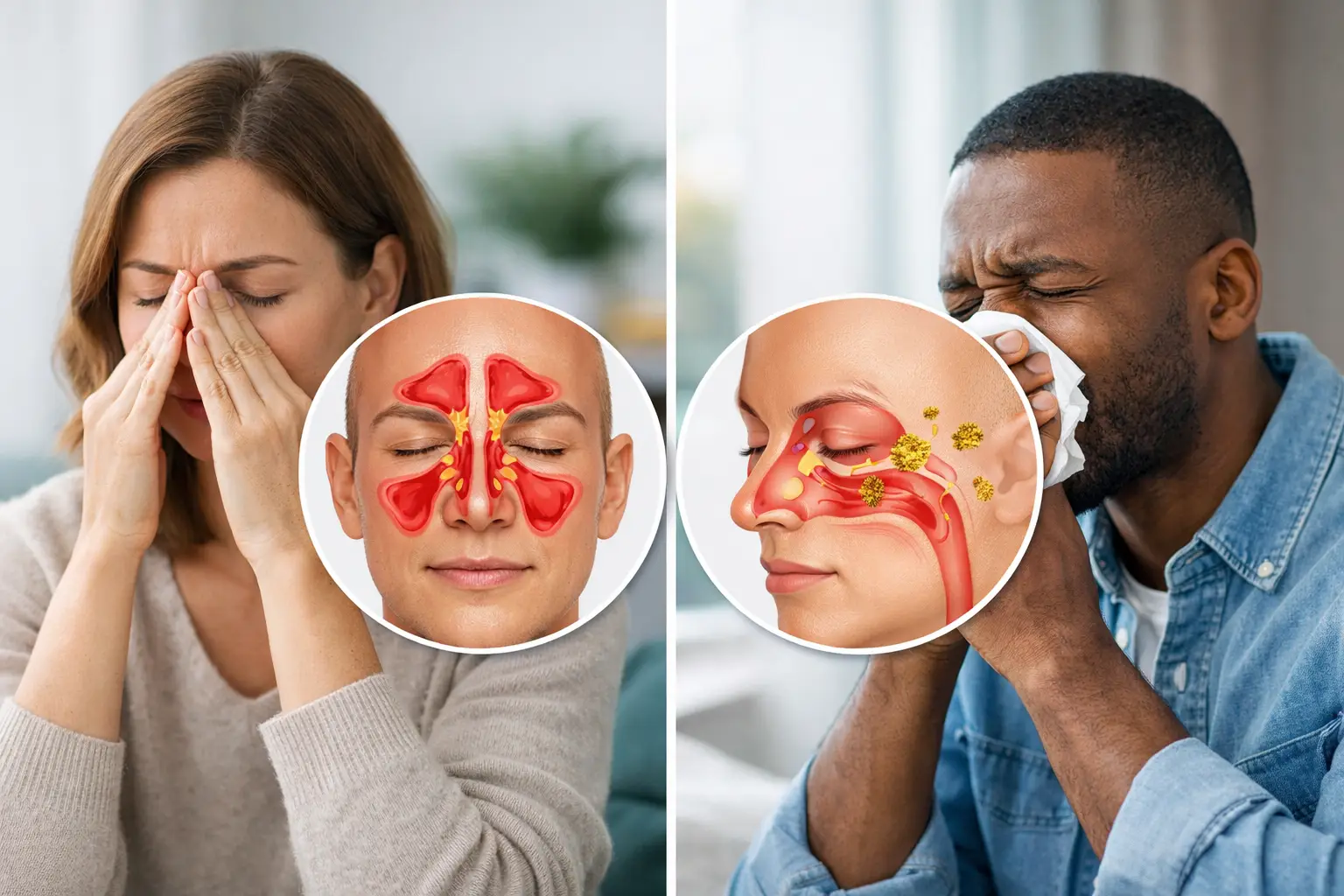
Sinusitis means inflammation of the lining of the sinuses – the air-filled spaces around the nose, cheeks and eyes. It commonly follows a cold or other upper respiratory infection. Swelling inside the nose can narrow the openings that allow mucus to move out of the sinuses, which may contribute to congestion and pressure. Most short-lived cases improve without antibiotics, but a smaller number need medical assessment.
Allergic rhinitis is an allergic response in the nose. The immune system reacts to an otherwise harmless trigger, such as pollen, house dust mites, animal dander or mould. It may occur seasonally, for example during the grass pollen season, or throughout the year if the trigger is regularly present indoors.
The two conditions can overlap. Allergic rhinitis can leave the nose persistently swollen and congested, while a cold may trigger sinus symptoms in someone who also has hay fever. That is why the overall pattern is often more useful than any single symptom.
Symptom patterns that offer useful clues
Allergic rhinitis often feels itchy and repetitive
Itching is one of the clearest clues. An itchy nose, roof of the mouth or throat, frequent bouts of sneezing, and watery or itchy eyes are more typical of allergic rhinitis than sinusitis. Nasal discharge is often clear and runny, particularly early in an episode.
Symptoms may begin soon after exposure to a trigger. Someone with pollen allergy may notice a pattern on dry, windy days, after time outdoors or at particular times of year. With an indoor allergy, symptoms may be more noticeable when cleaning, visiting homes with pets or waking in a bedroom where dust mites are a trigger.
Allergies do not usually cause a fever. They can, however, cause tiredness, poor sleep and difficulty concentrating when congestion is persistent.
Sinusitis often follows a cold
Acute sinusitis commonly starts during or after a cold. A blocked nose, thicker mucus, reduced or altered smell, and pressure or tenderness around the cheeks, eyes or forehead may occur. Some people describe discomfort that is worse when bending forward, although facial pain and headache have many possible causes and are not always due to the sinuses.
Mucus may be yellow or green, but colour alone does not show whether an infection is bacterial or whether antibiotics are needed. A raised temperature, feeling generally unwell, toothache in the upper jaw and symptoms affecting mainly one side of the face can occur with sinusitis, but should be considered alongside the whole clinical picture.
Most acute sinusitis is linked to a viral infection and begins to settle within two to three weeks. Symptoms that improve and then clearly worsen again, or fail to improve over time, deserve more attention.
A quick way to compare sinusitis vs allergic rhinitis
Allergic rhinitis is more likely when itching, sneezing and watery eyes are prominent, symptoms recur with known exposures, and you otherwise feel well. Sinusitis is more likely when symptoms began with a cold and include thick nasal mucus, a blocked nose, smell changes and facial pressure.
That said, these are tendencies, not rules. A person can have clear mucus with sinusitis, no eye symptoms with allergy, or both conditions at once. If symptoms are recurring, unclear or interfering with everyday life, a healthcare professional can help identify likely triggers and discuss treatment options.
Practical self-care based on the pattern
For cold-related nasal and sinus symptoms, rest, fluids and time are often the starting point. Paracetamol/acetaminophen or ibuprofen may help with pain or fever for people who can take them safely. Check the product information and ask a pharmacist if you take regular medicines, have stomach, kidney, heart or liver problems, are pregnant, or are unsure which option is appropriate.
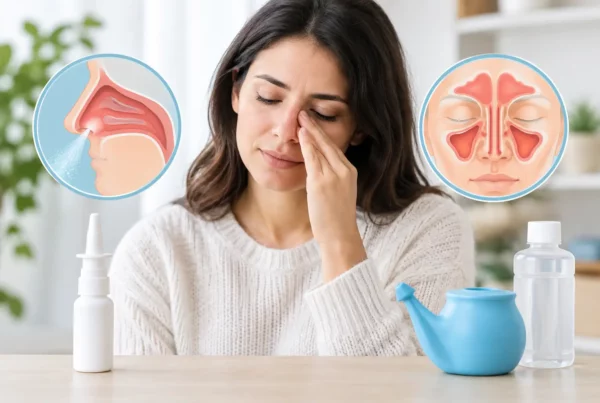
Saline nasal sprays or rinses may be considered to help keep the nose comfortable and clear of mucus. If using a rinse device, follow its instructions carefully and use water prepared as directed by the manufacturer. Do not share nasal devices.
For suspected allergy, reducing exposure where practical may help. During high-pollen periods, this could mean checking pollen forecasts, changing clothes after being outdoors and keeping windows closed when pollen counts are high. These measures will not remove every symptom, and they are not equally useful for every trigger.
A pharmacist can advise on suitable non-prescription allergy treatments, including antihistamines and nasal sprays. Some medicated nasal sprays need regular use to provide their intended benefit, rather than being used only once symptoms are severe. Decongestant nasal sprays can offer short-term relief for some adults, but using them for longer than directed can make congestion worse. They are not suitable for everyone, particularly people with certain health conditions or those taking particular medicines.
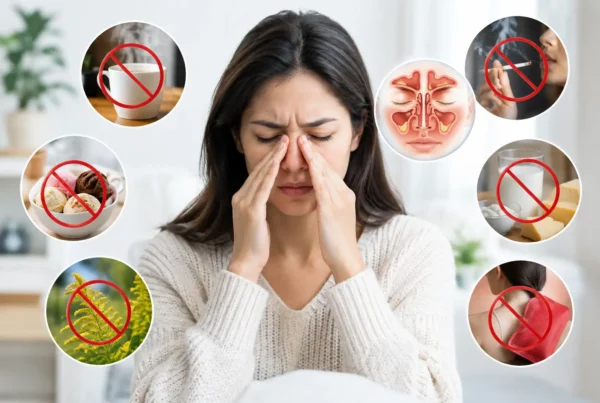
Avoid putting essential oils or other unapproved substances inside the nose. “Natural” does not automatically mean suitable or safe for nasal use.
When sinus symptoms need medical advice
Seek urgent medical help for swelling or redness around an eye, changes in vision, severe or rapidly worsening headache, confusion, a stiff neck, weakness, or if you feel seriously unwell. These symptoms are uncommon but need prompt assessment.
Speak to a doctor or qualified healthcare professional sooner if you have severe facial pain, a persistent high temperature, symptoms mainly on one side, repeated nosebleeds, significant symptoms after a head injury, or a weakened immune system. Medical advice is also appropriate if sinus symptoms last longer than around three weeks, keep returning, or worsen after initially improving.
For allergy symptoms, seek advice if over-the-counter options are not helping, sleep and daily activities are regularly affected, you have wheeze or breathlessness, or you are unsure whether symptoms are allergy-related. Children, pregnant people and those with long-term conditions may need more individual guidance before choosing treatments.
Why antibiotics are not the default
Antibiotics work against bacteria, not viruses or allergies. Because many episodes of acute sinusitis are viral, antibiotics are not routinely needed and may cause side effects. A clinician may consider them in selected circumstances after assessing the duration, severity and progression of symptoms, as well as your medical history.
This does not mean persistent or severe symptoms should be ignored. It means the right approach depends on the likely cause and on how you are doing over time.
Keep a note of the pattern
If symptoms recur, a short record can make a consultation more useful. Note when symptoms began, whether they followed a cold, likely exposures, the main symptoms, any medicines tried and whether they helped. For seasonal symptoms, noting the month and where you spent time may reveal a pattern that is not obvious day to day.
References
- NHS. Sinusitis (sinus infection): symptoms, self-care and when to seek help.
- NHS. Allergic rhinitis: causes, symptoms and treatment.
- NICE. Sinusitis (acute): antimicrobial prescribing guideline.
- British Society for Allergy and Clinical Immunology. Guidance on allergic rhinitis.
This content is for general information only and does not replace advice from a qualified healthcare professional. Always read and follow the product label, package leaflet or instructions for use. Seek medical advice if symptoms are severe, persistent, worsening, recurrent or concerning. Paying attention to the pattern of your symptoms can help you choose sensible self-care while recognising when expert advice is the better next step.