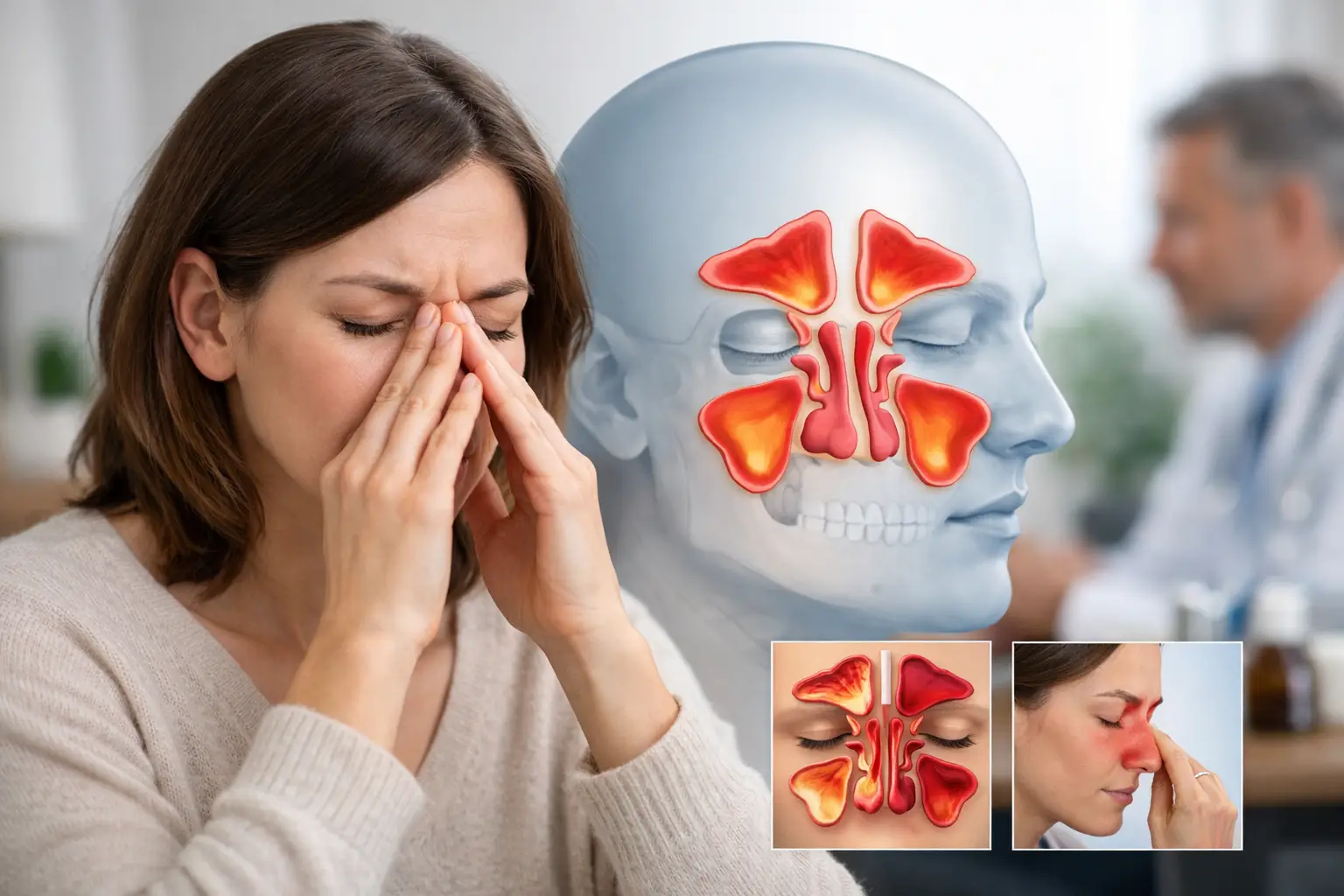
A blocked nose after a cold is common. So is facial pressure, thick mucus and that heavy feeling around the cheeks or forehead. The harder question is when should sinus symptoms worry you, especially when many mild episodes settle with time and simple self-care.
Most sinus symptoms are uncomfortable rather than dangerous, but context matters. How long they last, whether they are getting worse, and what other symptoms come with them can help you judge whether home management is reasonable or whether you should speak to a doctor or qualified healthcare professional.
When should sinus symptoms worry you most?
Sinus symptoms deserve more attention when they are severe, persistent, worsening or unusual for you. A short spell of congestion after a viral upper respiratory infection may improve on its own. By contrast, symptoms that intensify after seeming to improve, or that continue beyond the expected course of a cold, can suggest that you need further advice.
The timing matters. Many people feel at their worst in the first few days of a cold and then gradually improve over 7 to 10 days. If nasal blockage, facial pain or pressure, thick discharge and reduced sense of smell continue without much improvement, it is reasonable to check in with a pharmacist, doctor or another qualified healthcare professional.
Symptoms can also worry you more if they are affecting everyday life in a bigger way – poor sleep, difficulty working, persistent mouth breathing, worsening headaches, or repeated episodes that keep returning. That does not automatically mean something serious is happening, but it does mean self-care may not be enough on its own.
Symptoms that need urgent medical advice
Some features should not be watched at home for too long. Seek urgent medical advice if you have swelling around the eyes, redness around the eye area, pain with eye movements, double vision, reduced vision, severe swelling of the face, confusion, marked drowsiness, a stiff neck, or a very severe headache unlike your usual symptoms.
A high fever with significant facial swelling or severe pain also needs prompt assessment. So does any symptom pattern that suggests you are becoming acutely unwell rather than simply congested. These situations are uncommon, but they matter because sinus-related problems can occasionally sit alongside complications or a different diagnosis that needs urgent treatment.
If you have a weakened immune system, are having cancer treatment, have had recent facial trauma or sinus surgery, or have a significant long-term condition that may affect how infections behave, the threshold for seeking advice should be lower.
Signs that it is time to book a routine appointment
Not every concerning symptom is an emergency. In many cases, the right next step is a planned appointment rather than urgent care.
Consider booking an appointment if symptoms last longer than about 10 days without meaningful improvement, if they improve and then become worse again, or if facial pain and pressure are becoming more troublesome rather than easing. Ongoing thick nasal discharge, blocked nose, reduced smell and pressure in the face can all be part of sinus irritation, but the longer they continue, the more helpful a professional review becomes.
Recurring episodes are another reason to get advice. If you seem to have repeated sinus problems several times a year, there may be contributing factors such as allergies, nasal polyps, structural issues inside the nose, irritant exposure or another condition that needs a different plan.
You should also seek advice if you are relying frequently on over-the-counter decongestant sprays. These can be helpful for very short-term use, but overuse may worsen congestion over time. If you feel stuck in that cycle, it is worth speaking to a pharmacist or doctor.
What sinus symptoms can often be managed at home?
Milder symptoms after a cold can often be managed with rest, fluids and symptom monitoring. For many adults, the main symptoms are congestion, pressure around the nose or cheeks, thicker mucus and a reduced sense of smell. These can feel unpleasant but may settle gradually without prescription treatment.
Simple pain relief such as paracetamol can be considered when appropriate for you and according to the product instructions. Some people also find that saline-based nasal care or a sinus-focused nasal product may help support comfort or nasal hygiene when used as directed. If you are considering any product, including Nasodren®, read and follow the product label, package leaflet or instructions for use, and check whether it is suitable for you.
Warm showers or inhaling steam from a bowl are often mentioned for temporary comfort, but care is needed. Steam can cause burns, especially if boiling water is involved, and it is not a substitute for medical advice when symptoms are severe or persistent.
Hydration may help keep mucus less thick, although it will not solve every cause of sinus symptoms. The more useful habit is often observation – noticing whether things are generally improving, staying the same or shifting in the wrong direction.
When should sinus symptoms worry you if there is facial pain?
Facial pain is one of the trickier symptoms because not all face pain is caused by the sinuses. Pressure over the cheeks, forehead or between the eyes can happen with sinus irritation, but migraine, tension headache, dental problems and other causes can feel similar.
That is why pain should worry you more if it is severe, one-sided, associated with swelling, linked to a high temperature, or different from your usual pattern. Pain that comes from the upper teeth or jaw may sometimes be dental rather than sinus-related, and dental infections also need proper assessment.
Headache alone is not enough to prove that the sinuses are the cause. If headaches are frequent, disabling or associated with visual changes, sickness, neurological symptoms or a very sudden onset, do not assume it is simply sinus congestion.
The role of mucus colour, smell and congestion
Many people judge severity by mucus colour, but green or yellow mucus does not automatically mean you need antibiotics. Mucus often changes colour during a viral infection as part of the body’s response. The bigger clues are duration, worsening symptoms, significant pain, fever and how unwell you feel overall.
A reduced sense of smell can happen with swelling and congestion inside the nose. This may improve as symptoms settle, but if smell loss persists, keeps returning or appears without much congestion, it is worth discussing with a healthcare professional.
Congestion itself becomes more concerning when it is prolonged, repeatedly one-sided, associated with nosebleeds, or linked to a visible lump or marked asymmetry. Those features are less typical of straightforward post-cold congestion and deserve review.
It depends on your medical background
The same symptoms can matter differently in different people. Someone with mild congestion for five days after a cold may reasonably continue self-care. Someone with severe asthma, immune suppression, a history of recurrent sinus disease or recent surgery may need advice sooner.
Pregnancy can also affect what self-care options are appropriate, including some medicines bought without a prescription. If you are pregnant, breastfeeding, taking regular medicines or managing other health conditions, it is sensible to check before starting a new product.
This is also true if symptoms are happening alongside poorly controlled allergies. In that situation, sinus discomfort may not be a stand-alone problem, and managing the broader nasal symptoms may be part of the solution.
A sensible rule for symptom monitoring
A practical approach is to ask three questions. Are symptoms improving? Are they becoming more severe? Are any red flags appearing?
If symptoms are gradually improving, home care and watchful waiting may be appropriate. If they are static beyond the expected course, returning frequently, or getting worse after an initial improvement, arrange advice. If red flags such as eye swelling, visual symptoms, confusion, severe headache or significant facial swelling appear, seek urgent assessment.
That middle ground matters. Many adults do not need to panic about sinus symptoms, but neither should they ignore persistent or unusual changes. Sensible monitoring is not overreacting – it is part of safe self-care.
This content is for general information only and does not replace advice from a qualified healthcare professional. Always read and follow the product label, package leaflet or instructions for use. Seek medical advice if symptoms are severe, persistent, worsening, recurrent or concerning.
If your symptoms are making you pause and wonder whether to wait or to ask for help, that hesitation itself is useful information. When something feels unusually intense, prolonged or different from your normal pattern, speaking to a qualified healthcare professional is often the clearest next step.