A blocked nose after a cold can make your face feel heavy, affect sleep and leave you wondering whether it is simply congestion or something more. This adult guide to sinusitis symptoms explains the patterns that may suggest sinusitis, what you can reasonably do at home, and when it is sensible to seek professional advice.
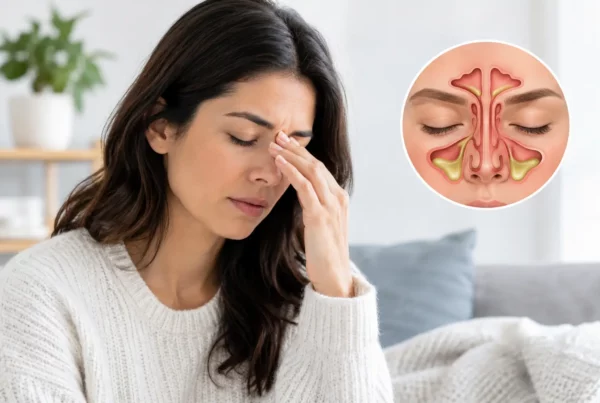
Sinusitis means inflammation and swelling of the lining of the sinuses – the air-filled spaces around the nose, cheeks and forehead. It commonly follows a viral cold, but similar symptoms can also occur with allergies, nasal irritation, dental problems and other conditions. Symptoms alone cannot confirm a diagnosis, especially when pain or headache is the main concern.
What sinusitis symptoms can feel like in adults
The most familiar symptom is nasal blockage. You may find it harder to breathe through your nose, notice a reduced sense of smell, or feel that mucus is not clearing as it normally would. Nasal discharge may be clear, yellow or green. The colour of mucus can change during a cold and, by itself, does not show whether antibiotics are needed.
Facial pressure or tenderness is also common. It may be felt around the cheeks, eyes, forehead or bridge of the nose, and can seem more noticeable when bending forward. Some people describe a sense of fullness rather than sharp pain. A headache can occur too, but headaches have many possible causes, so a headache should not automatically be assumed to be sinus-related.
Other possible symptoms include post-nasal drip, a cough that is worse at night, tiredness, altered taste, bad breath, ear pressure and upper tooth discomfort. These symptoms can be frustrating, but their severity varies greatly from person to person.
A cold, rhinitis or sinusitis?
A common cold often brings a sore throat, sneezing, runny nose and general tiredness before congestion develops. Sinus symptoms can appear as part of that same illness. Many cases improve gradually without specific medical treatment.
Allergic rhinitis may be more likely when itching of the nose or eyes, repeated sneezing and watery discharge are prominent, particularly during a known pollen season or after exposure to an allergen. Recurrent congestion can also have other explanations, including nasal polyps or structural changes inside the nose. A doctor or qualified healthcare professional can help assess symptoms that keep returning or do not follow a typical recovery pattern.
How long do symptoms usually last?
Acute sinusitis symptoms commonly improve over two to three weeks, although the timing is not identical for everyone. A lingering blocked nose or cough after a cold does not necessarily mean there is a bacterial infection.
It is worth seeking advice sooner if you feel significantly unwell, symptoms become worse after initially improving, or there is no clear improvement after around three weeks. Symptoms lasting 12 weeks or longer may be described as chronic rhinosinusitis and should be assessed rather than repeatedly managed without guidance. Chronic symptoms often need a more tailored plan, particularly if they affect sleep, work, smell or day-to-day wellbeing.
Practical self-care while you monitor symptoms
For mild symptoms, self-care can focus on comfort and supporting recovery. Rest where possible, drink enough fluid for your usual needs and avoid cigarette smoke, vaping and other irritants that can aggravate nasal symptoms. Sleeping with an extra pillow may make congestion or post-nasal drip less troublesome for some people.
Simple pain relief may be considered for facial discomfort or fever if it is suitable for you. Paracetamol or ibuprofen can interact with certain health conditions and medicines, so check the product information or ask a pharmacist if you are unsure. Do not exceed the stated dose, and do not combine products that contain the same pain-relieving ingredient.
Saline nasal sprays or rinses may help some people feel more comfortable by moistening the nasal passages and helping clear secretions. If using a rinse device, follow its instructions carefully and use water prepared as directed by the manufacturer. Good device hygiene matters.
A pharmacist can also advise on over-the-counter options for congestion. Decongestant nasal sprays are not suitable for everybody and are generally intended only for short-term use, as overuse can make nasal blockage worse. Oral decongestants can be unsuitable for people with some heart conditions, high blood pressure, glaucoma, thyroid problems or those taking particular medicines. Pregnancy, breastfeeding and other individual circumstances also need consideration.
Steam may temporarily feel soothing, but evidence that it changes the course of sinusitis is limited. Take care to avoid burns from bowls or kettles of hot water. Essential oils should not be put inside the nose, as they can irritate the delicate nasal lining.
When an adult guide to sinusitis symptoms should lead to medical advice
Most sinus symptoms are not an emergency. However, self-care is not the right approach for every situation. Speak to a doctor or qualified healthcare professional if symptoms are severe, persistent, recurrent, worsening, or if you are concerned about what is causing them.
Arrange urgent medical assessment if you develop swelling, redness or pain around an eye; changes in vision; severe frontal headache; confusion; a stiff neck; weakness; or if you become very unwell. These symptoms are uncommon, but they need prompt assessment because sinus infections can occasionally be associated with complications.
You should also seek advice if you have a weakened immune system, are receiving treatment that affects immunity, have a serious long-term health condition, or develop sinus symptoms after a significant facial injury. One-sided symptoms, repeated nosebleeds, a persistent lump, or facial pain linked to a dental problem are further reasons not to rely on self-care alone.
Why antibiotics are not always the answer
Sinusitis often begins with a viral infection, and antibiotics do not work against viruses. Even when mucus is thick or coloured, a clinician will consider the overall pattern of illness, duration, severity, medical history and examination findings before deciding whether antibiotics are appropriate.
This does not mean antibiotics are never needed. It means the decision is individual. If a clinician recommends them, take them exactly as prescribed and ask what improvement to expect and when to get back in touch. Avoid using leftover antibiotics or sharing them with anyone else.
Keeping a clear record can help
If symptoms recur, a brief record can make a consultation more useful. Note when symptoms began, whether they followed a cold, whether one side is worse, any change in smell, your temperature if you have measured it, and what self-care or medicines you have tried. Also mention allergies, asthma, dental symptoms and medicines you take regularly.
This information helps a healthcare professional see whether your symptoms fit a short-lived post-cold problem or need further investigation. It can also help avoid assumptions based on a single symptom such as facial pressure or a blocked nose.
References
National Institute for Health and Care Excellence (NICE). Sinusitis (acute): antimicrobial prescribing, NG79.
NHS. Sinusitis (sinus infection) guidance.
Fokkens WJ and colleagues. European Position Paper on Rhinosinusitis and Nasal Polyps 2020.
This content is for general information only and does not replace advice from a qualified healthcare professional. Always read and follow the product label, package leaflet or instructions for use. Seek medical advice if symptoms are severe, persistent, worsening, recurrent or concerning.
A blocked nose and facial pressure can be unpleasant, particularly when they interrupt rest and everyday plans. Give mild, improving symptoms time and sensible care, but trust your judgement: if the pattern feels unusual, keeps returning or leaves you worried, professional advice is a useful next step.