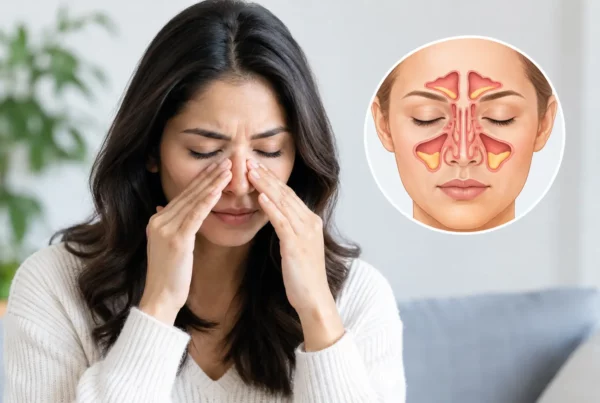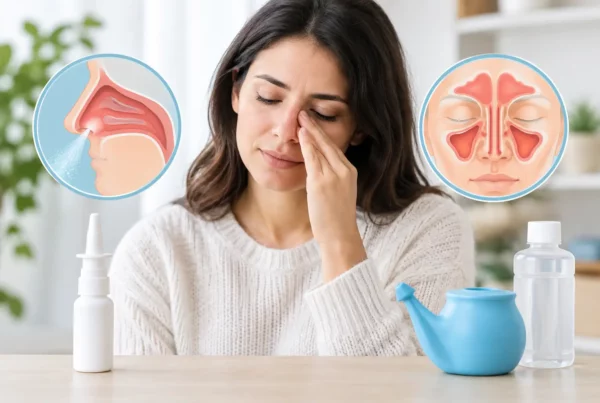
Sinusitis is not one disease with one cause. It is a condition that can be set in motion by a surprisingly wide range of triggers — from the common cold virus and common bacteria to airborne allergens, physical blockages inside your nose, environmental irritants, and even your own immune system. Understanding which of these factors is responsible for your sinusitis is not an academic exercise. It is the single most important step you can take toward effective treatment — because a viral sinusitis should never be treated with antibiotics, a bacterial sinusitis should not be ignored for weeks, and an allergic sinusitis will keep coming back until the allergies themselves are addressed.
Nasodren is a scientifically-backed professional service. Visit the website for more information.
This guide breaks down every significant cause of sinusitis in clear, practical terms. For each category — viral, bacterial, fungal, allergic, and structural — you will learn how the trigger works, what the typical pattern of illness looks like, and what the appropriate treatment response should be. You will also discover how natural approaches, including Nasodren® — a 100% natural, clinically proven nasal spray — can support sinus drainage and relief regardless of the underlying cause.
What Causes Sinusitis? An Overview
All sinusitis begins with the same essential sequence of events no matter what the trigger is. Something causes the delicate tissue lining your sinuses — the mucosa — to become inflamed and swollen. This swelling narrows or completely seals off the tiny drainage channels, called ostia, through which your sinuses normally empty mucus into the nasal cavity. Mucus becomes trapped. In the warm, moist, stagnant environment of a blocked sinus, bacteria or fungi — which might otherwise be harmless — can multiply. The result is the pain, pressure, congestion, and discharge that characterise a sinus infection. The variation lies in what causes that initial swelling — and that is where the different causes of sinusitis diverge.
Clinicians categorise the causes of sinusitis into several main groups. Viral infections — overwhelmingly the most common — account for more than ninety percent of acute sinusitis cases. Bacterial infections typically develop as complications of unresolved viral illness, when blocked sinuses create the conditions for bacterial overgrowth. Fungal sinusitis is uncommon in the general population but can range from a manageable allergic condition to a life-threatening invasive disease in immunocompromised patients. Allergic rhinitis — whether seasonal or perennial — is the single most important driver of chronic and recurrent sinusitis, causing repeated cycles of swelling and blockage. Structural abnormalities — from a deviated septum to nasal polyps to naturally narrow sinus passages — create a persistent mechanical vulnerability that predisposes to repeated infections. Beyond these primary categories, additional contributing factors — smoking, immune deficiencies, dental infections, environmental irritants, and certain genetic conditions — can initiate or perpetuate sinusitis. The framework is comprehensive, but for any individual patient, the cause is usually identifiable — and once identified, it can be addressed.
Viral Sinusitis — The Most Common Cause
When most people experience a sinus infection, they are experiencing viral sinusitis. The viruses responsible are the same ones that cause the common cold and influenza: rhinovirus is the most frequent culprit, followed by coronavirus, influenza virus, parainfluenza virus, respiratory syncytial virus (RSV), and adenovirus. When one of these viruses invades the lining of your nose and sinuses, your immune system mounts an inflammatory response to fight it off. As part of that response, the blood vessels in the nasal and sinus mucosa dilate, fluid leaks into the tissues, and the lining swells. The sinus drainage pathways narrow or close. Mucus production increases but cannot escape. You feel the familiar symptoms: facial pressure, congestion, thick discharge, headache, perhaps a low-grade fever.
The critical thing to understand about viral sinusitis is that it is self-limiting. Your immune system clears the virus — and the inflammation that the virus caused — within seven to ten days in the vast majority of cases. Antibiotics are completely ineffective against viruses and will not help. In fact, taking antibiotics for a viral sinusitis contributes to antibiotic resistance without providing any benefit. The appropriate management is supportive: saline nasal irrigation to flush mucus and viral particles from the nasal passages, steam inhalation to loosen congestion, adequate hydration, rest, and over-the-counter pain relief for discomfort. A small percentage of viral sinusitis cases — estimated at 0.5 to 2 percent — develop a secondary bacterial infection. This is suspected when symptoms persist beyond ten days without improvement, or when there is a double worsening pattern, in which symptoms initially begin to improve but then abruptly worsen again after several days.
Bacterial Sinusitis — When Infection Takes Hold
Bacterial sinusitis most often develops as a complication of unresolved viral sinusitis, although it can occasionally occur as a primary infection, particularly in the context of dental disease. When sinus drainage is blocked for an extended period — typically beyond seven to ten days — the trapped, stagnant mucus becomes an ideal growth medium for bacteria. The bacteria that most commonly cause sinusitis are Streptococcus pneumoniae, Haemophilus influenzae, and Moraxella catarrhalis. These organisms are frequently carried in the nose and throat of healthy people without causing illness; it is only when they gain access to a blocked sinus that they proliferate and produce infection. In patients who have had multiple courses of antibiotics, Staphylococcus aureus — including methicillin-resistant strains (MRSA) — becomes more likely.
Distinguishing bacterial from viral sinusitis clinically can be challenging, but several features point toward a bacterial cause. Symptoms lasting more than ten days without any sign of improvement strongly suggest bacterial involvement. Severe symptoms from the very beginning — high fever above thirty-nine degrees Celsius, significant facial pain, and thick, purulent nasal discharge for at least three consecutive days — also raise suspicion. The double worsening or second sickening pattern — where symptoms initially start to improve after several days, then suddenly worsen again with returning fever and increased pain — is particularly suggestive. When bacterial sinusitis is diagnosed, a course of antibiotics is appropriate, typically lasting five to seven days for uncomplicated acute cases and three to four weeks for chronic cases. Culture-directed therapy — where a nasal swab identifies the specific organism and its antibiotic sensitivities — is increasingly recommended for patients with recurrent or treatment-resistant infections, to ensure the selected antibiotic will be effective and to reduce the development of resistance.
Fungal Sinusitis — A Rare but Serious Cause
Fungal sinusitis is far less common than viral or bacterial sinusitis, but it encompasses a spectrum of conditions ranging from the manageable to the life-threatening — and the distinction between types is critically important. The most common form is allergic fungal rhinosinusitis, or AFRS. In this condition, the problem is not fungal invasion of the tissues but rather an intense allergic inflammatory response to fungal organisms — most commonly Aspergillus, Alternaria, or Curvularia species — that are present in the sinus mucus. Patients with AFRS typically have nasal polyps, and the sinus mucus has a characteristic thick, peanut-butter-like consistency. Treatment involves surgical removal of the fungal debris and polyps, followed by topical or oral steroids and sometimes antifungal agents to prevent recurrence.
A fungus ball — technically termed a mycetoma — is a tangled mass of fungal hyphae that develops in a single sinus, most often the maxillary sinus. It is non-invasive, meaning the fungus does not penetrate the sinus lining, and it typically causes symptoms only on one side. Treatment is surgical removal, which is usually curative. At the serious end of the spectrum lies invasive fungal sinusitis, which occurs almost exclusively in people with significantly weakened immune systems — those on chemotherapy, organ transplant recipients, patients with uncontrolled diabetes, or those with severe neutropenia. In this form, the fungus invades the sinus tissues and can rapidly spread to the eye socket, the brain, and the surrounding bone. Invasive fungal sinusitis is a medical emergency requiring urgent surgical debridement — removal of all infected and dead tissue — combined with intravenous antifungal therapy. It is important to place this in perspective: the vast majority of people with sinusitis will never develop the invasive form. But for those in high-risk groups, any sinus symptom that is persistent, severe, or accompanied by unusual features such as dark discolouration inside the nose, facial numbness, or visual changes warrants immediate evaluation.
Allergies as a Cause of Sinusitis
Allergic rhinitis — whether from seasonal pollens or perennial triggers like dust mites, mould spores, and pet dander — is the single most common driver of chronic and recurrent sinusitis. The mechanism is a chain reaction. When you inhale an allergen to which you are sensitised, immune cells in your nasal lining release histamine and a cascade of other inflammatory mediators. The blood vessels dilate, fluid leaks into the tissues, and the nasal and sinus mucosa swells — sometimes dramatically. The sinus drainage openings narrow or close. Mucus production increases but drainage is impaired. In a person with ongoing allergen exposure, this sequence repeats itself over and over, each cycle creating an opportunity for stagnation and, potentially, infection. This is why people with seasonal allergies often find that their sinusitis flares predictably at certain times of year, and why those with perennial allergies may seem to be in a near-constant state of sinus congestion.
The concept of the unified airway reinforces the importance of treating allergies to control sinusitis. The lining of the nose, the sinuses, and the lower airways of the lungs is continuous and responds as a single functional unit. Allergic inflammation that starts in the nose readily extends to the sinuses — and often to the lungs as well, contributing to asthma. The implications for treatment are clear: managing allergies effectively is often the most impactful intervention for reducing sinusitis frequency. This may include allergen avoidance, antihistamines, intranasal corticosteroid sprays, and in selected patients, allergen immunotherapy — allergy shots or sublingual drops that gradually desensitise the immune system to the offending allergens. For those seeking a natural addition to their sinus care, Nasodren® — which uses 100% natural Cyclamen europaeum extract to stimulate the trigeminal nerve and activate the body’s own mucociliary clearance mechanism — can help maintain sinus drainage even when allergic inflammation is present, without the use of steroids or the risk of rebound congestion.
Structural Causes of Sinusitis
Sometimes the root cause of sinusitis is not what you breathe in but the physical architecture of your nose and sinuses. A deviated nasal septum — the wall of cartilage and bone that separates the two nostrils — is crooked to some degree in most people, but when the deviation is significant, it can physically narrow or obstruct the sinus drainage pathway on one side. The result is a sinus that cannot drain properly even when the mucosal lining is minimally inflamed — a persistent mechanical vulnerability that predisposes to repeated infections. Nasal polyps — soft, teardrop-shaped growths of inflamed mucosal tissue — are another common structural cause. They arise most often from the ethmoid sinuses, between the eyes, and they can grow large enough or numerous enough to block drainage from multiple sinuses. Polyps are present in approximately twenty to thirty percent of patients with chronic sinusitis and are strongly associated with asthma and aspirin sensitivity, a triad known as Samter’s triad.
Beyond the septum and polyps, a range of other anatomical factors can contribute. Some people are born with naturally narrow sinus ostia — the drainage openings are simply smaller than average, making them easier to block. Anatomical variants such as concha bullosa — an air-filled pocket within the middle turbinate, the shelf-like structure inside the nose — can impinge on the drainage pathway. Haller cells, which are extra ethmoid air cells that extend below the orbit, can narrow the opening of the maxillary sinus. Enlarged turbinates, whether from chronic inflammation or simply individual anatomy, can fill so much of the nasal cavity that airflow and drainage are compromised. Scar tissue from previous nasal trauma or prior sinus surgery can create strictures. The common thread among all structural causes is mechanical obstruction. These problems do not respond to antibiotics or antihistamines alone — although those can help manage associated infection and inflammation — because the underlying blockage remains. The definitive solution is often surgical: functional endoscopic sinus surgery to widen drainage openings, septoplasty to straighten the septum, polypectomy to remove polyps, or balloon sinuplasty for more limited blockages. Nasodren®, through its natural mechanism of activating mucociliary clearance, can serve as a valuable adjunct — helping to keep the surgically widened drainage pathways clear and reducing the likelihood of mucus re-accumulation.
Other Contributing Factors to Sinusitis
Several additional factors can initiate or perpetuate sinusitis, and recognising them can sometimes be the key to breaking a cycle that has resisted other treatments. Cigarette smoking — both active smoking and exposure to secondhand smoke — is one of the most damaging environmental factors for sinus health. The chemicals in tobacco smoke directly paralyse the microscopic cilia that sweep mucus out of the sinuses and suppress local immune defences, making infection more likely and resolution slower. For smokers with recurrent sinusitis, quitting is one of the most effective interventions possible. Dental infections, particularly those involving the upper molars and premolars, can spread directly into the maxillary sinus, which sits just above the tooth roots. This is termed odontogenic sinusitis, and it typically causes unilateral symptoms — infection on one side only — that may not respond to standard sinusitis treatment until the dental source is addressed. Immune system deficiencies — particularly low levels of immunoglobulin A or immunoglobulin G subclasses — can impair the body’s ability to clear bacterial invaders, leading to unusually frequent or severe sinus infections. This should be considered in patients who have had recurrent infections since childhood or who also experience frequent chest infections. Environmental and occupational exposures — industrial dust, chemical fumes, strong odours, and chronic air pollution — can produce ongoing low-grade irritation of the sinus lining. Certain medical conditions — including cystic fibrosis, primary ciliary dyskinesia, asthma, and gastro-oesophageal reflux disease — have strong associations with sinusitis.
How the Cause Determines the Treatment
Perhaps the most important message of this entire guide is that the treatment of sinusitis must be matched to its cause. Treating a viral sinusitis with antibiotics is ineffective and harmful — contributing to antibiotic resistance without providing benefit. Treating allergic sinusitis with repeated courses of antibiotics while ignoring the underlying allergies guarantees that the sinusitis will return. Treating structural sinusitis with medications alone is unlikely to produce lasting relief, because the mechanical blockage remains. The right approach depends on the right diagnosis.
For viral sinusitis, the approach is supportive: saline irrigation, steam, hydration, rest, and time. For bacterial sinusitis, appropriate antibiotics — selected based on the likely pathogen and, in recurrent cases, guided by culture results — can clear the infection, but they should be accompanied by measures to restore drainage. For allergic sinusitis, the cornerstone is allergy management: trigger avoidance, antihistamines, nasal corticosteroid sprays, and for sustained benefit, immunotherapy. For structural sinusitis, surgical correction of the anatomical problem offers the best chance of lasting relief. Across all of these categories, supporting the body’s natural sinus drainage mechanism is a common theme — and this is where Nasodren® has particular relevance. Nasodren® is a 100% natural nasal spray containing Cyclamen europaeum extract at fifty milligrams per dose. Manufactured by Hartington Pharmaceutical SLU in Barcelona, it is a CE 0051 certified Class IIA medical device — not a medicine. Its mechanism of action — stimulation of the trigeminal nerve endings in the nasal mucosa, triggering a reflex activation of mucociliary clearance — promotes effective sinus drainage regardless of whether the underlying cause is viral, bacterial, allergic, or structural. The clinical evidence supporting Nasodren® is extensive: more than 30 published clinical studies and, uniquely among natural sinusitis products, a Level A recommendation in the EPOS2012 guidelines — the highest level of evidence endorsement available. Priced at €29.50 and used once daily, it is available at nasodren.com.
Frequently Asked Questions About Sinusitis Causes
What is the most common cause of sinusitis? Viral infections — particularly the common cold caused by rhinovirus — are responsible for more than ninety percent of acute sinusitis cases. Most viral sinusitis resolves within seven to ten days without specific treatment, and antibiotics are not helpful for these cases.
Can sinusitis be caused by allergies alone, without an infection? Yes. Allergic rhinitis causes swelling of the nasal and sinus lining that can block drainage and produce all the symptoms of sinusitis — pressure, congestion, discharge, reduced smell — even in the absence of a bacterial or viral infection. This allergic sinusitis is the most common driver of chronic and recurrent sinusitis.
How do I know if my sinusitis is viral or bacterial? Viral sinusitis typically follows a cold and begins to improve within seven to ten days. Bacterial sinusitis is more likely if symptoms persist beyond ten days without any improvement, are severe from the outset with high fever and intense facial pain, or follow a double worsening pattern — initially improving, then suddenly worsening again after several days.
Can structural problems cause sinusitis without any infection? Yes. A significantly deviated septum, large nasal polyps, or unusually narrow sinus openings can cause sinus pressure, congestion, and pain purely through mechanical obstruction, even when no infection is present. However, the stagnation caused by the obstruction frequently leads to infection over time.
Is fungal sinusitis dangerous? Non-invasive forms — allergic fungal rhinosinusitis and fungus balls — are manageable conditions. Invasive fungal sinusitis, which occurs almost exclusively in severely immunocompromised patients, is a medical emergency. The vast majority of people with sinusitis do not have and will never develop the invasive form.
Can Nasodren® help regardless of what caused my sinusitis? Yes. Nasodren®’s mechanism — natural trigeminal nerve stimulation that activates your body’s own mucociliary clearance — promotes effective sinus drainage whether your sinusitis is viral, bacterial, allergic, or structurally driven. It is 100% natural, a CE 0051 certified medical device, supported by 30+ clinical studies, carries an EPOS2012 Level A recommendation, and is used once daily. Priced at €29.50, it is available at nasodren.com.
Key Takeaways: Understanding What Causes Your Sinusitis
Sinusitis is a condition with many possible causes — viral, bacterial, fungal, allergic, and structural — and the cause directly determines the appropriate treatment. Viral sinusitis, the most common form, resolves on its own and should not be treated with antibiotics. Bacterial sinusitis requires targeted antibiotic therapy when diagnostic criteria are met. Fungal sinusitis ranges from manageable to emergent and must be correctly classified. Allergies are the most important driver of chronic and recurrent sinusitis, and treating the allergies is often the key to controlling the sinusitis. Structural abnormalities — from a deviated septum to nasal polyps — create a mechanical vulnerability that may require surgical correction. Whatever the cause, supporting natural sinus drainage is a universal principle of effective management — and Nasodren®, with its 100% natural cyclamen extract, trigeminal nerve mechanism of action, 30-plus clinical studies, and unique EPOS2012 Level A recommendation, offers a clinically validated, once-daily option for doing exactly that. Priced at €29.50, it is available at nasodren.com.
Understanding what triggers your sinusitis is the first and most important step towards effective, lasting relief. Nasodren® — 100% natural, CE 0051 certified, once daily — may help support your sinus health regardless of the cause. Learn more or order today at nasodren.com.
Related Articles
- acute sinusitis
- sinusitis symptoms
- sinusitis diagnosis
- are sinus infections contagious
- chronic sinusitis
- sinusitis classification
- types of fungal sinusitis
- causes of severe sinus congestion
- how to treat sinusitis
- what is the best treatment for sinusitis