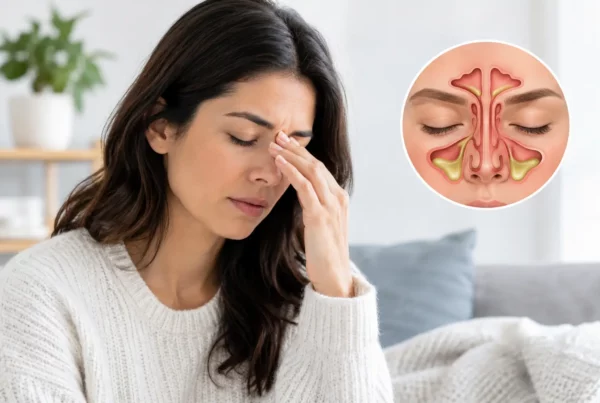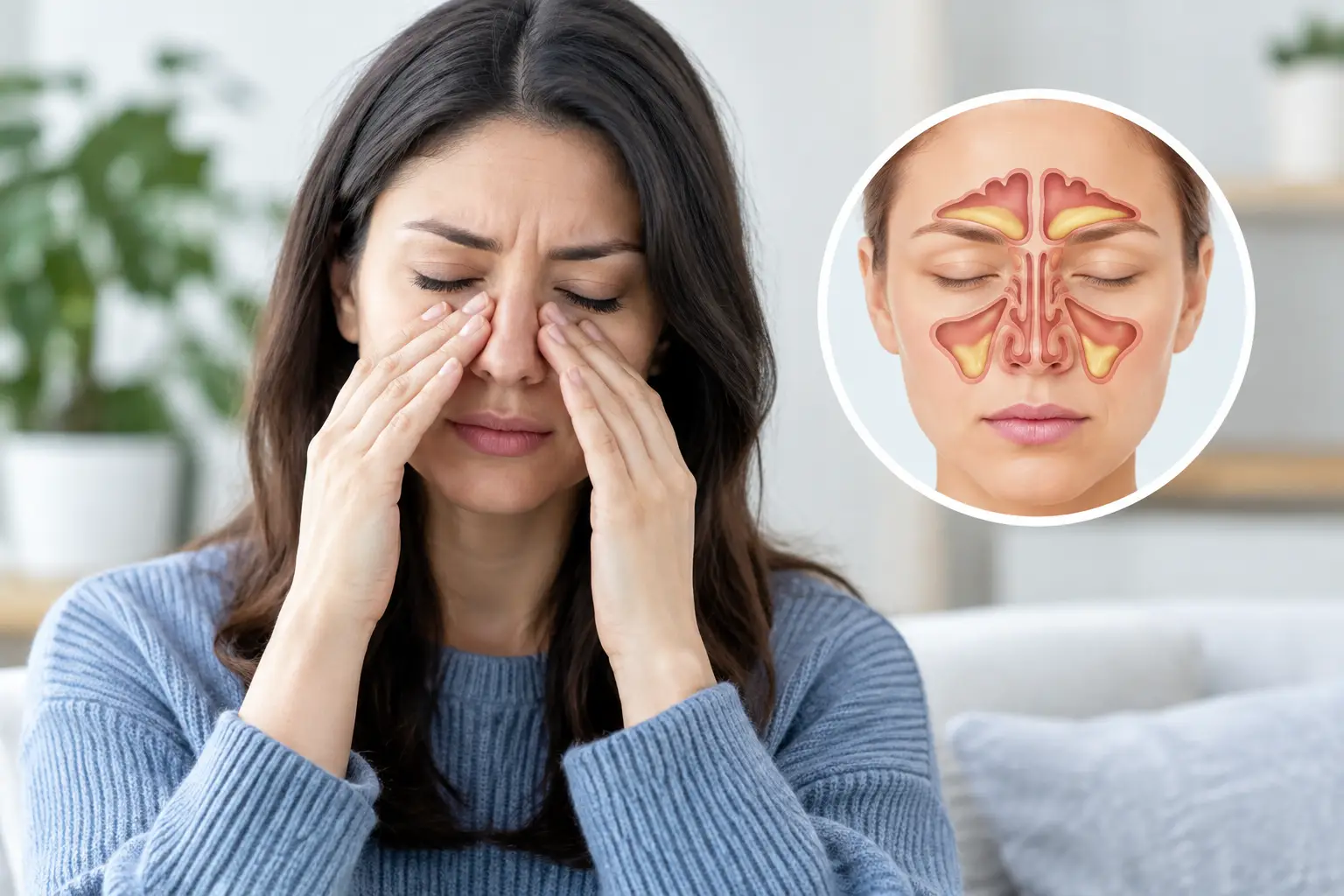
A cold that leaves you blocked up, tired and aching around the cheeks can feel as though it has settled in your sinuses. Common examples of viral sinusitis symptoms include a blocked nose, thickened nasal mucus, facial pressure and a reduced sense of smell. These symptoms are uncomfortable, but they often improve without antibiotics or specialist treatment.
The term sinusitis is commonly used when the lining of the nose and sinuses becomes swollen after a viral upper respiratory infection. Healthcare professionals may call this acute viral rhinosinusitis, because the nose and sinuses are usually affected together. Symptoms alone cannot confirm the cause, and facial pain or headache can have many possible explanations.
What viral sinusitis can feel like
Viral sinusitis usually begins during, or shortly after, a cold. Viruses can irritate the lining of the nose, leading to swelling and making mucus harder to clear. This may create pressure in the face and a sense that the nose is full or blocked.
The pattern varies from person to person. Some people mainly notice congestion and altered smell, while others are more aware of pressure across the cheeks or forehead. Symptoms may affect both sides of the face, although one side can sometimes feel more blocked than the other.
Nasal blockage and discharge
A blocked or stuffy nose is one of the most recognisable symptoms. You may find it harder to breathe through your nose, sleep comfortably or exercise as usual. Nasal mucus may be clear at first and then become thicker, white, yellow or green.
Mucus colour on its own does not tell you whether an infection is viral or bacterial. Coloured mucus can occur as part of an ordinary viral infection, particularly as it progresses. What matters more is the overall pattern: how unwell you feel, whether symptoms are improving, and how long they have lasted.
Facial pressure or discomfort
Pressure, tenderness or a dull ache may be felt around the cheeks, eyes, forehead or bridge of the nose. It can be more noticeable when bending forwards, coughing or lying down. Some people describe a feeling of fullness rather than pain.
Facial discomfort can accompany a cold, but it is not always caused by the sinuses. Migraine, tension-type headache, dental problems and other conditions may produce overlapping symptoms. Severe, sudden or unusual head or facial pain needs medical assessment rather than self-diagnosis.
Reduced smell and taste
When the nasal passages are swollen, smells may not reach the smell receptors as easily. Food can therefore seem less flavoursome. A reduced sense of smell may be temporary, but it can be frustrating and may affect appetite.
Changes in smell can also occur with other viral illnesses and nasal conditions. If smell changes are persistent, recurrent or concerning, speak to a doctor or qualified healthcare professional.
Post-nasal drip, cough and throat irritation
Mucus can travel down the back of the throat, sometimes called post-nasal drip. This may cause a need to clear the throat, a tickly cough or a sore throat, especially at night. A cough from a viral cold can also linger after the nose starts to clear.
These symptoms do not necessarily mean that mucus is coming from the sinuses alone. They can be part of the wider upper respiratory infection.
Feeling generally unwell
Tiredness, poor sleep, a mild fever, ear pressure and a general “bunged-up” feeling can occur with a viral cold and related sinus symptoms. Fever is more common early in a viral illness and often settles within a few days. Children can experience sinus symptoms too, but their assessment and treatment needs may differ, so caregivers should seek age-appropriate advice.
Typical timeline: when a virus is the likely explanation
For many adults, acute viral sinus symptoms start to ease within seven to 10 days. It is not unusual for congestion, cough or a reduced sense of smell to take a little longer to fully settle. Improvement is rarely perfectly linear: you might have a better day followed by a more congested morning.
A viral cause is more likely when symptoms follow a typical cold pattern and gradually improve. However, this is a general guide, not a diagnosis. Allergies, irritants, dental infections and structural nasal problems can also contribute to ongoing nasal or facial symptoms.
Practical self-care while symptoms settle
The aim of self-care is comfort, rest and symptom monitoring. Drink enough fluid for your usual needs, allow time for sleep, and avoid smoking, which can irritate the nose and airways.
Simple pain relief may be considered for facial discomfort or fever, if suitable for you. Paracetamol/acetaminophen or ibuprofen can be options for some adults, but they are not suitable for everyone. Follow the pack instructions, avoid taking more than one product containing the same ingredient, and ask a pharmacist if you have long-term health conditions, take regular medicines, are pregnant, or are unsure.
Some people find saline nasal sprays or rinses helpful for moistening the nose and clearing secretions. If using a rinse device, follow its instructions carefully and use water prepared as directed. A pharmacist can help you choose an appropriate option.
Decongestant nasal sprays may provide short-term relief for some people, but using them for longer than directed can worsen congestion. They may not be appropriate with certain medical conditions or medicines. Oral decongestants also have limitations and can cause side effects or interact with treatment, so seek pharmacy advice before using them.
Steam inhalation is often suggested for congestion, but evidence that it improves sinusitis symptoms is limited, and hot water carries a real risk of scalding. Avoid putting essential oils inside the nose, as they may irritate the nasal lining and are not suitable for everyone.
When symptoms need medical advice
Most viral sinus symptoms can be managed with time and sensible self-care. Still, there are situations where a doctor or qualified healthcare professional should assess you.
Seek advice if symptoms last more than around 10 days without improvement, become distinctly worse after initially getting better, or are severe enough to disrupt normal life despite self-care. A high fever, marked one-sided facial or dental pain, or symptoms that keep returning also deserve discussion. These features do not automatically mean a bacterial infection, but they can help a clinician decide whether further assessment is needed.
Urgent medical help is needed for swelling, redness or pain around an eye; changes to vision; confusion; a stiff neck; persistent vomiting; a severe headache unlike usual headaches; weakness; or if you feel seriously unwell. People with a weakened immune system or significant long-term conditions should seek advice earlier when they develop troublesome sinus symptoms.
What a healthcare professional may consider
A clinician will look at the duration and progression of symptoms, examine the nose and face where appropriate, and consider other possible causes. Antibiotics are not routinely useful for uncomplicated viral sinusitis, because they do not work against viruses. In selected cases, however, a clinician may identify a reason for different treatment or further investigation.
This is why monitoring the direction of symptoms matters more than trying to judge the cause from mucus colour alone. Getting better, even gradually, is generally reassuring. Persistent, recurrent or worsening symptoms are a reason to check in.
A note on sinus products
If you are considering any nasal or sinus-focused product, check whether it is suitable for your symptoms and personal circumstances. Read and follow the product label, package leaflet or instructions for use, including warnings, age restrictions and directions. A pharmacist can help if you are comparing options or need advice on using more than one cold or nasal product.
References
National Institute for Health and Care Excellence (NICE). Sinusitis (acute): antimicrobial prescribing, NG79.
NHS. Sinusitis (sinus infection): symptoms, self-care and when to seek help.
European Position Paper on Rhinosinusitis and Nasal Polyps (EPOS), 2020.
This content is for general information only and does not replace advice from a qualified healthcare professional. Always read and follow the product label, package leaflet or instructions for use. Seek medical advice if symptoms are severe, persistent, worsening, recurrent or concerning.
A blocked nose and facial pressure after a cold are common, but you do not have to simply put up with uncertainty. Focus on gentle symptom relief, notice whether you are improving, and seek professional advice when the pattern does not feel straightforward.