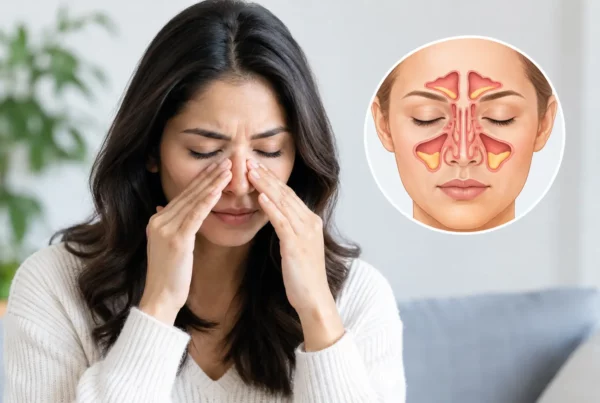
After flu, the fever and aches may settle while a blocked nose, thick mucus or pressure around the cheeks and forehead lingers. If you are wondering how to manage sinus symptoms after flu, the aim is usually to ease discomfort, support recovery and recognise when self-care is no longer enough. Sinus symptoms after a viral illness are common, but they do not always mean you have a bacterial infection or need antibiotics.
Why sinus symptoms can linger after flu
The lining of the nose and sinuses can remain irritated after flu or another viral respiratory infection. Swelling may narrow the small passages that allow mucus to move out of the sinuses. This can leave you feeling congested, with a reduced sense of smell, facial pressure, post-nasal drip or a cough that is more noticeable at night.
Symptoms often improve gradually over days or a few weeks. However, facial pain and headache have many possible causes, so it is best not to assume they are always caused by the sinuses. The pattern of symptoms, how long they have lasted and whether they are getting better all matter.
How to manage sinus symptoms after flu at home
Focus on comfort and recovery
Rest when you can, drink regularly and avoid smoking or smoky environments, which can irritate the nose and airways. Warm drinks may feel soothing if you have a sore throat or post-nasal drip, although they do not treat the underlying cause.
If pressure or pain is troublesome, paracetamol/acetaminophen or ibuprofen may be suitable for some adults when used according to the package directions. Ibuprofen is not appropriate for everyone, including some people with a history of stomach ulcers, kidney problems, certain heart conditions or asthma that is affected by anti-inflammatory medicines. A pharmacist can help you choose an option that fits your health needs and any medicines you already take.
A warm, clean flannel held gently against the face may provide temporary comfort. Take care with hot compresses, particularly if your skin is sensitive. Steam inhalation is often suggested, but there is limited evidence that it helps sinusitis and hot water can cause burns. It is not necessary to add essential oils, and they should not be put inside the nose.
Use saline carefully
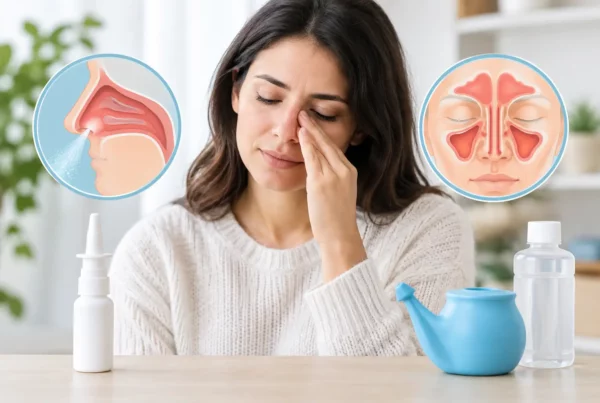
Saline nasal sprays or rinses may be considered to moisturise the nasal passages and help clear secretions. A ready-prepared saline spray is convenient for many people. If you use a nasal irrigation device, follow its instructions carefully and keep it clean.
Use sterile, distilled or previously boiled and cooled water for nasal rinsing. Do not use water straight from the tap. Stop and seek advice if rinsing causes significant pain, nosebleeds or ear discomfort.
Consider decongestants with care
A pharmacist may recommend a short course of a decongestant for some adults with a blocked nose. These medicines may not be suitable if you have high blood pressure, heart disease, glaucoma, an overactive thyroid, prostate symptoms, are pregnant or breastfeeding, or take certain medicines, including some antidepressants.
Decongestant nasal sprays should only be used for the short period stated on the product label. Using them for too long can lead to rebound congestion, where the nose feels more blocked when the medicine is stopped. Avoid taking more than one cold-and-flu product without checking the ingredients, as some contain the same painkiller or decongestant.
Nasal corticosteroid sprays may be considered in some situations, particularly when symptoms are persisting, but they are not an instant solution and are not right for everyone. Speak to a pharmacist, doctor or qualified healthcare professional about whether one is appropriate and how to use it correctly.
Watch the direction of travel, not just the symptom list
A blocked nose on day three of recovery is usually less concerning than symptoms that improve and then become clearly worse. Keep an eye on whether facial pressure, discharge, fever and general wellbeing are gradually settling.
Coloured mucus alone does not reliably show that an infection is bacterial. Likewise, antibiotics are not routinely useful for sinus symptoms following a viral illness. A clinician may sometimes consider them after assessing the full picture, especially where symptoms are severe, prolonged or worsening. Do not use leftover antibiotics or share them with anyone else.
It can help to make a brief note of when symptoms started, whether they followed flu or a cold, and which medicines you have tried. This gives a pharmacist or healthcare professional useful context if you need advice.
When to speak to a healthcare professional
Contact a doctor or qualified healthcare professional if symptoms are severe, are getting worse, keep returning, or have not improved after around three weeks. Seek advice sooner if you have a weakened immune system, are receiving treatment that affects immunity, or have a significant long-term health condition.
Urgent medical assessment is needed for symptoms that could indicate a complication or another serious illness. These include swelling, redness or pain around an eye; changes in vision; a severe or unusual headache; confusion; a stiff neck; persistent vomiting; or marked drowsiness. Get urgent help as well if flu symptoms include difficulty breathing, chest pain, bluish lips or face, or you feel seriously unwell.
Children, pregnant people and people with complex medical conditions may need more individual advice. This article is written for general adult self-care and cannot assess your particular situation.
A sensible approach to sinus-focused products
Sinus-focused nasal products may be an option for some adults, depending on their symptoms and suitability. The right choice depends on the product’s authorised intended purpose, your medical history and any other treatments you use. Do not assume that a product marketed for sinus symptoms is suitable for every cause of congestion or facial pressure.
Before using any nasal product, read and follow the product label, package leaflet or instructions for use. Ask a pharmacist or qualified healthcare professional if you are unsure about suitability, correct use, possible side effects or interactions. Nasodren products, where available and appropriate, should also be used only as directed in the approved product information for your market.
Give recovery time, but set a clear limit
Post-flu sinus discomfort can be frustrating because it often improves more slowly than the main flu symptoms. Gentle self-care, careful use of over-the-counter medicines and attention to warning signs can help you manage this period without overlooking a problem that needs assessment.
This content is for general information only and does not replace advice from a qualified healthcare professional. Always read and follow the product label, package leaflet or instructions for use. Seek medical advice if symptoms are severe, persistent, worsening, recurrent or concerning.
References
NHS, Sinusitis (sinus infection): symptoms, self-care and when to seek medical advice.
NICE Clinical Knowledge Summaries, Sinusitis: management of acute sinusitis in adults.
UK Health Security Agency and NHS guidance on flu symptoms and when to seek urgent medical help.