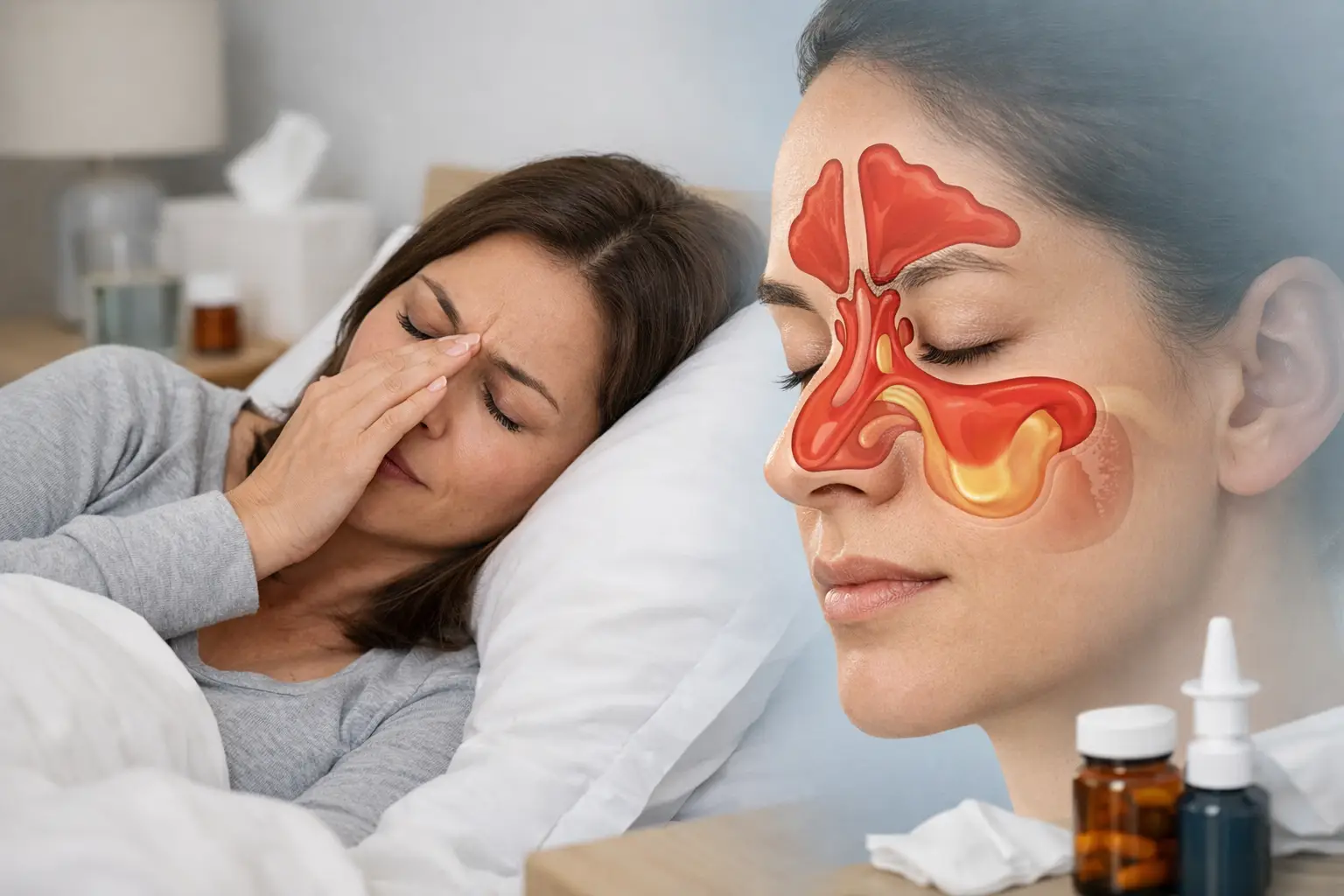
A blocked nose can make bedtime feel much longer than it should. When congestion and facial pressure become more noticeable as you lie down, it can be hard to settle, breathe comfortably or get the restorative sleep you need. Knowing how to sleep with sinus pressure starts with making your sleeping environment and position work for you, while paying attention to symptoms that need medical advice.
Sinus pressure can occur during a cold, with allergies or alongside sinusitis. It may feel like fullness or tenderness around the cheeks, eyes or forehead, often with a blocked or runny nose. Headache and facial discomfort have several possible causes, however, so it is sensible not to assume they are always caused by the sinuses.
How to sleep with sinus pressure more comfortably
Raise your head and upper body
Lying completely flat may make nasal blockage feel more troublesome for some people. Try sleeping with your head and upper body gently raised using an extra pillow, a wedge pillow or by adjusting the head of the bed if possible. The aim is a comfortable incline, not an awkward position that strains your neck.
A little elevation may make it easier to breathe through your nose and can reduce the feeling of pressure that develops when you are lying down. If you tend to slide down or wake with neck pain, use a firmer support or reduce the height slightly. Comfort matters as much as the angle.
Clear your nose before bed, gently
A warm shower before bed may feel soothing and can help loosen nasal secretions. You could also consider a saline nasal spray or rinse designed for nasal use, following the product instructions carefully. Saline products may help moisturise the nasal passages and clear mucus, but individual experiences vary.
If using a rinse device, use water that has been prepared according to the device instructions. Keep the device clean and allow it to dry between uses. Avoid forcing fluid through a completely blocked nose, and stop if it causes pain, ear pressure or bleeding.
Blow your nose gently rather than repeatedly or forcefully. Excessive blowing can irritate already sensitive nasal tissues and may increase pressure in the ears.
Make the bedroom kinder to your nose
Dry, overheated air can make a blocked nose feel more irritating. Aim for a cool, comfortable bedroom and consider whether your usual heating is drying the air too much. A clean humidifier may help some people when the air is dry, but it needs regular cleaning to prevent mould and microbial build-up.
It is also worth reducing common irritants before bed. Tobacco smoke, vaping aerosols, strong fragrances and household sprays can aggravate nasal symptoms. If allergies may be contributing, changing pillowcases regularly and keeping pets out of the bedroom may be practical measures to discuss with a pharmacist or qualified healthcare professional.
Steam inhalation is often suggested for congestion, but evidence for meaningful benefit in sinus symptoms is limited and hot water can cause serious scalds. A warm shower is generally a safer way to enjoy humid air. Do not put essential oils inside your nose, and be cautious with fragranced products if they trigger irritation.
Use pain relief thoughtfully if you need it
Facial pressure can make it harder to relax into sleep. Paracetamol/acetaminophen or ibuprofen may be suitable options for short-term pain relief for some adults, when used according to the packet instructions.
They are not appropriate for everyone. For example, ibuprofen may be unsuitable for people with certain stomach, kidney, heart or asthma conditions, and paracetamol/acetaminophen must not be taken above the recommended dose or combined unknowingly with other cold and flu medicines containing the same ingredient. Ask a pharmacist or qualified healthcare professional if you take regular medicines, are pregnant, have a long-term condition or are unsure which option is suitable.
Be careful with decongestants
Short-term decongestant nasal sprays can help some adults with a blocked nose, but they are not a solution for ongoing use. Using them for longer than directed can lead to rebound congestion, where the nose feels more blocked when the medicine is stopped.
Decongestant tablets and sprays may not be suitable for everyone, including people with high blood pressure, heart conditions, glaucoma, thyroid problems or those taking particular medicines. A pharmacist can help you choose safely. Always read and follow the product label, package leaflet or instructions for use.
A simple wind-down routine for a congested night
You do not need a complicated routine. About 30 to 60 minutes before bed, have a warm shower if it feels comfortable, use saline as directed if you choose to, and drink enough water to avoid feeling thirsty overnight. Then prepare your pillows so you are not trying to rearrange them at 3am.
Try to keep the rest of the routine low-stimulation. Dim lights, avoid alcohol close to bedtime and put screens aside where possible. Alcohol can disrupt sleep and may worsen snoring or mouth breathing. If your nose is blocked, sleeping on your side may feel more comfortable than lying on your back, although the best position varies from person to person.
Mouth breathing is common when you are congested, but it can leave your mouth and throat dry. Keep water by the bed and consider a bedside humidifier only if you can clean and maintain it properly. Do not tape your mouth shut to force nasal breathing, particularly if you are congested or have any breathing concern.
When self-care is not enough
Most cold-related nasal congestion improves over time, but sinus symptoms can sometimes need assessment. Speak to a doctor or qualified healthcare professional if symptoms are severe, are getting worse after initially improving, last longer than expected, keep returning or are affecting sleep and daily life significantly.
Seek urgent medical advice for swelling or redness around an eye, changes in vision, severe headache, confusion, a stiff neck, a high fever, persistent vomiting, shortness of breath, chest pain, or if you feel very unwell. These symptoms are uncommon, but they should not be managed with home care alone.
You should also seek advice if one-sided facial pain or nasal blockage persists, if you have frequent nosebleeds, or if you have a weakened immune system. Children, pregnant people and people with complex medical conditions may need more individual guidance for congestion and pain relief.
What about sinus-focused nasal products?
There are several types of nasal product, including saline sprays, decongestant sprays and products intended for specific sinus-related symptoms. The right choice depends on your symptoms, other medicines and health conditions. A pharmacist can help explain the differences without assuming that one product suits everyone.
If you are considering Nasodren®, read and follow the product label, package leaflet or instructions for use and check that it is suitable for you. It should not be used as a substitute for medical assessment when symptoms are severe, persistent, worsening or unclear.
Sources and further reading
This article reflects general self-care principles described in NHS guidance on sinusitis and nasal congestion, NICE guidance on acute sinusitis, and advice from the UK Medicines and Healthcare products Regulatory Agency on using medicines safely. Product-specific information should always be checked against the relevant approved label, package leaflet or instructions for use in your market.
This content is for general information only and does not replace advice from a qualified healthcare professional. Always read and follow the product label, package leaflet or instructions for use. Seek medical advice if symptoms are severe, persistent, worsening, recurrent or concerning.
A calmer bedtime routine will not remove every symptom, but small, safe adjustments can make the night more manageable while you give your body time to recover.